
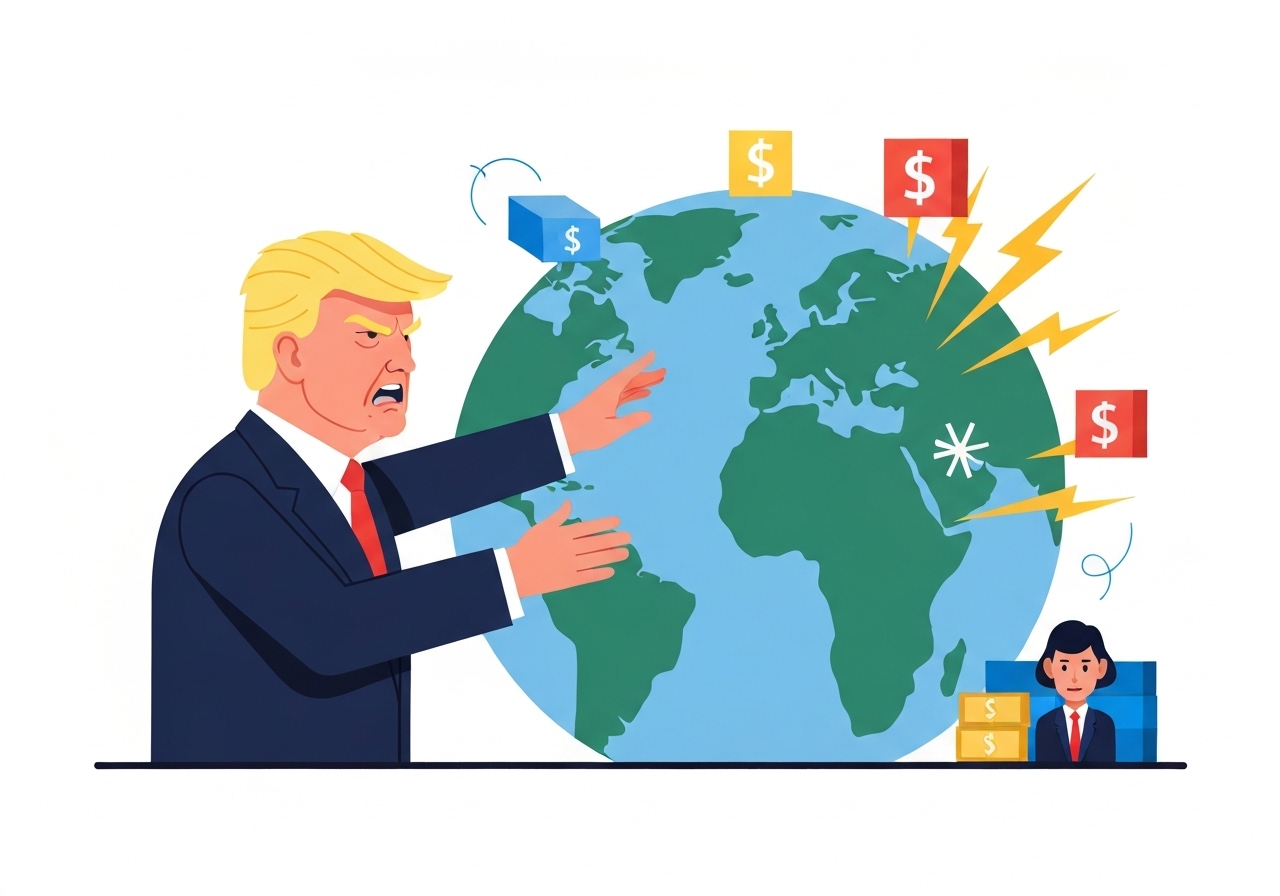
— President Donald Trump signed an executive order on Friday authorising sanctions and travel restrictions against any country the US labels a “state sponsor of wrongful detention,” a move announced about two weeks before the UN General Assembly in New York that could be used to bar foreign leaders from attendance.
Key Takeaways
- The president signed an order allowing sanctions and visa or travel restrictions for countries holding US citizens designated as engaging in “wrongful detention.”
- The announcement came roughly two weeks before the UN General Assembly, raising the prospect of barring some foreign leaders from New York.
- Officials cited Iran as an early possible target; other countries named for review include China, Afghanistan, Venezuela and Russia.
- Forty mostly Republican members of Congress urged the administration not to issue visas to Iran’s President Masoud Pezeshkian.
- The administration previously blocked Palestinian Authority leaders, including Mahmoud Abbas, from attending the UN meeting.
- The UN Headquarters Agreement restricts the US from impeding diplomatic travel, a legal and diplomatic complication the UN secretary-general has raised with the State Department.
Verified Facts
The executive order gives US agencies authority to impose economic and travel measures on states the administration designates as engaging in hostage or wrongful-detention practices. White House officials described travel restrictions as a particularly effective lever to deter regimes from using US citizens as bargaining chips.
Administration spokespeople declined to name which countries would be designated immediately. In a briefing before the signing, senior officials repeatedly mentioned Iran as a likely candidate for the new restrictions; they also listed China and Afghanistan among states to be reviewed.
On Friday, 40 mainly Republican members of Congress sent a letter asking the president to “refrain from issuing visas” to Iran’s President Masoud Pezeshkian and other senior Iranian officials ahead of the UN General Assembly, framing visa denial as a tool to protest Tehran’s behaviour.
The US has already announced it will bar Palestinian Authority leaders, including President Mahmoud Abbas, from attending this year’s UN General Assembly. Separately, the State Department maintains public travel advisories and “do not travel” warnings for countries with high risks of detention, naming Venezuela and Russia among others.
| Country | Why listed |
|---|---|
| Iran | Repeatedly named by officials as a likely target |
| China | Described as a participant in hostage diplomacy |
| Afghanistan | Included in officials’ list for review |
| Venezuela, Russia | Previously flagged in State Department travel advisories |
Context & Impact
The order arrives at a sensitive moment: leaders gather in New York mid-September for the annual UN General Assembly, where visa or travel bans could prevent heads of state or senior officials from attending, creating diplomatic friction between Washington and affected capitals.
UN law complicates unilateral US action. The 1947 UN Headquarters Agreement obliges the host country to allow diplomats and representatives access to UN meetings. The UN secretary-general has already raised concerns with the State Department about restricting Palestinian officials.
The administration framed part of its recent posture toward Palestinian leaders as a response to cooperation with international courts investigating Israel’s conduct in the Gaza conflict. Palestinian health authorities say the war in Gaza has killed more than 64,000 Palestinians over 22 months — a figure cited by officials and media reporting on the broader diplomatic disagreements.
Imposing travel bans on foreign leaders could produce reciprocal measures, strain intelligence and consular cooperation on detainee cases, and complicate negotiations for released US citizens. Allies may face diplomatic pressure to support or distance themselves from Washington’s moves at the UN.
Official Statements
“You are drawing a line in the sand that US citizens will not be used as bargaining chips,” said Sebastian Gorka, the administration’s counterterrorism director, describing the order’s intent.
Sebastian Gorka / White House official comment
Explainer: What the designation could mean
Unconfirmed
- Which countries, if any, will receive an immediate designation under the new authority.
- Whether the administration will block specific foreign leaders from the UN General Assembly beyond previously announced Palestinian exclusions.
- How the State Department will reconcile UN Headquarters Agreement obligations with any visa denials for diplomatic delegations.
Bottom Line
The executive order expands tools Washington can use against states that detain US citizens, signalling a tougher stance ahead of the UN General Assembly. Implementation and specific targets remain uncertain, and legal and diplomatic pushback — notably under the UN Headquarters Agreement — is likely to shape how far the administration goes.