
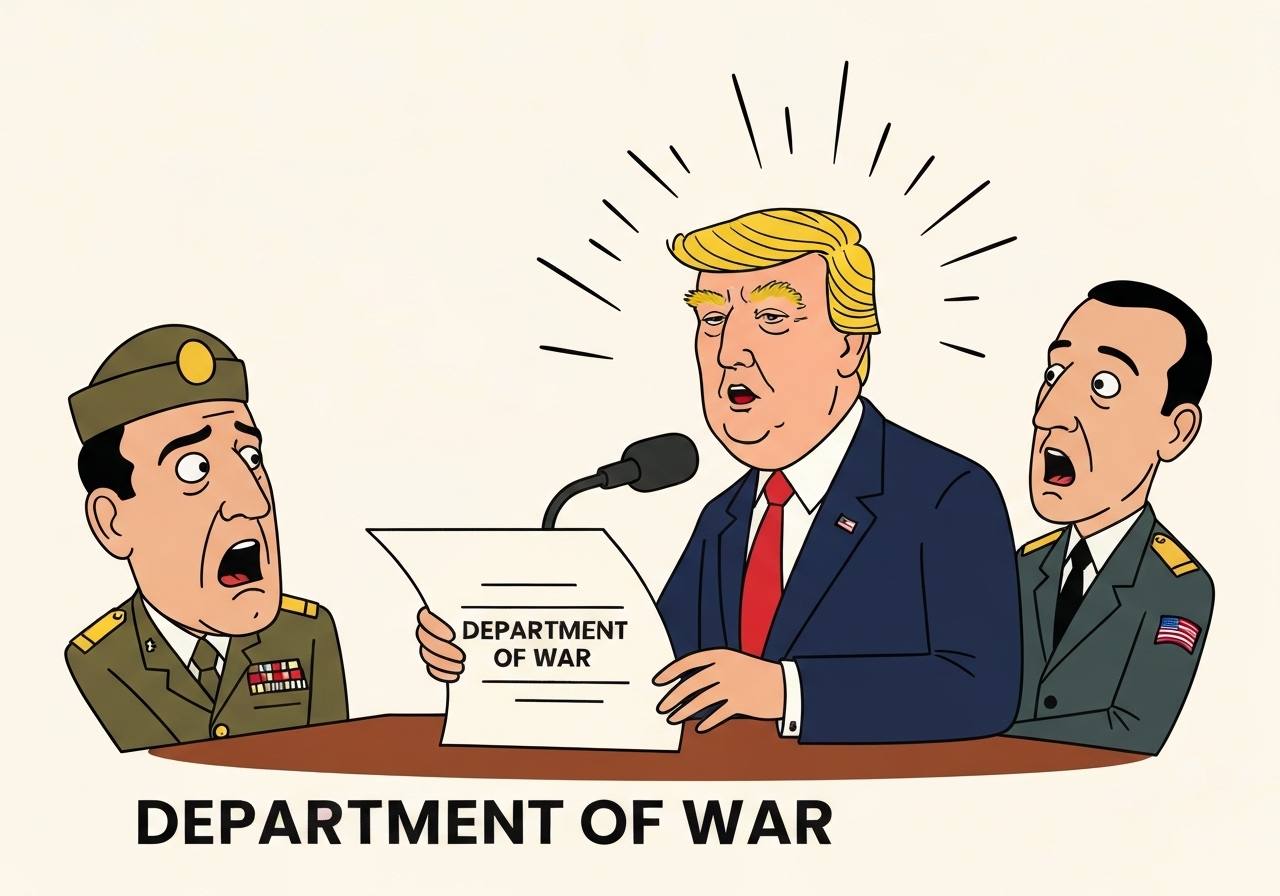
Lead: On Friday, 5 September 2025, President Donald Trump announced an executive order to adopt the name “Department of War” as a secondary title for the Pentagon, a change that has sparked immediate criticism and debate over cost and policy.
Key takeaways
- The White House says the executive order will add “Department of War” as a secondary title for the Department of Defense.
- Officials would be permitted to use titles such as “secretary of war,” with Pete Hegseth named publicly in support of the change.
- The rebrand aims to signal a more aggressively framed U.S. military posture, according to supporters.
- Critics, including Sen. Tammy Duckworth, say the move wastes resources better used for servicemember and family support or diplomacy.
- Changing signage, letterhead and other materials could cost tens of millions of dollars, officials estimate.
- The administration says the order avoids Congress by making the new name a secondary title rather than formally renaming the agency.
Verified facts
The administration issued an executive order on 5 September 2025 designating “Department of War” as a secondary title for the Department of Defense. An administration official told reporters the step is intended to bypass the need for an act of Congress to change an agency’s legal name while directing executive-branch communications to adopt the new terminology.
Officials named in public discussions include Defense Secretary Pete Hegseth, who has advocated for the rebrand in recent weeks. The White House said the order will allow senior officials to use legacy-style titles such as “secretary of war” in official correspondence and events.
Analysts and administration spokespeople have framed the change as a symbolic restoration of a historic title used during the first half of the 20th century. Supporters argue the shift emphasizes military readiness and a more force-forward posture; opponents counter it risks escalating rhetoric without adding material capability.
Context & impact
Costs: The reported expense stems mainly from replacing physical and digital assets — building signage, base plaques, stationery, identity badges and websites — both in the United States and at overseas facilities. The administration recognizes the expense but frames it as a modest price for a strategic messaging change; independent estimates cited in coverage place the bill in the tens of millions of dollars.
Legal and political implications: By designating the new name as a secondary title, the administration contends it can implement the change administratively. Critics say the move raises separation-of-powers questions and could prompt congressional or legal challenges if it is seen as an end-run around statutory naming authority.
- Diplomatic signaling: Allies and partners may read the change as a hardening of U.S. posture, potentially affecting negotiations and coalition dynamics.
- Military culture: Some veterans and service members may view the renaming as symbolic recognition of past conflicts; others warn it could narrow strategic thinking and undermine diplomatic tools.
Official statements
“Why not put this money toward supporting military families or toward employing diplomats that help prevent conflicts from starting in the first place?”
Sen. Tammy Duckworth (D), Armed Services Committee
“The designation as a secondary title will allow the executive branch to use historical terminology while preserving the Department of Defense’s legal name,”
White House official (statement to press)
Unconfirmed
- Exact final cost of the rebrand: public reports estimate “tens of millions,” but a comprehensive accounting has not been released.
- Whether Congress will challenge the use of a secondary title in court or through legislation remains uncertain.
- Any operational changes to department missions tied directly to the name change have not been announced.
Bottom line
The White House’s move to adopt “Department of War” as a secondary title is largely symbolic but carries real costs and political consequences. It is likely to fuel litigation and congressional scrutiny and to shift public debate about U.S. military posture and priorities. Watch for legislative responses, legal challenges, and internal DoD guidance clarifying whether the change will alter formal procedures or remain a communications adjustment.