
Lead
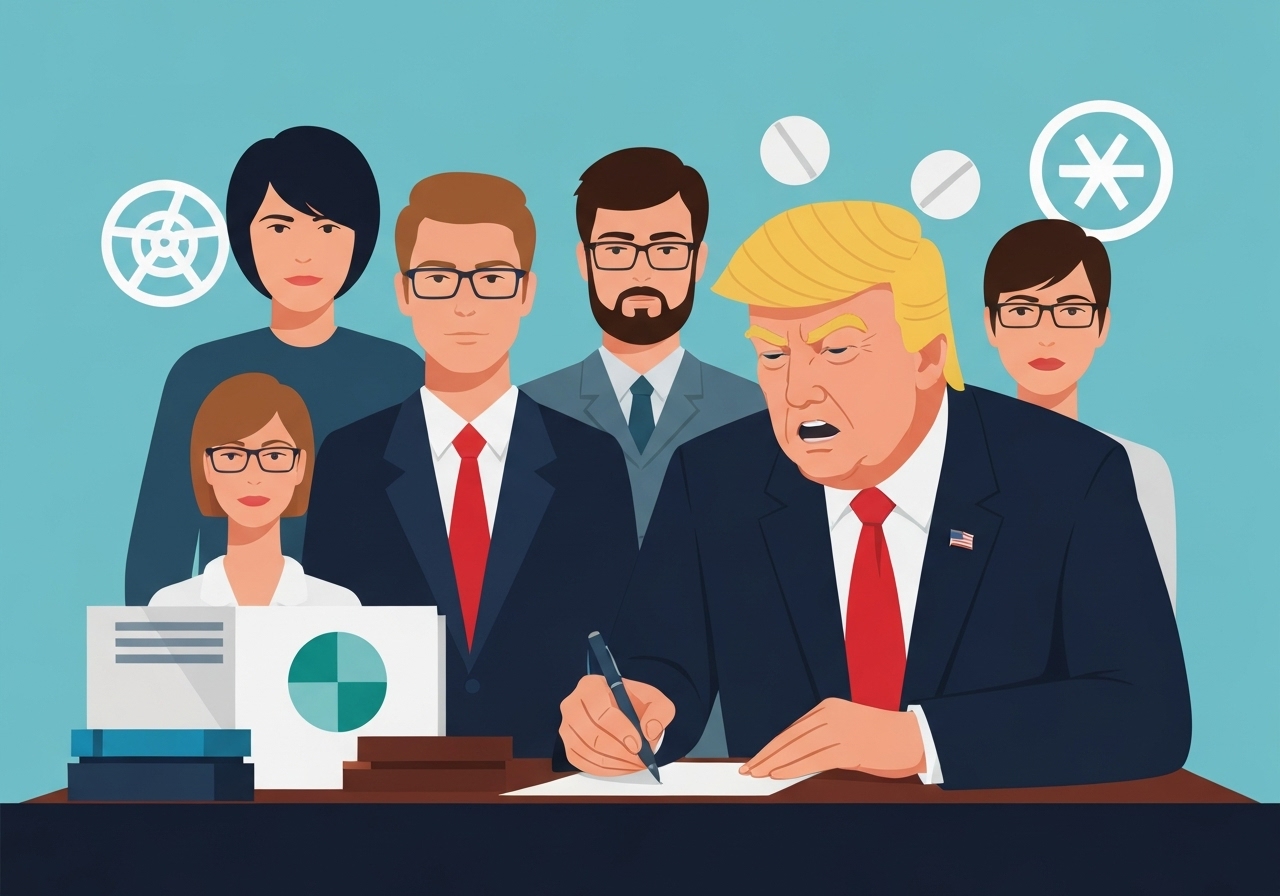
President Donald Trump on Tuesday in Washington signed a presidential memorandum directing federal agencies to push pharmaceutical companies to comply with existing advertising transparency rules, with particular emphasis on social media. The administration said it will follow the memorandum by issuing 100 cease-and-desist enforcement letters and thousands of warning letters to companies and online pharmacies. Officials framed the action as a legal, rather than legislative, effort to ensure consumers receive clear, accurate information about prescription drugs and disclosure of paid promotions. The White House described the move as the strongest action available under current statutes to address misleading drug promotion online.
Key Takeaways
- The memorandum targets drug advertising on social platforms like Instagram and TikTok and instructs agencies to pursue enforcement under current law.
- The administration plans to send 100 cease-and-desist letters and thousands of warning letters to advertisers and online pharmacies.
- Officials cited studies showing social-media drug promotion often omits risk information; a 2015 study found roughly one-third of posts listed possible harms.
- Health and Human Services Secretary Robert F. Kennedy Jr. previously advocated for a TV ban on pharmaceutical ads, but the memorandum stops short of such a ban.
- Administration officials said some large pharma CEOs privately urged stronger action, reflecting industry frustration with unregulated online promotion.
- The U.S. and New Zealand remain the two countries that permit direct-to-consumer prescription drug advertising, a fact regulators noted as context for action.
Background
Direct-to-consumer prescription advertising is legal in only two countries: the United States and New Zealand. That regulatory setting has long allowed drugmakers to market prescription medicines directly to consumers through television and other channels, and more recently via social media and influencer partnerships. Regulators and public-health researchers have raised concerns that social-media posts promoting medications often prioritize reach and engagement over balanced information about benefits and risks. Several academic studies and watchdog reports over the past decade documented frequent omissions of side-effect information and inconsistent disclosure when paid influencers promote drugs.
Federal agencies, including the Food and Drug Administration, already have guidance and statutes governing truthful promotion and disclosure obligations, but enforcement has historically emphasized traditional media channels. The rise of influencer marketing and online pharmacies has complicated oversight because posts can blur the lines between editorial content and paid advertising. The memorandum directs agencies to use existing statutory tools more aggressively, signaling a shift toward proactive administrative enforcement rather than seeking new legislation. Administration officials argue this approach levels the playing field between established pharma advertisers and newer online actors who have evaded comparable scrutiny.
Main Event
On Tuesday, the president signed a memorandum that instructs relevant federal agencies to step up enforcement of advertising laws as they apply to prescription drugs. Administration officials on a briefing call described two immediate measures: sending 100 cease-and-desist letters to entities judged to be in significant violation and distributing thousands of warning letters to companies and online pharmacies believed to be skirting disclosure requirements. Officials emphasized that the action relies on laws already on the books and does not require new legislation or rulemaking to implement the enforcement push.
Officials singled out social-media promotions in which influencers do not clearly disclose paid relationships or fail to present adequate safety information, saying these posts can give a misleading impression of a drug’s risks and benefits. The move responds to growing concern that many social posts omit side-effect information or regulatory disclosures that would be standard in broadcast ads or product labeling. The administration said the stepped-up letters are intended to produce rapid corrective action and to deter future noncompliance by making enforcement visible and predictable.
While the memorandum represents a sharpened enforcement posture, it stops short of the TV advertising ban that Health and Human Services Secretary Robert F. Kennedy Jr. advocated before taking office. A senior administration official described the memorandum as the “strongest, boldest” action the president could take under current authority and said there are no immediate plans for broader bans beyond this memorandum. The official also said some large pharmaceutical CEOs privately asked the administration to address what they view as an “arms race” in online promotional spending and disclosure evasion.
Analysis & Implications
Administratively driven enforcement can be faster than legislative reforms, allowing agencies to target specific behaviors and platforms without waiting for congressional action. By leveraging existing statutes, the administration aims to create near-term deterrence: high-profile cease-and-desist letters and many warning notices could push companies and influencers toward clearer disclosures and fuller risk information. That said, enforcement depends on agency capacity, legal defensibility of particular enforcement letters, and platform cooperation in identifying and removing noncompliant posts.
For pharmaceutical companies that already follow FDA guidance in traditional media, the memorandum may mostly formalize expectations for social marketing and influencer arrangements. For online pharmacies and novel actors that have operated with less oversight, the letters could impose immediate compliance costs and prompt changes in marketing strategy. Industry compliance will hinge on legal interpretations about what constitutes adequate disclosure in short-form content and whether platforms adopt uniform labeling features for paid promotions.
Politically, the action aims to position the administration as responding to consumer-safety concerns without pursuing wider advertising restrictions that some stakeholders opposed. Public-health advocates may welcome stronger enforcement of disclosures and risk communication, but some consumer groups will watch whether letters result in measurable improvements in information quality. Internationally, the U.S. focus on enforcement highlights a regulatory gap left by having permissive DTC advertising rules compared with most other countries.
Comparison & Data
| Item | Noted Measure / Finding |
|---|---|
| Planned enforcement | 100 cease-and-desist letters; thousands of warning letters |
| 2015 social-media study | About one-third of promotional posts listed possible harms |
| Global DTC policy | U.S. and New Zealand permit prescription drug DTC ads |
The table summarizes the administration’s announced enforcement volume alongside a commonly cited academic finding and the international context for direct-to-consumer advertising. The planned letters are intended to be a visible, measurable sign of enforcement; the 2015 study is frequently cited to illustrate longstanding shortcomings in online promotional content. Observers will track whether the distribution of letters correlates with improved disclosure rates in sampled social-media posts over time.
Reactions & Quotes
Administration spokespeople framed the memorandum as a proportionate step to protect patients and ensure fair competitive practices across advertising channels. They argued that uniform enforcement will reduce a perceived “Wild West” dynamic on social platforms and hold all advertisers to the same standards.
“There has been broad frustration with the increasing prevalence of these ads creating a misleading impression, specifically not disclosing side effects appropriately,”
Senior administration official
The official offered that enforcement would send a message to online pharmacies and influencers that existing rules apply offline and online. They said the administration had consulted with industry leaders who privately supported more vigorous action to curb opaque paid promotions.
“One of the things I’m going to advise Donald Trump to do … is to ban pharmaceutical advertising on TV,”
Robert F. Kennedy Jr., HHS Secretary (prior statement)
Secretary Kennedy’s prior public call for a blanket TV ban contrasts with the memorandum, which focuses on enforcing current statutes rather than pursuing new prohibitions. Officials explicitly noted the administration was not moving forward with a TV ad ban as part of this memorandum.
“A couple large pharmaceutical company CEOs have told me to take action on pharmaceutical ads,”
Senior administration official (summarizing industry feedback)
The official said some industry executives want clearer, enforceable norms to prevent competitors and third parties from gaining an advantage through less-regulated online promotions. That dynamic, the official said, contributed to the administration’s decision to prioritize enforcement letters.
Unconfirmed
- Whether the initial 100 cease-and-desist letters will withstand legal challenge remains uncertain and could be contested in court.
- It is unclear how quickly social platforms will adopt uniform disclosure tools or whether enforcement will produce measurable improvement in information quality.
- No official timeline was provided for how the thousands of warning letters will be prioritized or publicly tracked.
Bottom Line
The memorandum represents a notable administrative escalation aimed at improving transparency in prescription drug marketing, especially on social media. By using existing laws and signaling large-scale enforcement, the administration hopes to force clearer disclosures about risks and paid endorsements without waiting for new legislation. The action may prompt faster compliance among mainstream pharmaceutical advertisers, but its ultimate effectiveness will depend on legal durability, agency capacity, and platform cooperation.
Observers should watch for the content and recipients of the initial cease-and-desist letters and whether regulators publish follow-up metrics on compliance. If enforcement reduces opaque paid promotions, consumers could see clearer safety information; if not, advocates may renew calls for broader statutory change or platform-level remedies.
Sources
- ABC News — News (original reporting)