
Lead
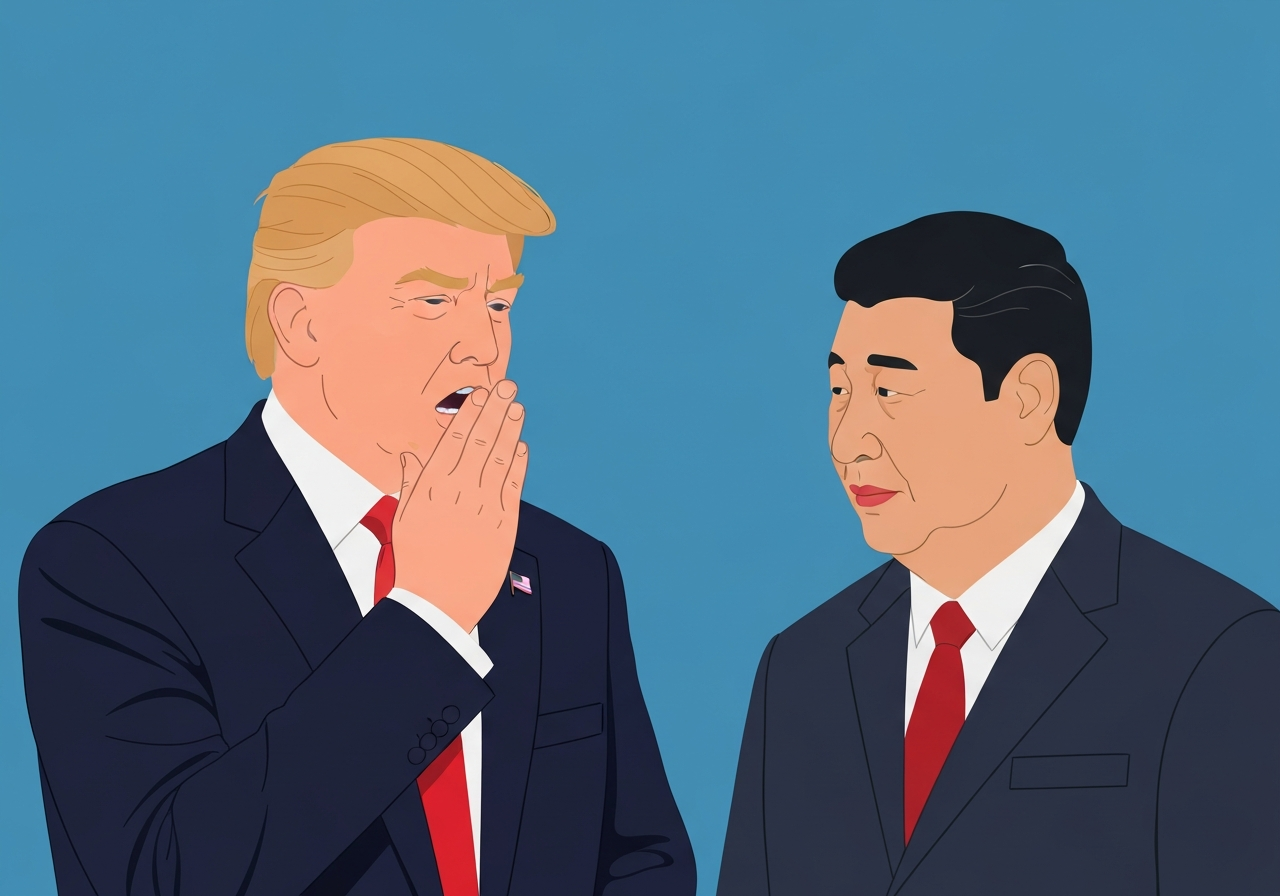
Donald Trump has asked to postpone a planned summit with Chinese President Xi Jinping because of the ongoing war involving Iran, the Financial Times reports. The request, reported this week, reflects concern that a widening Middle East conflict would overshadow bilateral discussions. If the delay is accepted, it would push back what U.S. and Chinese officials had been preparing as a high-profile diplomatic encounter. At the time of reporting, neither side had announced a new date or issued a formal joint statement confirming rescheduling.
Key Takeaways
- Donald Trump formally requested a postponement of a summit with Xi Jinping, according to the Financial Times report; the move was linked to the Iran war.
- The reported request came amid an intensifying Middle East conflict that U.S. officials say could complicate global diplomacy and security discussions.
- No confirmed replacement date or mutually agreed schedule was disclosed in the FT story; public confirmation from either Washington or Beijing was not reported.
- If postponed, the summit delay would affect planned agenda items including trade, technology controls and regional security cooperation that officials had signalled earlier.
- Analysts warn a postponement could be used politically by domestic audiences in both countries and may alter the timing of other diplomatic engagements.
Background
Summits between U.S. and Chinese leaders have historically been used to reset ties during periods of tension and to negotiate specific agreements on trade, technology and security. Over recent years, competition over trade, investment screening, export controls and regional security has made such high-level meetings both politically sensitive and strategically consequential. Third-party crises—especially large-scale conflicts in the Middle East—have in the past disrupted diplomatic calendars worldwide by shifting attention and resources to crisis management.
The current situation in and around Iran has raised concerns among many capitals about escalation and spillover, prompting leaders to prioritize consultations with allies and military and intelligence briefings. For Washington and Beijing, the calculus for a bilateral summit now includes how to avoid the meeting being overshadowed by urgent security developments, and how any statements from the leaders might be read by domestic and regional audiences.
Main Event
According to the Financial Times, Mr. Trump requested that the meeting with Mr. Xi be postponed in light of the Iran war. The FT report does not provide a transcript of an official statement from either government confirming the request or outlining next steps. Media reporting suggests the request was framed as a matter of timing and focus, with concern that the external crisis would dominate any joint messaging.
Officials in both capitals often use established diplomatic channels to coordinate scheduling; such a request typically triggers consultations among foreign ministries and scheduling offices. If accepted, teams would negotiate a new window for the leaders to meet that avoids competing international crises. If rejected, the summit could proceed with altered agenda priorities emphasizing crisis management and deconfliction.
There are immediate operational impacts even from a reported postponement: preparatory working groups pause finalization of communiqués and policy deliverables, and national security teams reassess the inclusion of region-specific items on the summit agenda. Private-sector actors who plan travel, security and media coverage also face logistical uncertainty while dates remain unset.
Analysis & Implications
A postponed summit would have layered implications. Diplomatically, it delays an opportunity for top-level bilateral problem solving on trade and technology controls at a time when both sides face acute strategic competition. Postponement can reduce immediate friction but also prolong unresolved tensions, pushing contentious issues into lower-level channels where progress is slower.
Politically, timing matters for domestic audiences. A request framed around an external security crisis allows leaders to justify schedule changes while avoiding perceptions of weakness; conversely, opponents may argue the delay reflects a missed chance to confront bilateral challenges. In the U.S. context, presidential scheduling is often scrutinized for both foreign policy impact and political optics.
For Beijing, accepting any postponement is a diplomatic choice: it can be read as deference to crisis management norms or as a tactical decision to keep summit optics under Beijing’s control. China typically balances the value of engagement with concerns about appearing to react to external pressure. The decision will therefore be watched for signals about how China prioritizes bilateral ties versus multilateral stability.
Reactions & Quotes
The Financial Times reports that the request was tied directly to the unfolding Iran conflict and its potential to dominate summit discussions.
Financial Times (media report)
Some analysts told reporters that postponing could buy breathing room to address immediate security concerns but would complicate high-stakes negotiations that require leader-level political cover.
Independent foreign-policy analyst (commenting to media)
Unconfirmed
- No formal, mutually agreed new date for a rescheduled summit has been published by either the White House or the Chinese government in public sources cited by the FT.
- Details about the exact channel and wording of the request (for example, whether it was verbal or written, and which offices were involved) were not disclosed in the Financial Times report.
- It is unconfirmed how Beijing has officially responded to the request beyond media reporting; formal acceptance or rejection was not reported at the time of the FT article.
Bottom Line
The reported request by Donald Trump to postpone a meeting with Xi Jinping highlights how third-party crises—here the Iran war—can reshape the calendar of great-power diplomacy. Whether the delay becomes a temporary pause or a longer-term disruption depends on follow-up communications between Washington and Beijing and on developments in the Middle East that may demand sustained attention.
For observers, the key items to watch now are: any formal confirmation of rescheduling from either government; whether elements of the summit agenda are shifted to lower-level talks; and how markets and allied capitals interpret the diplomatic signal. Even a short postponement can alter negotiation dynamics and domestic political narratives in both countries.
Sources
- Financial Times — media report (article detailing the request to postpone summit)