
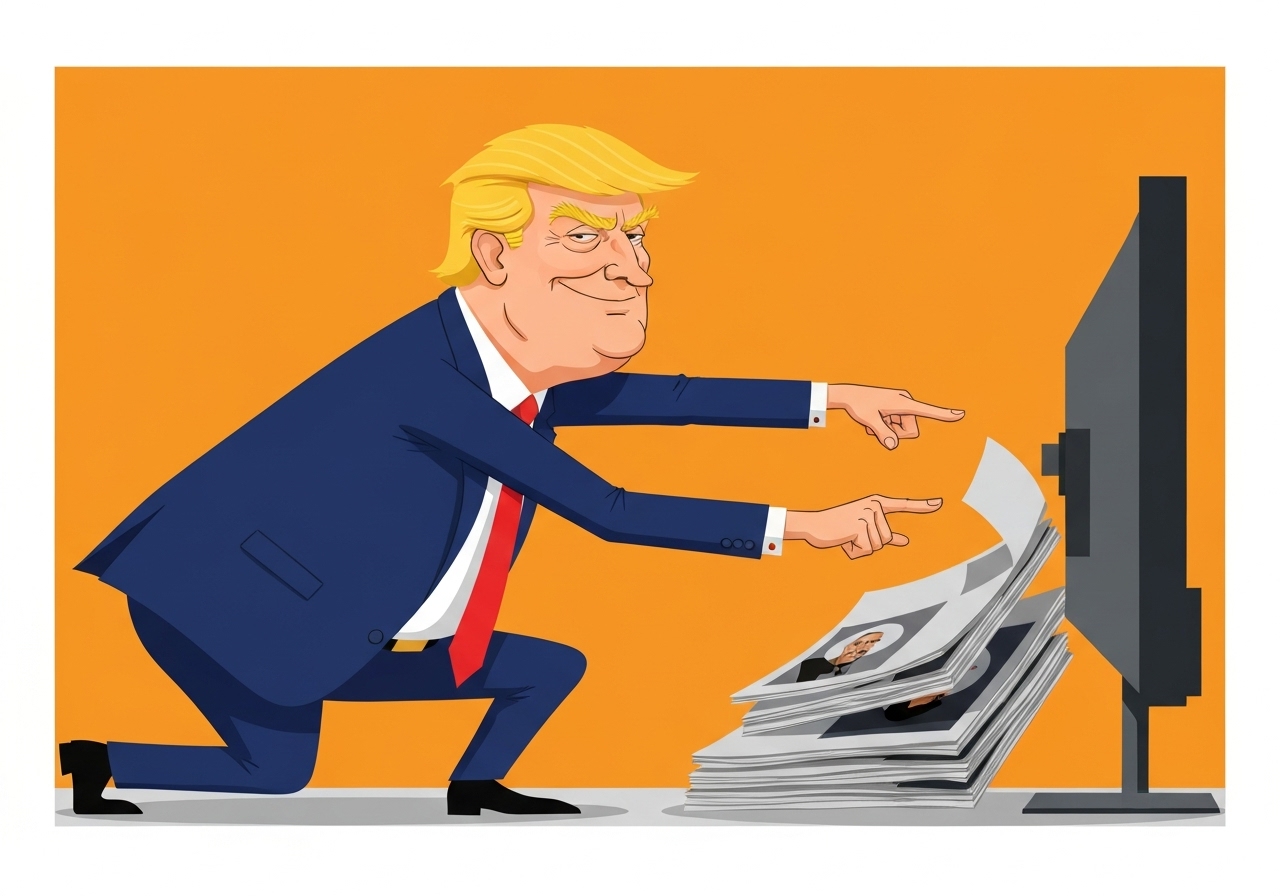
On Dec. 15, 2025, President Donald J. Trump publicly suggested that the fatal stabbings of director Rob Reiner and his wife, Michele Singer Reiner, were linked to the couple’s outspoken criticism of him, calling the deaths a consequence of “Trump derangement syndrome.” The Reiners were found dead at their Los Angeles home; Los Angeles police said their 32-year-old son, Nick Reiner, was arrested and booked for murder and is being held on $4 million bail. Authorities have not reported any evidence that the couple’s political views or public statements played a role in the killings, and investigators described the event as an apparent domestic homicide.
Key Takeaways
- Victims: Rob Reiner, 77, and his wife, Michele Singer Reiner; found stabbed at their Los Angeles home on Dec. 14–15, 2025, according to police statements.
- Suspect: Their son, Nick Reiner, 32, was arrested the night of the discovery and booked on murder charges; jail records show $4 million bail.
- President’s comment: On Dec. 15, 2025, President Trump posted on Truth Social suggesting the deaths were linked to “TRUMP DERANGEMENT SYNDROME,” a claim with no public evidentiary support.
- Official stance: Los Angeles police, led by Chief Jim McDonnell, reported no indication that political beliefs motivated the violence as of initial releases.
- Public reaction: Elected officials across the political spectrum condemned the president’s timing and tone, calling for restraint and empathy toward the grieving family.
- Background on suspect: Public records and prior interviews indicate Nick Reiner had previously discussed substance abuse and periods of homelessness.
- Legal status: The case is under active investigation by the Los Angeles Police Department and pending formal charging decisions by prosecutors.
Background
Rob Reiner is a long-standing figure in Hollywood, known for both his directing work and frequent political commentary. Over recent years he had been a prominent critic of President Trump, participating in public discourse that often placed him among high-profile entertainers who speak on national politics. Political polarization in the U.S. has made celebrity criticism a persistent target for partisan commentary, with social media accelerating both amplification and backlash.
Family dynamics and domestic tragedy intersected with these public tensions in this case. Law enforcement officials described the incident as an apparent homicide discovered at the Reiners’ residence in Los Angeles on the weekend of Dec. 14–15, 2025. Their adult son, who has previously spoken about addiction and housing instability, was detained by police on the same night the bodies were found. Local authorities have treated the matter primarily as a criminal investigation into a family killing rather than a politically motivated attack.
Main Event
According to Los Angeles police briefings, officers responded to the Reiners’ residence after a welfare check or report indicating a possible violent incident; they found Rob and Michele Reiner stabbed and later pronounced them dead. The Los Angeles Police Department identified their son, Nick, as the person booked on murder charges and said he was taken into custody the same evening. Jail records list bail at $4 million, and formal charging decisions are pending review by county prosecutors.
Shortly after the arrests and initial public reporting, President Trump posted on Truth Social linking the deaths to what he called “TRUMP DERANGEMENT SYNDROME,” implying the couple’s own political statements contributed to the violence. That assertion circulated widely on social media and drew immediate backlash from lawmakers and commentators who said the remark was inappropriate while a family mourned.
Law enforcement spokespeople have so far declined to attribute a motive tied to political views. Chief Jim McDonnell of the Los Angeles Police Department noted the arrest and emphasized that investigators were collecting evidence and interviewing witnesses; he did not assert a political motive. Prosecutors and detectives are expected to review medical examiner findings, witness statements and the suspect’s history before presenting charges that specify motive, if any.
Analysis & Implications
The president’s rapid public linking of the killings to a partisan grievance demonstrates how national political actors can shape immediate narratives about violent events, regardless of investigative findings. When a sitting president frames a crime as an outcome of political hostility, it can pressure media coverage, influence public sentiment and complicate law enforcement communications. In this instance, officials have not found evidence to support the president’s characterization, underscoring a gap between political rhetoric and investigative facts.
For families and communities, such commentary can deepen harm by reframing a private tragedy as a political symbol. Critics argued that attacking a deceased public figure while their family is still processing a loss reduces complex, personal circumstances to partisan talking points. Supporters of the president may view his remarks as defense against media criticism, but the episode highlights the risks when leaders conflate political disagreement with criminal causation without evidence.
Legally, the prosecution’s case will rely on forensic evidence, witness testimony and medical findings rather than public statements. If investigators find evidence of mental-health crises, substance-related impairment, or domestic conflict, those factors would typically form the basis for criminal charges and any eventual sentencing, rather than the political views of the victims. The national conversation prompted by the president’s post may nonetheless affect jury selection, pretrial publicity and local perceptions as the case progresses.
Comparison & Data
| Item | Date/Detail |
|---|---|
| Incident discovery | Dec. 14–15, 2025; Los Angeles residence |
| Suspect | Nick Reiner, 32; booked for murder, $4M bail |
| Presidential comment | Dec. 15, 2025; Truth Social post invoking “TRUMP DERANGEMENT SYNDROME” |
| Official motive status | No public evidence linking political views to the killings (LAPD) |
The table above summarizes key factual timestamps and statuses reported by law enforcement and media. While political leaders frequently comment on public tragedies, comparisons to past episodes—such as controversial remarks about deceased public figures—show recurring tensions between political expression and expectations of restraint during criminal investigations.
Reactions & Quotes
“Regardless of how you felt about Rob Reiner, this is inappropriate and disrespectful discourse about a man who was just brutally murdered.”
Rep. Thomas Massie (R-Ky.)
Representative Massie criticized the president’s timing and called on colleagues to address the remarks. Other Republicans, including Rep. Mike Lawler and Rep. Marjorie Taylor Greene, publicly urged empathy; Lawler emphasized that violence is never acceptable and Greene described the episode as a family tragedy rather than a political moment.
“Mr. Trump knows no shame.”
Sen. Chuck Schumer (D-N.Y.)
Senator Schumer condemned the post as lacking basic decency. Local officials and many commentators urged patience for investigators to complete evidence collection before drawing causal inferences.
Unconfirmed
- That Rob Reiner’s political criticisms of President Trump directly led to his and his wife’s deaths—no public evidence supports this claim as of initial LAPD statements.
- Any connection between the couple’s political views and the suspect’s motive—investigators have not publicly established political motive.
- Specific details of the timeline inside the residence beyond police summaries—those details remain subject to release through official channels and court filings.
Bottom Line
The killings of Rob and Michele Reiner are being investigated as an apparent domestic homicide; their son has been arrested and held on murder charges. President Trump’s public suggestion that the deaths were caused by ‘‘Trump derangement syndrome’’ is not backed by evidence disclosed by law enforcement and provoked bipartisan criticism for its timing and tone.
As the criminal investigation moves forward, the primary hope for clarity rests with forensic results, witness statements and prosecutorial decisions. Observers should distinguish between confirmed findings reported by investigators and partisan commentary that interprets tragedy through political lenses—an important distinction for fair reporting and for ensuring a transparent legal process.
Sources
- The New York Times — news reporting and timeline of events (media)
- Los Angeles Police Department — official agency site for statements and press releases (official)