
Lead
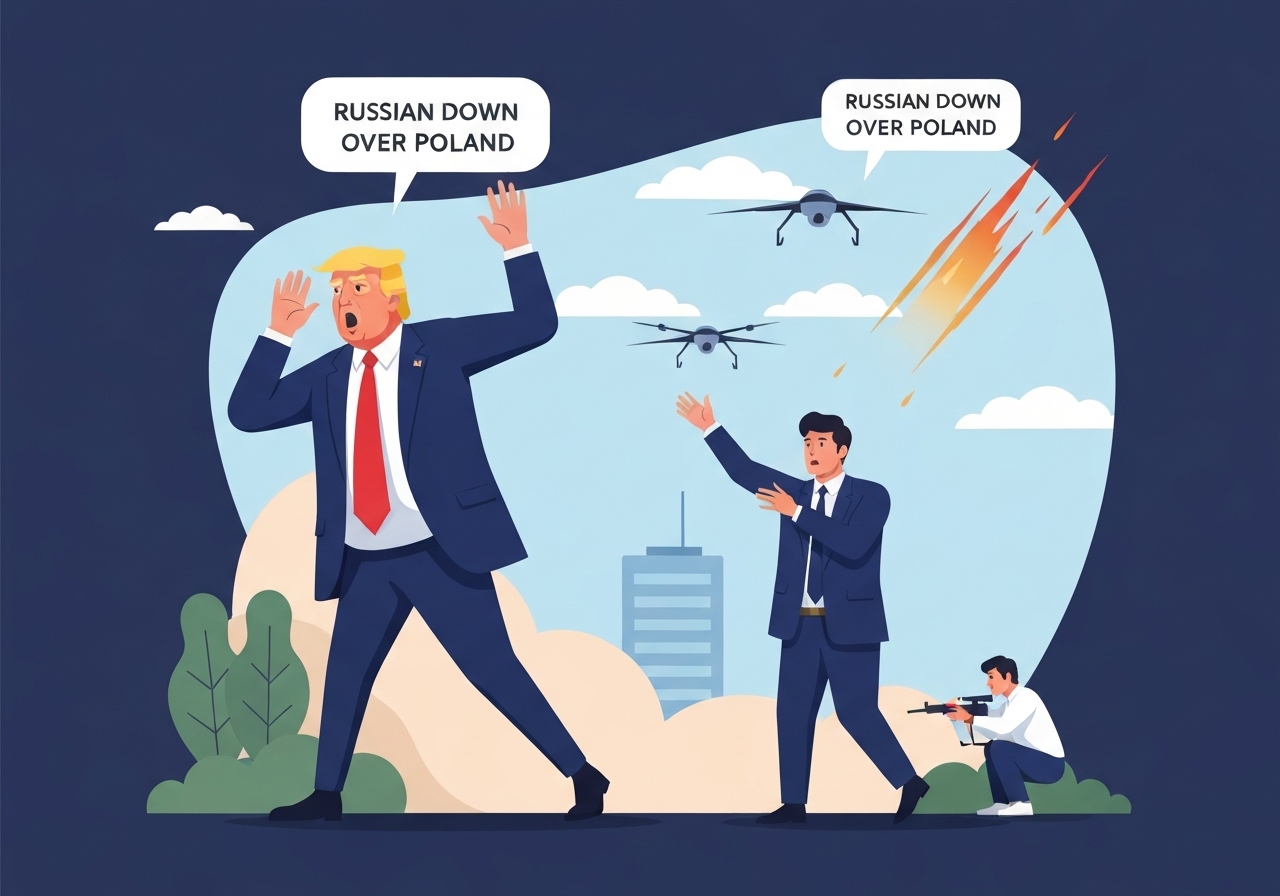
On September 10, 2025, President Donald Trump issued his first public reaction after at least 19 Russian drones violated Polish airspace and were shot down, an action NATO and Polish officials described as unprecedented. Trump posted a brief comment on his social platform saying, “What’s with Russia violating Poland’s airspace with drones? Here we go!” The incident prompted NATO to scramble aircraft and deploy two Polish F-16s and two Dutch F-35s to intercept and shoot down the unmanned vehicles. The episode has prompted swift diplomatic reactions in Warsaw and among NATO capitals as leaders assess the security and political implications.
Key Takeaways
- At least 19 drones entered Polish airspace overnight on September 10, 2025, according to the Polish prime minister.
- NATO dispatched four fighters—two Polish F-16s and two Dutch F-35s—to intercept and shoot down the drones.
- Supreme Headquarters Allied Powers Europe said this marked the first time NATO fighters engaged potential targets in allied airspace, per Col. Martin L. O’Donnell.
- President Trump posted a short message on his social platform criticizing the incursion and is expected to speak with Polish President Karol Nawrocki the same day.
- Polish officials, including Foreign Minister Radek Sikorski, publicly challenged U.S. diplomatic approaches to Russia following the incident.
- U.S. Ambassador to NATO Matthew Whitaker posted that the United States stands by NATO allies and will defend NATO territory.
Background
The incursion comes amid heightened tensions in Europe over Russian military operations in the region. NATO has increased surveillance and defensive posture across member states’ borders in recent months, and allied governments have repeatedly criticized Russian air and maritime maneuvers as destabilizing. Poland, a frontline NATO member, has been vocal about strengthening its air defenses and deepening cooperation with partners following repeated airspace incidents in the region.
Before this episode, NATO had recorded numerous airspace incursions and close approaches involving Russian aircraft, but officials said fighters had not previously engaged potential targets inside allied airspace. The historical precedent cited by NATO leadership elevates the diplomatic stakes and adds urgency to allied consultations. U.S.-Poland ties have been foregrounded recently by bilateral meetings; last week President Trump pledged support for Polish security during a White House meeting with Polish leadership.
Main Event
According to Polish statements released on September 10, at least 19 unmanned aerial vehicles crossed into Poland overnight. Warsaw reported that NATO scrambled assets in response and that two Polish F-16s, joined by two Dutch F-35s, engaged and shot the drones down. The sequence of detection, scramble and engagement unfolded over several hours as allied air controllers coordinated in real time.
The involvement of Dutch F-35s highlights NATO’s integrated air policing structure, where member states contribute aircraft to protect one another’s airspace. Col. Martin L. O’Donnell, a spokesperson for Supreme Headquarters Allied Powers Europe, characterized the response as historically significant because it was the first recorded instance of fighters engaging potential targets in allied airspace for the alliance.
President Trump posted a succinct message on his social platform reacting to the reported violation and said he was monitoring developments. A White House official told ABC News that Trump was expected to speak with Polish President Karol Nawrocki on Wednesday and that the administration was tracking the reports. U.S. diplomatic and military officials reiterated public support for NATO allies while investigators seek to establish the drones’ origin and intent.
Analysis & Implications
The engagement of NATO fighters in allied airspace establishes a new operational precedent and raises questions about rules of engagement, escalation management and deconfliction. If confirmed as Russian-launched, the incursion would represent a deliberate step that risks further militarizing NATO’s eastern flank. Allies now face a dual challenge: deter future airspace violations while avoiding actions that could trigger broader kinetic escalation.
Politically, the incident intensifies scrutiny of bilateral and multilateral approaches to Russia. Polish leaders have urged firmer action and tangible support, while some NATO members may prefer measured diplomatic responses to avoid immediate escalation. President Trump’s short, public reaction and his pledge to assist Poland in prior meetings will draw attention to how his administration translates rhetoric into coordinated NATO policy and operational support.
Economically and militarily, repeated airspace violations can accelerate allied decisions on force posture, air defense investments and deterrence spending. Member states may accelerate deliveries of air defense systems, increase joint exercises, or revise patrol rules. The long-term effect could be a sustained increase in NATO activity along eastern borders, with budgetary and political consequences for alliance cohesion.
Comparison & Data
| Year | Location | Reported Drones/Fighters | Notes |
|---|---|---|---|
| 2025 | Poland | 19 drones / 4 fighters engaged | Described by NATO as first engagement of potential targets in allied airspace |
| Prior years | Various NATO borders | Multiple incursions / no recorded fighter engagements | Airspace encounters monitored and intercepted without recorded engagements of potential targets |
The table summarizes public details provided by Polish and NATO officials: the 2025 incident involved at least 19 drones and four NATO fighters and has been identified by SHAPE spokespeople as a first for allied airspace. Analysts caution that publicly available counts may change as investigators complete radar, radio and wreckage analyses. The operational data underline why NATO leaders call the event unprecedented and are treating it as a priority for allied consultations.
Reactions & Quotes
“What’s with Russia violating Poland’s airspace with drones? Here we go!”
President Donald Trump, social platform post
Trump’s terse post framed the immediate U.S. political reaction and signaled executive attention; the White House said the president was monitoring developments and planned a call with Poland’s president.
“We stand by our NATO Allies in the face of these airspace violations and will defend every inch of NATO territory.”
Matthew Whitaker, U.S. Ambassador to NATO (social post)
Whitaker’s short public message echoed allied commitments to mutual defense and was circulated by U.S. diplomatic channels to reassure partners and domestic audiences of continued support.
“Putin laughs at President Trump’s peace efforts. Since Alaska, he has only intensified the war. I hope that [Trump] backs his words with action.”
Radek Sikorski, Polish Foreign Minister
Polish officials used strong language to characterize the incident as proof that Russian policy remains aggressive; their comments also reflect domestic pressure on Warsaw to secure stronger guarantees from allies.
Unconfirmed
- Whether the drones were armed or conducting reconnaissance remains unconfirmed pending recovery and forensic analysis.
- The exact launch location and the degree of direct Russian government control over the operation are not yet verified.
- Whether the incursions were intended as deliberate provocation, navigation errors, or proxy operations has not been firmly established.
Bottom Line
The September 10, 2025 drone incursion into Polish airspace and the subsequent shooting down of at least 19 drones represent a significant moment for NATO and European security. NATO’s deployment of fighters and the alliance’s description of this as the first engagement of potential targets in allied airspace raise the operational and diplomatic stakes across the alliance.
Immediate priorities for policymakers and analysts will include establishing the drones’ origin and intent, coordinating an allied political response, and managing the risk of further escalation. Observers should watch upcoming diplomatic exchanges—particularly the expected call between President Trump and Polish President Karol Nawrocki—and NATO consultative meetings for signals about changes in posture, support commitments, and deterrence measures.
Sources
- ABC News — U.S. news media reporting on officials’ statements and immediate developments.