
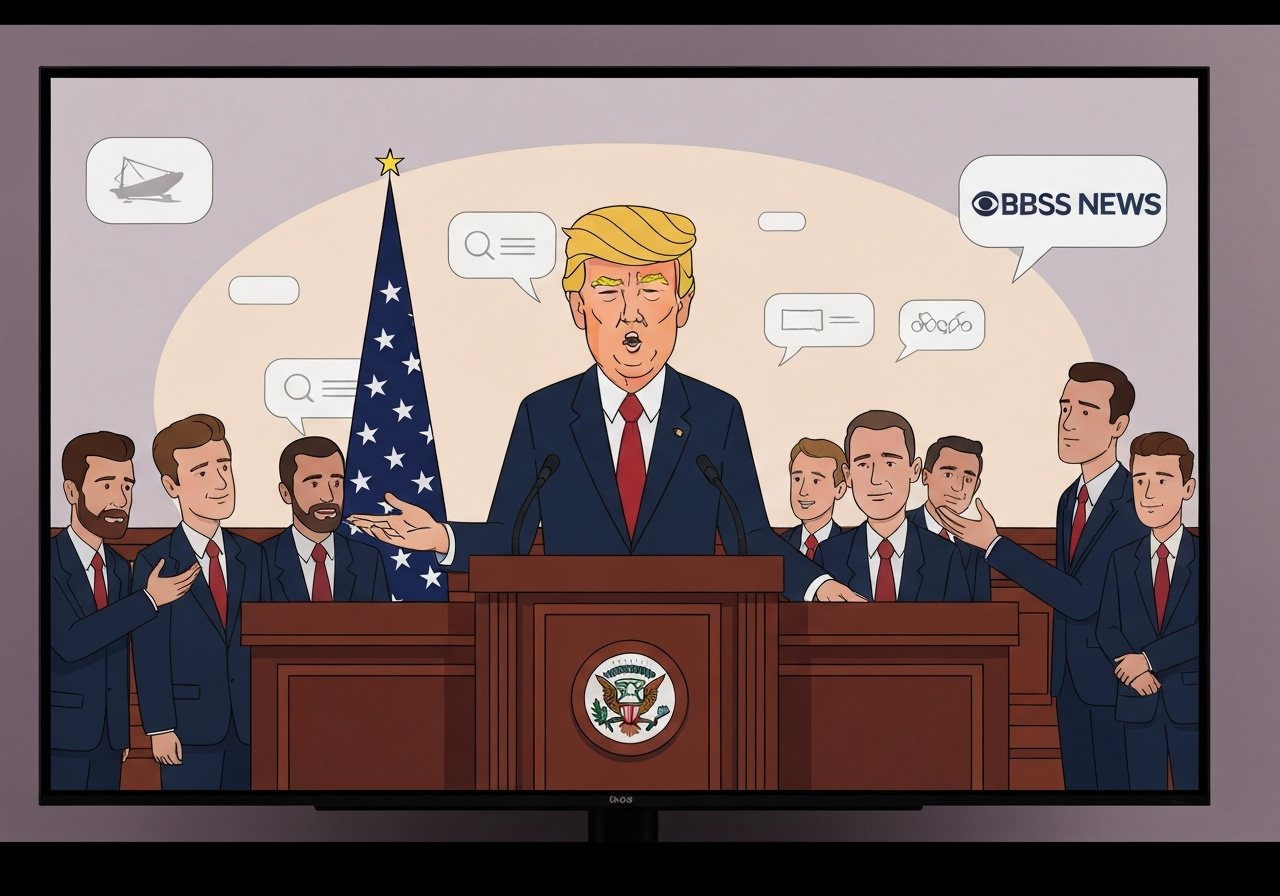
Lead: On Feb. 24, 2026 at the U.S. Capitol, President Donald Trump delivered a State of the Union address that ran about 1 hour 48 minutes and mixed policy announcements, military and civilian honors, and sharp partisan clashes. The speech included high-profile moments — two Medal of Honor presentations, the reunion of a Venezuelan political prisoner with his niece, and new proposals on voting, immigration, tariffs and AI energy use. Democrats responded from Colonial Williamsburg, where Virginia Gov. Abigail Spanberger centered her rebuttal on affordability and accused the president of failing to tell the full truth. The address unfolded under the shadow of a Department of Homeland Security funding lapse and fresh tensions over Iran and trade.
Key takeaways
- Speech length: The address lasted approximately 1 hour and 48 minutes, the longest presidential State of the Union or joint-session address since at least 1964, per the American Presidency Project.
- Medals and reunions: Mr. Trump awarded Chief Warrant Officer Eric Slover the Medal of Honor for wounds sustained in the Venezuela operation and presented the Medal of Honor to 100-year-old Navy veteran E. Royce Williams; he also surprised Alejandra Gonzales by bringing her uncle Enrique Márquez, a released Venezuelan political prisoner, into the chamber.
- Use of force and strikes: The administration credited a months-long campaign against suspected drug-smuggling boats with at least 44 strikes since Sept. 2 that officials say killed more than 150 people; legality and due process for those strikes have been questioned.
- Iran and national security: Mr. Trump reiterated that all options remain on the table regarding Iran, asserting that the U.S. had ‘obliterated’ Iran’s nuclear weapons program and referencing operations in June that targeted Iranian sites.
- Domestic policy agenda: The president pushed for the SAVE America Act (proof-of-citizenship and photo-ID voting rules), proposed additional personal tax cuts, announced a ‘rate-payer protection pledge’ with tech firms to limit local electricity price impacts from AI data centers, and asked Congress to ban institutional purchases of single-family homes.
- Congressional friction: The address occurred while DHS funding was cut off (shutdown since Feb. 14), prompting the president to demand full restoration; several Democrats loudly protested parts of the speech over immigration and law-enforcement actions.
- Contested claims: Mr. Trump repeated a figure alleging roughly $19 billion in losses tied to Minnesota Somali communities, and touted tariffs as central to an economic turnaround despite a Feb. 20 Supreme Court ruling limiting his tariff authority.
Background
The State of the Union came amid heightened political contention: the Department of Homeland Security had been operating without agreed funding since Feb. 14 as Democrats sought immigration-reform concessions, raising questions about pay and agency operations. Lawmakers from both parties had been briefed in advance about Iran, and some members were preparing war-powers resolutions in the event of unilateral military action by the administration. The address also followed a Feb. 20 Supreme Court decision that struck down most of the president’s sweeping global tariffs, prompting the White House to signal alternative measures.
Mr. Trump returned to a familiar strategy: combining policy announcements with ceremonial honors and emotional narratives to bolster his political themes of security, economic revival and American exceptionalism. Republicans controlled the chamber and gave repeated standing ovations, while many Democrats signaled their dissent through silence, signs and intermittent shouting. The day’s optics included four Supreme Court justices in attendance, a full presidential family in the gallery, and the U.S. men’s Olympic hockey team as guests.
Main event
The president entered the House chamber at about 9:06 p.m. ET and began speaking shortly after 9:11 p.m. He opened by framing the moment as part of the nation’s 250th anniversary and declared that the ‘golden age of America is now upon us,’ an optimistic refrain repeated through the night. Early in the address Mr. Trump touted an array of domestic accomplishments — lower inflation, rising incomes, and what he described as the most secure border in history — and called for more tax cuts and the passage of the SAVE America Act.
Mr. Trump paused for high-profile recognitions. He awarded Chief Warrant Officer Eric Slover the Medal of Honor for injuries sustained in the Venezuela operation and presented the Medal of Honor to 100-year-old E. Royce Williams for Korean War valor, the first such presentation during a State of the Union in modern memory. The president also reunited Alejandra Gonzales with her uncle Enrique Márquez, whom officials said had been detained by the Maduro regime and was brought to the Capitol to celebrate his release.
Tensions flared repeatedly as Mr. Trump discussed immigration and alleged fraud. Several Democrats vocally objected — including Reps. Ilhan Omar and Rashida Tlaib — and Rep. Norma Torres displayed signs referencing two people killed during federal removal operations. House Speaker Mike Johnson later said he nearly used his gavel to eject protesting members. The president at times spoke directly over interjections and sharply criticized Democrats for blocking DHS funding.
On foreign policy, Mr. Trump kept options open on Iran and reiterated claims that the U.S. had degraded Iran’s nuclear capabilities, referencing strikes in June he said had ‘obliterated’ their program. He also described a sustained campaign against alleged drug boats in the Caribbean and eastern Pacific and touted measures to pressure Iran and other adversaries while urging congressional support for his security initiatives.
Analysis & implications
Politically, the speech was designed to consolidate the president’s base by mixing policy wins with symbolic gestures. Awarding high-profile medals and showcasing reunions served to humanize his national-security narrative and create memorable moments for television and social media. However, the speech also sharpened divisions: vocal protests by Democrats and ongoing House GOP fissures over tariffs and other issues underscore fragility within Washington’s governing coalitions.
Substantively, several proposals face steep legal and legislative hurdles. The SAVE America Act would require proof of citizenship and photo ID for federal voter registration and faces strong Democratic opposition and likely a Senate filibuster without 60 votes. The administration’s attempt to replace a portion of its tariff authority with a new import tax and executive-level workarounds may prompt additional legal challenges and congressional pushback following the Feb. 20 Supreme Court ruling.
On foreign policy, the president’s public posture toward Iran — asserting both a preference for diplomacy and readiness to use force — raises immediate congressional and international questions. Members of Congress from both parties signaled intent to press for formal votes or war-powers resolutions if military action is taken without explicit authorization. That push could constrain executive options or force a politically fraught showdown in the months ahead.
Comparison & data
| Year | Address length |
|---|---|
| 2017 | 1:00 |
| 2018 | 1:21 |
| 2019 | 1:22 |
| 2020 | 1:18 |
| 2025 | 1:40 |
| 2026 | 1:48 |
The length of the 2026 address continued a recent pattern of extended presidential remarks; the American Presidency Project records Mr. Trump’s 2025 joint-session address at 1 hour 40 minutes and lists 2026 as his longest on record since at least 1964. Separately, the administration’s tally of strikes on suspected drug-smuggling vessels (44 strikes, more than 150 fatalities) has become a focal point for legal and human-rights scrutiny.
Reactions & quotes
Democratic response: Virginia Gov. Abigail Spanberger delivered the official rebuttal from Colonial Williamsburg and focused on cost-of-living issues while challenging the president’s factual claims.
‘We did not hear the truth from our president,’ Gov. Abigail Spanberger said in laying out the Democratic alternative on affordability and accountability.
Gov. Abigail Spanberger (Democratic response)
Presidential remarks and framing: The president repeatedly framed his first year in office as a ‘turnaround for the ages’ and emphasized national pride and security.
‘The golden age of America is now upon us,’ Mr. Trump declared as he tied achievements and headline announcements to the nation’s 250th anniversary.
President Donald J. Trump
Lawmakers and experts: Members from both parties warned that key policy items will face legal, procedural and political obstacles; Senate leaders and intelligence committee officials also urged the administration to make its case to Congress before any unilateral military steps.
Unconfirmed
- Claims that U.S. actions in June ‘totally obliterated’ Iran’s nuclear program have not been independently verified and remain disputed.
- The president’s assertion that ‘members of the Somali community have pillaged an estimated $19 billion’ reflects a disputed figure cited during the speech and lacks clear public sourcing.
- Administration statements that ‘hundreds’ of Venezuelan political prisoners have been released were presented as fact in the address but have not been fully documented in public records accessible at the time of this report.
- Proposals to replace tariff authority with new unilateral import taxes may face legal challenge; whether such measures can be implemented without congressional action is unconfirmed.
Bottom line
Mr. Trump’s 2026 State of the Union was equal parts policy platform, political theater and ceremonial recognition, intended to reinforce core campaign themes of security, economic revival and nationalist pride. The speech presented concrete proposals that will trigger immediate legislative and legal debate — from voting rules and tariffs to DHS funding and limits on congressional stock trading — but many of those proposals face clear obstacles in a divided Congress and in the courts.
For citizens and lawmakers, the near-term implications are straightforward: continued battles over DHS funding, likely floor fights or filibuster threats in the Senate over voting and tax measures, heightened congressional oversight and possible war-powers confrontations if the administration pursues strikes on Iran. The next weeks will show whether the address reshapes legislative priorities or mainly serves as a rallying moment for the president’s supporters.