
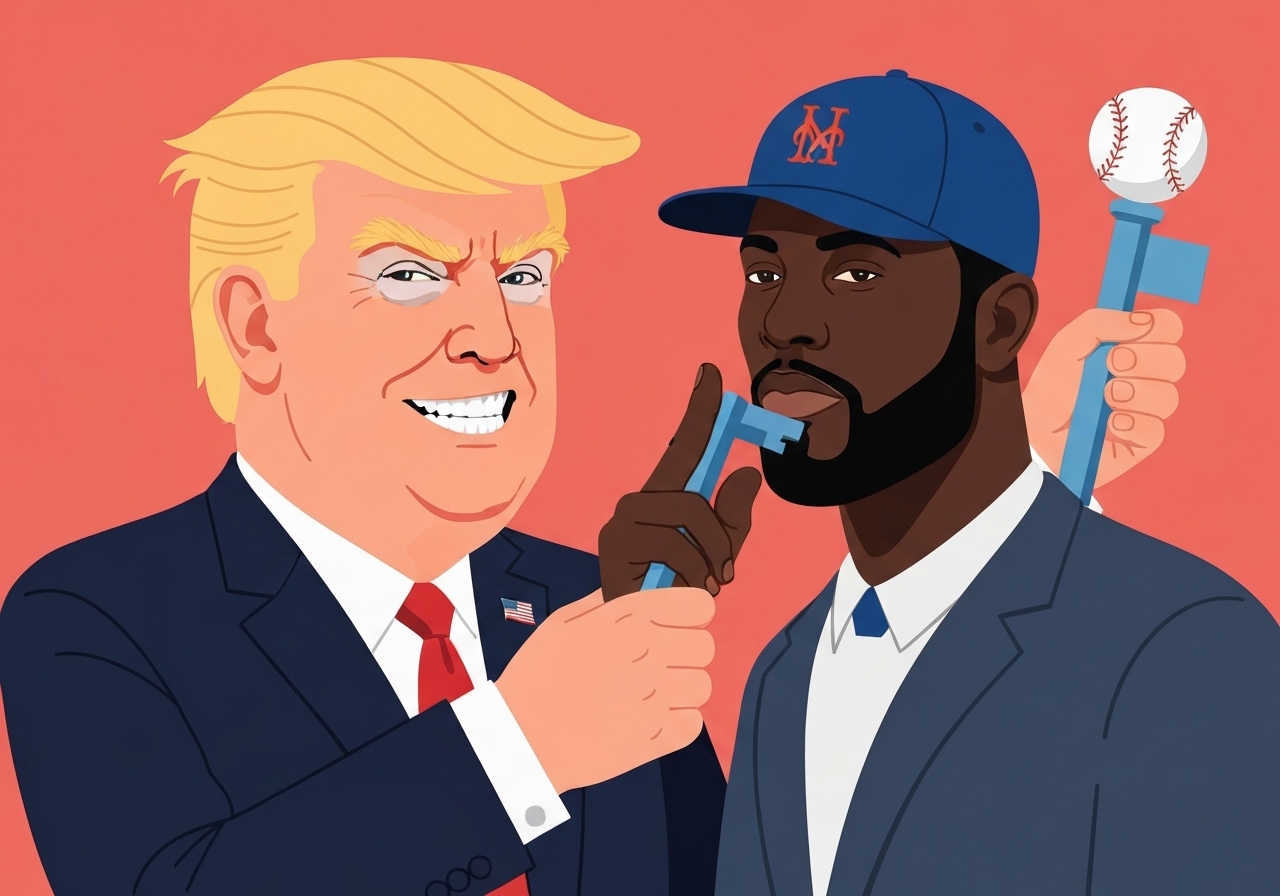
President Donald Trump granted a full pardon on Nov. 7, 2025, to former Major League Baseball outfielder Darryl Strawberry, who pleaded guilty to tax evasion in 1995. The White House confirmed that Strawberry, now 63, served a sentence and repaid back taxes after his conviction. Strawberry is an eight‑time All‑Star whose career included World Series runs with the New York Mets and New York Yankees. The administration highlighted his subsequent recovery, long‑term sobriety and ministry work as context for clemency.
Key Takeaways
- On Nov. 7, 2025, President Trump issued a full pardon to Darryl Strawberry for a 1995 tax‑evasion conviction.
- Strawberry, age 63, previously pleaded guilty to failing to report tens of thousands of dollars in income and repaid back taxes after serving time.
- He was an eight‑time MLB All‑Star and played for the New York Mets and New York Yankees, contributing to World Series championship teams.
- Strawberry’s MLB career effectively ended after a 2000 suspension following a failed drug test; he has been publicly sober for more than a decade.
- The White House cited his faith, ministry activity and operation of a recovery center as factors in granting clemency.
- This pardon follows a recent string of high‑profile clemency actions, including the commutation/clemency measures for George Santos and Changpeng Zhao in 2025.
- Legal scholars note presidential pardons erase federal criminal disabilities but do not expunge underlying convictions in every context.
Background
Darryl Strawberry rose to prominence in the 1980s as one of MLB’s most powerful hitters, earning eight All‑Star selections and playing key roles on Mets and Yankees teams that reached the World Series. In 1995, Strawberry pleaded guilty to one count of tax evasion for failing to report significant income, a case that led to incarceration and obligations to repay taxes. His professional trajectory was later disrupted by off‑field struggles; in 2000 he failed a drug test and received a suspension that effectively ended his major‑league career.
Following his playing days, Strawberry has publicly described a turn toward Christianity and long‑term recovery. He founded and remains associated with a recovery center that provides services to people dealing with substance abuse. Those post‑career developments were cited by the White House in announcing the pardon, reflecting a broader executive‑branch practice of considering rehabilitation when granting clemency.
Main Event
The White House issued a statement confirming the pardon on Nov. 7, 2025, noting Strawberry had ‘‘served time and paid back taxes’’ after the 1995 conviction. The announcement named rehabilitation and community service among the mitigating factors. The administration’s statement did not provide a full transcript of the legal review that led to the pardon, but it placed Strawberry within a series of recent high‑profile clemency actions.
News organizations reported the timing and details of the pardon shortly after the White House statement. Coverage recalled Strawberry’s playing career, his 1995 guilty plea for tax evasion, and his 2000 suspension following a failed drug test. The reports also noted Strawberry’s subsequent advocacy and ministry work as part of the public record that the administration cited.
Observers inside baseball and legal commentators reacted quickly. Some former teammates and fans marked the news as a rehabilitation success story, while others questioned the political implications of a president issuing clemency to well‑known public figures. The administration emphasized that the pardon addresses federal legal consequences and restores certain civil rights affected by the conviction.
Analysis & Implications
Presidential pardons remove federal penalties and can restore rights such as the ability to hold certain licenses or, in some jurisdictions, to vote if state law permits. They do not, however, erase the historical record of a conviction for many practical purposes. For Strawberry, the pardon relieves lingering federal collateral consequences but does not automatically alter state law outcomes or non‑federal background checks.
Politically, the pardon joins a sequence of clemency actions by President Trump in 2025 that included the commutation of George Santos’s sentence and a pardon for Changpeng Zhao. That pattern has drawn debate over criteria and consistency: supporters frame such acts as exercising constitutional clemency power to correct past harsh outcomes or recognize rehabilitation, while critics argue the decisions appear selective and politically resonant.
For professional sport and public perception, the move spotlighted questions about how societies balance past misconduct with later rehabilitation. Strawberry’s visible recovery and ministry work were foregrounded in the White House rationale; whether that standard will be applied uniformly in future clemency cases remains a matter for legal scholars and policymakers to watch.
Comparison & Data
| Subject | Action | Date |
|---|---|---|
| Darryl Strawberry | Full presidential pardon (federal tax‑evasion conviction) | Nov. 7, 2025 |
| George Santos | Sentence commuted (wire fraud & identity theft) | Oct. 2025 |
| Changpeng Zhao | Presidential pardon (money‑laundering compliance plea) | Oct/Nov 2025 |
The table places Strawberry’s pardon alongside two recent 2025 clemency actions by the same administration, illustrating frequency and profile of recipients. The comparison underscores that multiple high‑profile figures received relief within weeks, prompting discussion about selection criteria and review processes.
Reactions & Quotes
“He served time and paid back taxes,”
White House official (statement to media)
“Following his career, Mr. Strawberry found faith in Christianity and has been sober for over a decade — he has become active in ministry and started a recovery center which still operates today,”
White House official (statement to media)
Both quotations were included in the White House announcement relayed to news organizations and were cited by multiple outlets reporting the pardon. Media reaction varied: some editorials framed the pardon as recognition of rehabilitation, while opinion pieces raised questions about consistency and political optics. Legal analysts noted the pardon affects federal legal status but not necessarily all practical consequences tied to a historical conviction.
Unconfirmed
- Any private communications between Strawberry or his representatives and the White House regarding the petition for clemency have not been publicly documented.
- Full legal memoranda or internal review materials the administration used to reach its decision have not been released for independent verification.
- Whether the pardon affects state‑level employment or licensing checks in all jurisdictions is case‑by‑case and has not been universally clarified.
Bottom Line
On Nov. 7, 2025, President Trump issued a full pardon to Darryl Strawberry for a 1995 federal tax‑evasion conviction, citing the former player’s completion of legal obligations and post‑career rehabilitation. The action restores certain federal rights and removes federal penalties linked to the conviction, but it does not erase the historical record nor automatically change every collateral consequence tied to the conviction.
The pardon also fits a pattern of high‑profile clemency decisions by this administration in 2025, prompting debate about selection criteria and the public purposes of executive clemency. Readers should expect further reporting as additional documents or statements become available that clarify the legal review and practical effects of this pardon.
Sources
- CNBC — U.S. media report summarizing White House statement and context