
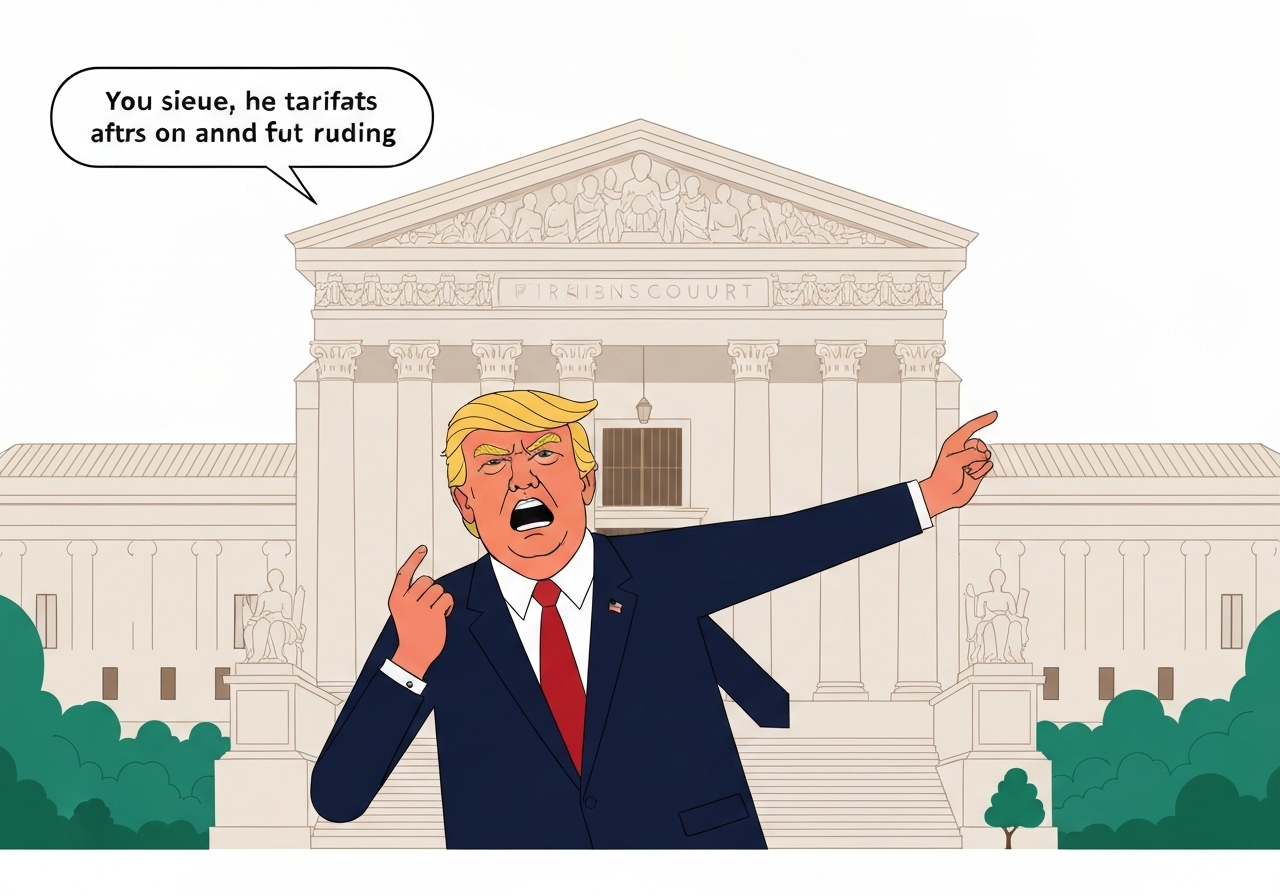
— President Donald Trump has asked the US Supreme Court to overturn a federal appeals court ruling that found many of his broad import tariffs unlawful. The administration filed a petition late Wednesday seeking a fast ruling on the president’s authority after a 7–4 Federal Circuit decision, while the lower court’s order remains stayed pending appeal.
Key Takeaways
- The administration asked the Supreme Court to review a Federal Circuit ruling that limited presidential tariff powers.
- The appeals court ruled 7–4 that many tariffs imposed under the International Emergency Economic Powers Act (IEEPA) exceed presidential authority.
- Trump’s measures include a baseline 10% tariff and additional ‘reciprocal’ levies aimed at over 90 countries.
- Separate duties on steel and aluminium are not affected because they were issued under different authority.
- The rulings could require refunds worth billions and have paused parts of the tariff program while appeals proceed.
- Small-business challengers say the tariffs have caused significant harm and seek a prompt resolution.
Verified Facts
In April, President Trump declared an economic emergency and signed executive orders establishing a baseline 10% tariff and so-called reciprocal tariffs intended to address trade imbalances. The administration justified the steps under IEEPA, a statute that permits presidential action against ‘unusual and extraordinary’ threats.
In May, the US Court of International Trade ruled the tariffs unlawful; that decision was stayed while it and related appeals moved forward. Last week the US Court of Appeals for the Federal Circuit issued a 7–4 decision finding that setting such broad tariff levels is a core Congressional power and not within the president’s mandate under IEEPA. The appeals court, however, delayed implementation of its ruling to allow the government to seek review.
The Department of Justice, through Solicitor General John Sauer, argued in Wednesday’s Supreme Court filing that the lower-court ruling has disrupted sensitive diplomatic trade talks and created legal uncertainty for the administration’s economic and foreign policy efforts. Lawyers for small-business plaintiffs, including attorneys from the Liberty Justice Center, said their clients have faced concrete harm from the levies.
The appellate decision also struck down specific levies on Canada, Mexico and China that the administration had defended as necessary to curb harmful imports, including illegal drugs. The Federal Circuit’s ruling does not address duties enacted under distinct statutory authorities, such as those on steel and aluminium.
Context & Impact
If the Supreme Court declines review, the Federal Circuit’s decision could take full effect on , potentially obliging the US to refund billions collected under the struck-down tariffs. That outcome would have budgetary, diplomatic and commercial implications.
Beyond refunds, the decision raises questions about the executive branch’s ability to use national emergency statutes to reshape trade policy unilaterally. Allies and trading partners may press for clarity as tariff-related negotiations resume under legal uncertainty.
For US businesses, especially smaller importers, the removal or abrupt change of tariffs could affect pricing, supply chains and contractual relationships. Trade negotiators may also lose or gain leverage depending on how quickly the legal issues are resolved.
- Potential near-term effects: refund calculations, customs processing changes, and shifts in import flows.
- Longer-term effects: precedents on executive power and future use of emergency trade authorities.
“The stakes in this case could not be higher,” the Solicitor General wrote, saying the lower-court ruling has caused legal uncertainty and disrupted negotiations.
John Sauer, Solicitor General
Unconfirmed
- Exact total of potential refunds described as ‘billions’ has not been itemised in a single public accounting.
- Precise diplomatic effects on ongoing trade talks are claimed by the government but not independently quantified.
- Whether the tariffs asserted to reduce drug inflows will produce measurable results if reinstated remains unproven.
Bottom Line
The Supreme Court’s decision whether to take the case will determine if the Federal Circuit ruling stands or if the president’s use of IEEPA to impose broad tariffs will be restored. A denial would allow the appeals ruling to go into effect on 14 October; acceptance could set up a fast-track, high-stakes constitutional review with wide economic consequences.