
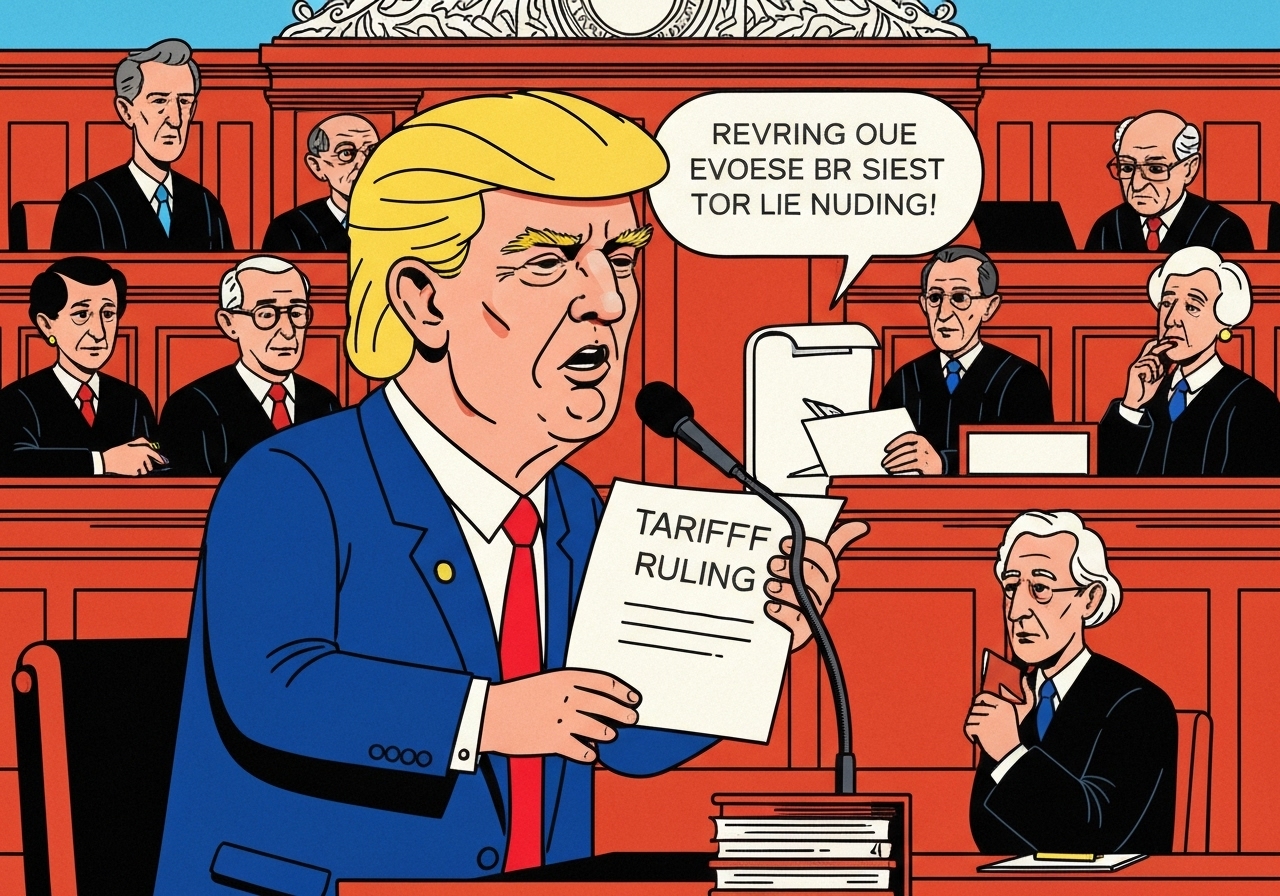
WASHINGTON — On Sept. 4, 2025, the Trump administration asked the U.S. Supreme Court to move quickly to overturn a U.S. Court of Appeals for the Federal Circuit decision that concluded most of President Donald Trump’s recent import tariffs were an unlawful exercise of emergency powers under the 1977 International Emergency Economic Powers Act (IEEPA).
Key Takeaways
- The administration filed an emergency petition seeking Supreme Court review and asked for arguments in early November.
- The Federal Circuit issued a 7–4 judgment finding most of the tariffs exceeded presidential authority under IEEPA but left the levies in place for now.
- The disputed duties include two sets of tariffs announced in February and April covering imports from Canada, China and Mexico.
- Some levies, including those on foreign steel, aluminum and autos, were not affected by the appeals court ruling.
- Tariff revenue reached roughly $159 billion by late August, and the government warned that striking the duties could require refunds to some importers.
- Small-business groups say the tariffs and legal uncertainty are harming companies and supply chains.
- The case raises constitutional questions about Congress’s power to tax and how much authority it has delegated to the president.
Verified Facts
The Justice Department, through Solicitor General D. John Sauer, filed an electronic petition Wednesday asking the Supreme Court to reverse the Federal Circuit’s decision and to hear arguments in early November. The administration argued that the appeals court ruling undermines ongoing foreign negotiations and creates urgent legal uncertainty for trade partners.
The Federal Circuit’s 7–4 opinion held that most of the tariffs issued under a presidential declaration of emergency were not authorized by IEEPA. The appeals court, however, did not vacate the tariffs immediately and left many levies in place while the legal process continues.
The litigation centers on two rounds of tariffs the administration justified by declaring a national emergency: a set announced in April and another from February affecting imports from Canada, China and Mexico. The appeals court ruling did not touch all tariffs; levies on steel, aluminum and autos were excluded from the judgment.
By late August, reported tariff collections totaled about $159 billion for the fiscal period cited by the administration. The government has warned that if courts ultimately strike down the duties, the Treasury could face large refund obligations to importers who paid the taxes.
Businesses challenging the tariffs have scored courtroom victories twice — first in a federal trade-focused court and again at the appellate level. Multiple lawsuits raise related claims about the administration’s process and the scope of emergency authority used to impose steep import duties.
Context & Impact
The dispute tests the boundaries of IEEPA, a Cold War-era statute enacted in 1977 to give presidents wartime and emergency economic tools. Over time, Congress has delegated a range of trade and national-security authorities to the executive branch, creating room for legal conflict over scope and limits.
Economically, the tariffs and their uneven legal status have unsettled markets, complicated negotiations with trading partners and raised concerns about higher consumer prices and slower growth. The administration says the levies are leverage in negotiating new trade frameworks with the European Union, Japan and others.
Small businesses and trade groups say the measures and resulting uncertainty jeopardize supply chains and profits. Some legal advocates stress that a swift Supreme Court ruling could bring clarity, while opponents warn a court endorsement might permanently expand executive tariff powers.
- Potential near-term effects: slowed negotiations, continued market volatility, possible refund liabilities for the Treasury.
- Longer-term stakes: precedent on executive power under IEEPA and the balance between congressional and presidential authority on tariffs.
“That decision casts a pall of uncertainty upon ongoing foreign negotiations that the President has been pursuing through tariffs over the past five months,”
D. John Sauer, U.S. Solicitor General
“These unlawful tariffs are inflicting serious harm on small businesses and jeopardizing their survival,”
Jeffrey Schwab, Liberty Justice Center
Unconfirmed
- Whether the Supreme Court will agree to hear the case or set the precise calendar beyond the administration’s request for early November.
- Which, if any, tariff collections would ultimately have to be refunded if courts strike the duties.
- The exact effects on specific international negotiations and on particular U.S. industries pending a final ruling.
Bottom Line
The administration’s petition asks the Supreme Court to resolve a high-stakes legal clash over emergency powers and trade policy. A prompt ruling could either reaffirm expanded executive discretion to impose tariffs or reassert limits on presidential authority under statutes like IEEPA, with major consequences for U.S. trade policy, the Treasury and businesses across sectors.