
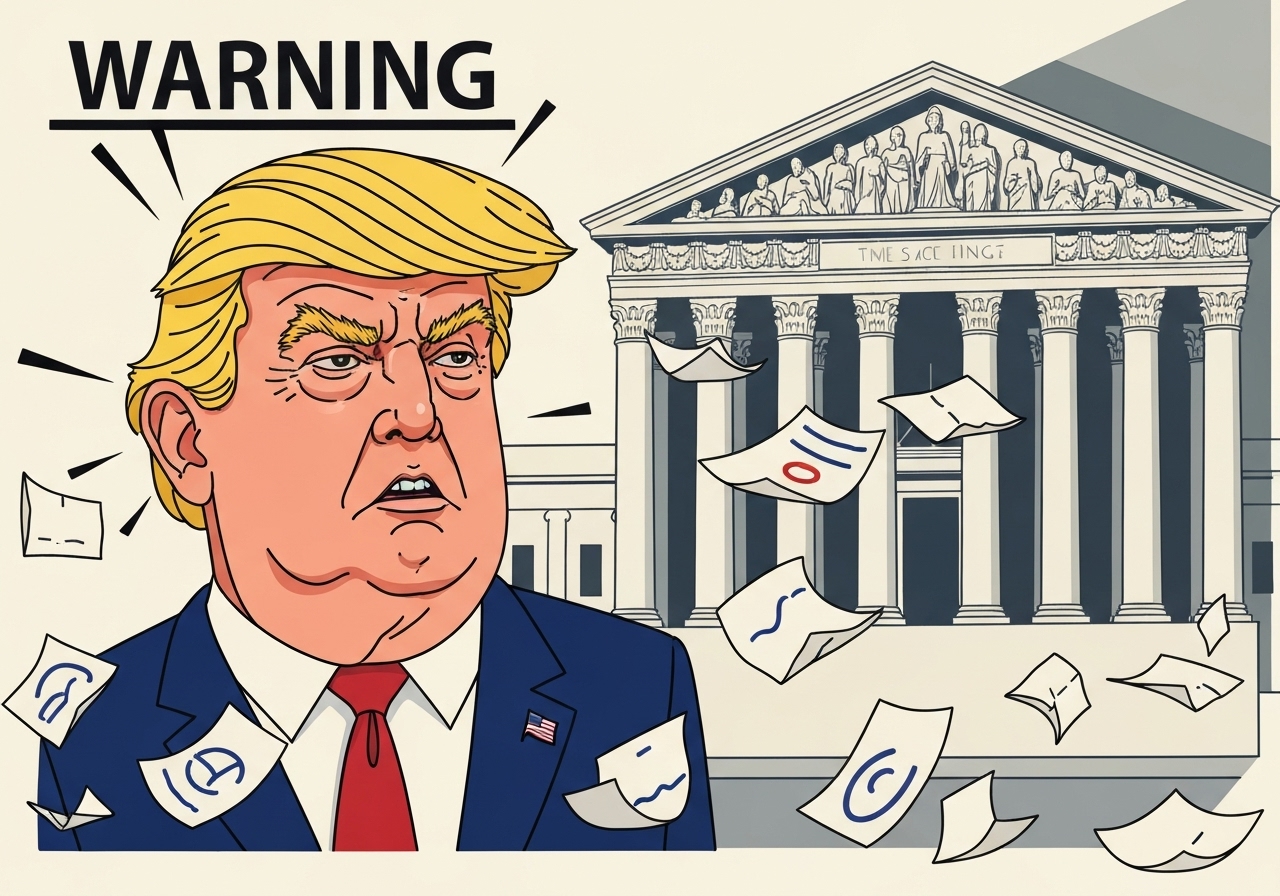
Trump warns trade deals would unravel if Supreme Court rejects his tariffs
— President Donald Trump told reporters in the Oval Office that if the U.S. Supreme Court invalidates his administration’s import tariffs, existing trade agreements with partners such as South Korea and the European Union could be dismantled, a move he said might force the U.S. to “unwind” deals and risk economic setbacks.
Key Takeaways
- On Sept. 4, 2025, President Trump warned the Supreme Court’s decision on tariffs could nullify current trade agreements.
- He said losing the case would leave the U.S. vulnerable economically and could necessitate unwinding deals with trade partners.
- The administration points to past trade losses since NAFTA to justify tariffs; figures cited include an earlier 90,000-factory claim and a revised Census-based net loss of 70,500 factories (1997–2022).
- Critics and economists warn that reversing agreements would hurt U.S. credibility and complicate future negotiations.
- Legal, political and diplomatic consequences would follow a court ruling against the tariff authority, but the exact pathway to “unwinding” deals is unclear.
- Observers say Congress, trading partners and courts could all play roles in next steps if the tariffs are struck down.
Verified Facts
President Trump publicly tied his tariff program to broader trade leverage during a White House briefing on Sept. 4, 2025, asserting that if the high court does not uphold his import taxes, the administration might cancel or reverse existing negotiated agreements.
The administration has referenced manufacturing declines since the 1990s to justify reshoring and protectionist measures. A figure often cited — a loss of 90,000 factories since NAFTA — aligns with numbers used in past reports; however, later analyses using revised Census data calculated a net decline of about 70,500 manufacturing sites between 1997 and 2022, with roughly one quarter of those sites having four or fewer employees, according to reporting that summarized the updated data.
NAFTA, which entered into force in 1994, was later replaced by the United States-Mexico-Canada Agreement (USMCA) in 2020. The administration’s comments characterise existing agreements as vulnerable if the legal basis for the tariffs is removed, but formal treaty or agreement termination typically involves distinct legal and diplomatic processes.
Legal challenges to the administration’s tariff authority are pending in multiple courts; a Supreme Court decision could set precedent on the executive branch’s power to impose wide-reaching import taxes without new congressional authorization. The outcome could affect both domestic industry protection measures and negotiations with trading partners.
Context & Impact
Trade agreements are built on negotiated obligations and enforcement mechanisms. If the U.S. were to attempt to “unwind” deals, partners could view the move as a repudiation of U.S. commitments, reducing trust and making future comprehensive agreements harder to secure.
Economic effects would vary by sector: manufacturers protected by tariffs might face renewed import competition if tariffs are invalidated, while exporters could face retaliatory measures or reduced market access in response to any U.S. policy reversals.
- Supply chains: Firms could need to reconfigure sourcing and production plans if tariff regimes change suddenly.
- Investment: Policy uncertainty tends to depress cross-border investment decisions.
- Diplomacy: Partners may demand compensation, renegotiation, or pursue dispute settlement.
Official Statements
“I guess we’d have to unwind them,” the president said when asked about trade deals if the tariffs are struck down.
President Donald Trump, Oval Office briefing, Sept. 4, 2025
Unconfirmed
- No formal plan has been published describing the procedural steps the administration would take to “unwind” specific trade agreements.
- The administration’s full economic assessment of immediate impacts if tariffs are invalidated has not been released publicly.
- The extent to which trading partners would accept renegotiation versus pursuing dispute settlement or retaliation is uncertain.
Bottom Line
The dispute over tariffs puts both trade policy and legal doctrine into the spotlight. A Supreme Court ruling against the administration’s tariff authority would constrain one of the executive’s key trade tools and raise hard choices about how to pursue industrial policy and negotiate future deals. Policymakers, businesses and partners should prepare for heightened uncertainty until the court issues a ruling.