
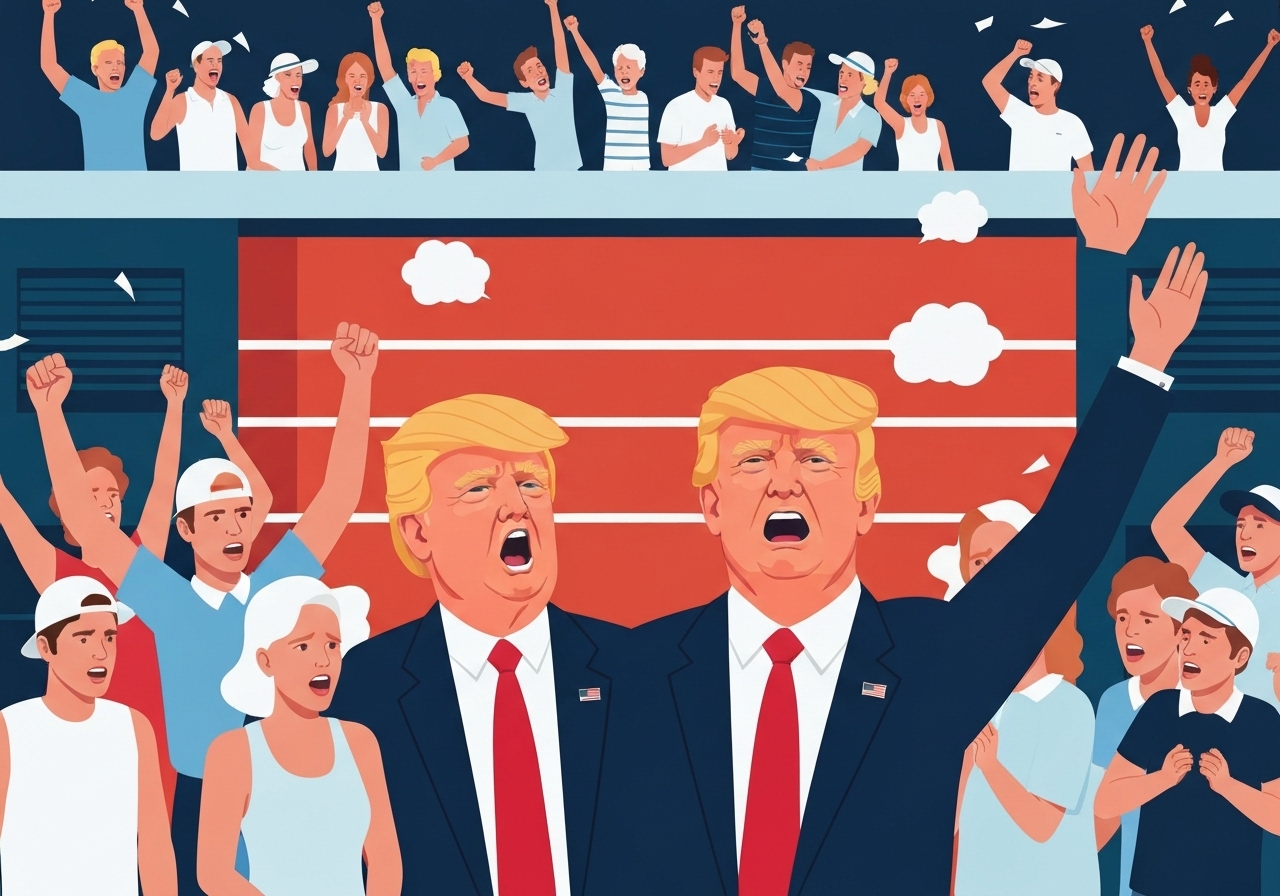
— President Donald Trump was greeted with a mix of boos and cheers during the national anthem at the US Open men’s final at Flushing Meadows, as stadium screens showed him saluting while a West Point ensemble played The Star-Spangled Banner.
Key takeaways
- Trump attended the US Open men’s final on 7 Sept 2025 and was shown on stadium monitors during the anthem.
- Audience reaction was mixed: an initial burst of cheers was quickly overtaken by boos when the camera remained on him.
- The U.S. Tennis Association asked broadcasters not to show crowd reactions to the president; ESPN nonetheless briefly displayed his image.
- Heightened security for the president delayed some attendees; the Secret Service acknowledged the protection effort may have slowed entry.
- Carlos Alcaraz led Jannik Sinner 6-2 about 45 minutes into the match while many fans were still arriving.
- Protesters gathered outside, including a small group from RefuseFascism.org and an organizer identified as Emma Kaplan from Brooklyn.
- Other notable attendees, such as Bruce Springsteen, drew enthusiastic cheers when shown on the big screen.
Verified facts
The president arrived at Arthur Ashe Stadium more than an hour before the scheduled start and sat in a suite alongside family members and several cabinet officials. At one point he raised a fist for cameras while making his way into the venue.
When the West Point band performed the anthem, stadium monitors cut to Trump saluting. That shot prompted an audible split in the crowd: cheers rose and were then drowned out by boos as the image remained on the screen. After a changeover, the camera returned to his image and boos continued until the feed moved on.
The U.S. Tennis Association emailed broadcast partners asking that reactions to the president not be shown, a request that organizers described in internal communications and that broadcasters received before the match. Despite that request, ESPN in the United States briefly showed the president on its live coverage.
Security measures around the presidential visit affected fan entry. The Secret Service said protecting the president “required a comprehensive effort” that “may have contributed to delays for attendees.” About 45 minutes into play many seats were still filling; at that point Carlos Alcaraz led Jannik Sinner 6-2.
Context & impact
This marked Trump’s first appearance at the US Open since 2015, when he was also booed while attending matches. His public profile in New York shifted after he launched his presidential campaign in 2015; appearances that once generated celebrity attention have more recently drawn political reaction.
Organizers face a balance between accommodating a sitting president and managing crowd dynamics. High-profile attendees routinely change the flow of spectators and broadcast decisions; requests to broadcasters to limit politically charged shots reflect that tension.
Outside the grounds a small group of protesters gathered ahead of the match. One organizer, identified as Emma Kaplan, 33, handed out flyers calling for a mass protest on 5 November. Members of RefuseFascism.org displayed signs with explicit political messaging aimed at the president.
The differing reactions to other cameras — notably an energetic cheer when the screen showed Bruce Springsteen — underlined how audience sentiment varied sharply by who was on the stadium screens that evening.
“Protecting the president required a comprehensive effort and that may have contributed to delays for attendees.”
United States Secret Service
Unconfirmed
- The extent to which the USTA’s request influenced each broadcaster’s real-time editing choices remains unclear.
- Any internal instructions given to camera operators about the president’s shots have not been publicly released.
Bottom line
President Trump’s presence at the 7 September US Open men’s final produced a visibly divided crowd and raised questions about how major sporting events and broadcasters handle politically charged attendees. Security and production choices affected both entry times and what viewers saw on air; the episode highlights the friction that can follow when politics and major sports intersect.