
Lead
On Nov. 17, 2025, President Donald Trump told reporters in the Oval Office he does not “rule out” deploying U.S. ground forces to Venezuela as options are being reviewed. The comment came during a public appearance tied to a White House task force meeting on the 2026 FIFA World Cup. The same day the U.N. Security Council approved a U.S.-backed Gaza stabilization resolution that the White House says aligns with the administration’s broader foreign policy goals. Domestic developments also included the FBI assigning protective detail to Director Kash Patel’s partner and the Supreme Court agreeing to hear a challenge to the administration’s asylum turnback policy.
Key Takeaways
- President Trump said on Nov. 17, 2025, “No, I don’t rule that out,” when asked if U.S. troops on the ground in Venezuela were off the table.
- The comment followed reporting that the administration has been briefed on military options for Venezuela, including potential strikes or land operations.
- The U.N. Security Council on Nov. 17, 2025, approved a U.S.-drafted Gaza stabilization resolution tied to a multinational “Board of Peace” the administration has proposed.
- FBI Director Kash Patel’s partner, Alexis Wilkins, was given an FBI protective detail after what the bureau called hundreds of credible death threats.
- The U.S. Supreme Court agreed to review the administration’s policy to turn back asylum seekers at border crossings; oral argument is likely in spring 2026 with a decision by late June 2026.
- The White House scheduled Trump to meet the FIFA World Cup 2026 task force and to speak at a Washington summit on Nov. 17, 2025.
Background
Tensions between the United States and Venezuela have fluctuated for years, shaped by sanctions, diplomatic pressure, and competing claims of legitimacy between the Maduro government and opposition forces. The Trump administration has repeatedly signaled willingness to use a range of tools — diplomatic, economic and military — to counter perceived threats in the Western Hemisphere. Washington’s public review of military options in mid-November 2025 follows years of heightened U.S. focus on regional security and irregular migration.
Separately, the administration’s Gaza peace initiative — a 20-point plan promoted by the White House — seeks a multinational stabilization force backed by a U.N. resolution. The plan and its proposed “Board of Peace” represent an effort to institutionalize international participation in volatile theaters, and the Security Council vote on Nov. 17, 2025, gave the framework legal cover at the U.N. level. Domestically, immigration and law-enforcement controversies have continued: the Supreme Court agreed to review a major asylum restriction and the FBI publicly acknowledged protective measures for staff-related associates.
Main Event
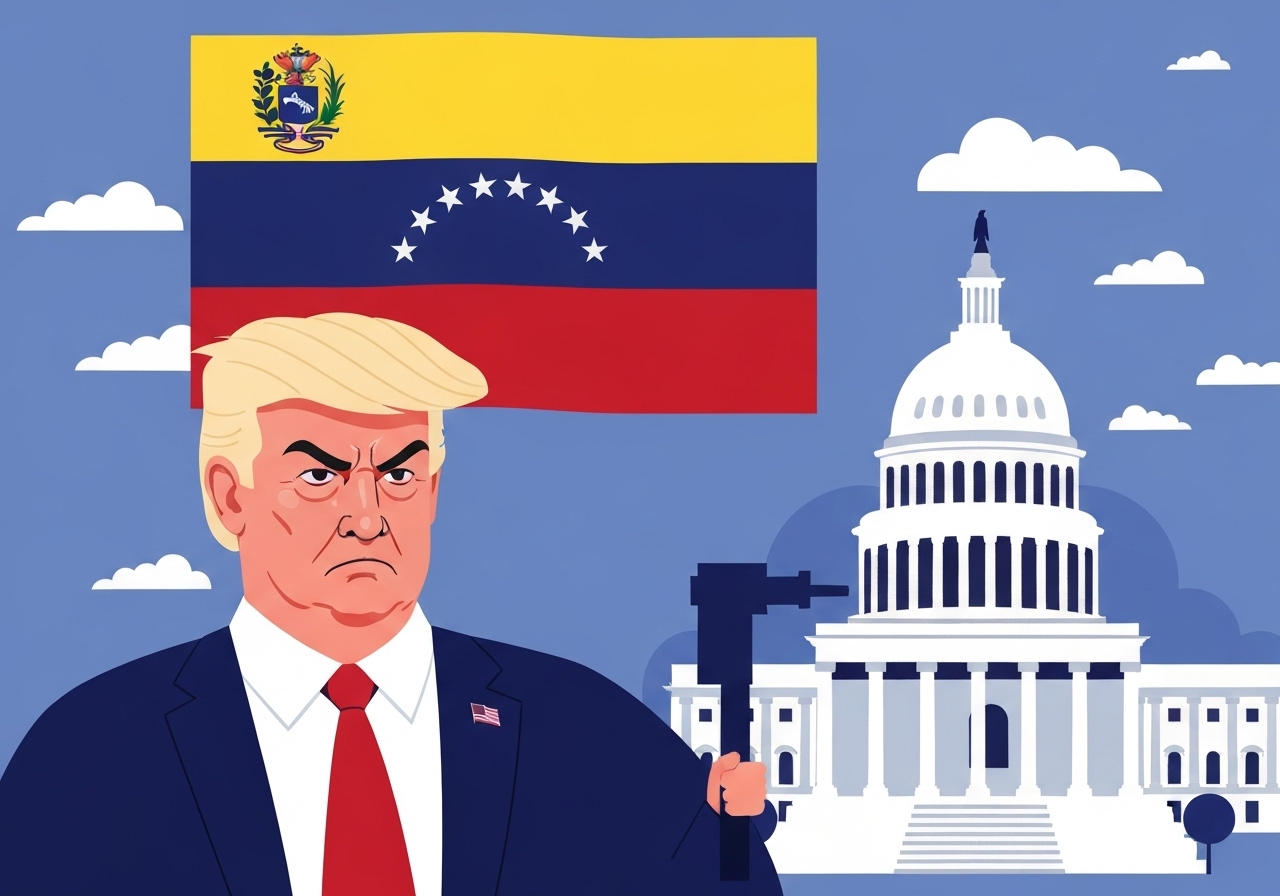
During an Oval Office exchange on Nov. 17, 2025, Mr. Trump was asked whether he would rule out sending U.S. troops into Venezuela. He replied bluntly that he did not rule anything out, adding the need to “take care of Venezuela.” The remark followed ABC News reporting that the White House had been briefed on updated military options for the country, which included possibilities on land as well as strike options.
The same day the president celebrated the U.N. Security Council’s approval of the Gaza stabilization resolution, posting praise on his social media platform for what the White House described as a major international endorsement of its plan. The administration has framed the resolution as providing international legal authority for a multinational security mission and has said further announcements about the Board’s membership will follow in coming weeks.
On domestic matters, the FBI said Alexis Wilkins, identified in reporting as the partner of Director Kash Patel, is being provided a protective detail after receiving what the bureau described as hundreds of credible death threats. The FBI statement cited safety concerns and declined to provide additional operational details. The sequence of events also resurrected scrutiny of the director’s use of agency resources for travel during the federal reopening period.
Analysis & Implications
Trump’s refusal to categorically rule out ground troops in Venezuela signals a willingness to keep military options publicly on the table, which can serve both as diplomatic leverage and as a deterrent. Publicly preserving the full range of options — from sanctions to strikes to possible deployments — increases pressure on Caracas but risks escalating tensions with regional governments and international partners who favor de-escalation. The mention of land operations, in particular, raises the stakes because ground deployments entail higher political, logistic and casualty considerations than limited air strikes.
The U.N. Security Council’s endorsement of a Gaza stabilization plan gives Washington an avenue to pursue multilateral security engagement while channeling much of the operational authority through an internationally framed mechanism. If the White House follows through on naming a “Board of Peace” and securing participating states, the mission could draw broader legitimacy — though success will depend on funding commitments, rules of engagement, and clear benchmarks for withdrawal or transition to local control.
On immigration, the Supreme Court’s decision to take the asylum turnback case places a central domestic policy of the administration on a national legal test. If the Court upholds the policy, the administration would gain a durable legal tool to reduce asylum claims processed on U.S. soil; if the Court strikes it down, the White House will need new operational and legislative options to meet its stated border-management goals. The timing — with argument likely in spring 2026 and decision by the end of June — means litigation will shape enforcement choices through next year.
Comparison & Data
| Item | Status as of Nov. 17, 2025 |
|---|---|
| U.S. military options for Venezuela | Under review; includes strike and land options (reported) |
| U.N. Gaza stabilization resolution | Adopted by Security Council on Nov. 17, 2025; gives international legal authority |
| Asylum turnback policy | Blocked in lower courts; U.S. Supreme Court agreed to review (oral argument likely spring 2026) |
The table summarizes the core policy tracks reported on Nov. 17, 2025. Each line reflects official actions or court schedules: military options were described in media reporting as briefed to the president; the U.N. vote is a formal Security Council action; the Supreme Court’s docket decision is a public procedural development that sets an appellate timeline.
Reactions & Quotes
No, I don’t rule that out. I don’t rule out anything. We just have to take care of Venezuela.
President Donald Trump, Oval Office exchange, Nov. 17, 2025
Trump’s succinct phrasing was offered in response to a direct question from reporters and has been amplified across media and political commentary as an indicator the administration retains a wide array of contingencies.
Ms. Wilkins is receiving a protective detail because she has faced hundreds of credible death threats related to her relationship with Director Patel.
FBI spokesperson, agency statement, Nov. 17, 2025
The FBI’s explanation framed the protective assignment as a security response to threats; the bureau declined to provide further operational specifics citing safety concerns.
Congratulations to the World on the incredible Vote of the United Nations Security Council…This will go down as one of the biggest approvals in the History of the United Nations, will lead to further Peace all over the World.
President Donald Trump, social media post, Nov. 17, 2025
The president used public remarks to cast the Security Council decision as a foreign-policy success and to set expectations for upcoming announcements about international partners.
Unconfirmed
- Specific timelines, troop numbers, or deployment orders for any potential ground operation in Venezuela have not been publicly confirmed by the White House or the Department of Defense.
- Final membership and authorities of the proposed “Board of Peace” have not been released; announcements the White House referenced remain pending.
- Details about the nature and source of the threats against Alexis Wilkins beyond the FBI’s summary have not been publicly disclosed.
Bottom Line
President Trump’s statement on Nov. 17, 2025, that he does not rule out U.S. ground troops in Venezuela leaves strategic ambiguity at the center of U.S. policy in the region. Keeping options openly available can increase diplomatic leverage but heightens the risk of miscalculation and regional pushback if rhetoric escalates without clear multilateral coordination or congressional consultation.
The U.N. Security Council’s approval of a Gaza stabilization plan offers the administration a multilateral path to pursue security objectives overseas, but its implementation will depend on concrete partner commitments and operational clarity. Domestically, the Supreme Court’s decision to hear the asylum case and the FBI’s protective measures for a senior official’s partner underscore how intertwined foreign policy and internal governance questions remain in this moment.