
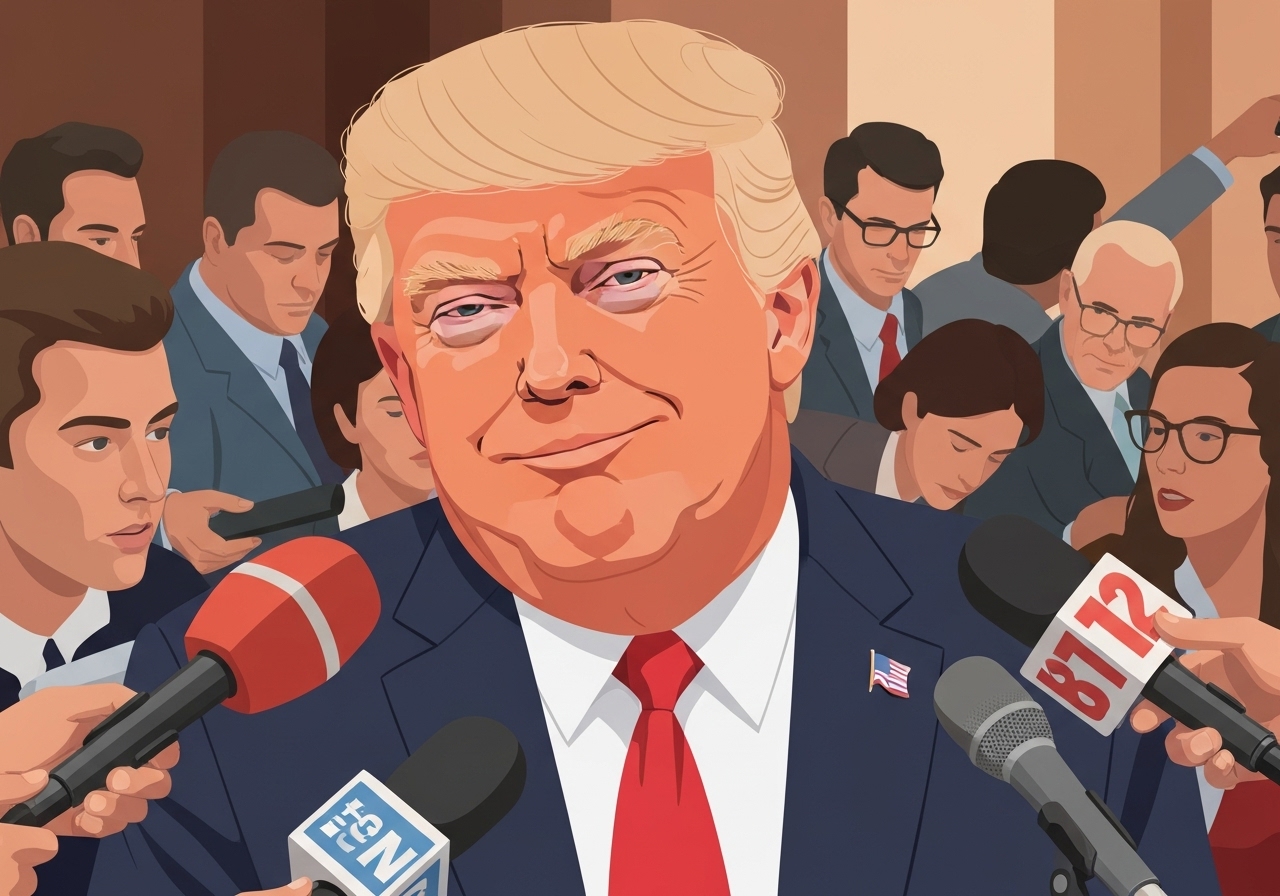
President Donald Trump told CBS News on Nov. 14, 2025, aboard Air Force One that he has “sort of” made up his mind about how to proceed on Venezuela after senior aides spent a third day reviewing possible actions at the White House. Top administration, military and diplomatic officials met repeatedly this week to consider a range of options, including potential strikes on land, though the president declined to describe any specific plan. The deliberations come amid U.S. allegations that Venezuelan leader Nicolás Maduro is complicit with drug-smuggling gangs; Maduro rejects those claims. U.S. forces have also conducted strikes at sea in recent months, which the administration says targeted vessels moving narcotics toward the United States.
Key Takeaways
- On Nov. 14, 2025, President Trump told CBS News he had “sort of” decided on next steps regarding Venezuela after three days of White House deliberations involving senior officials.
- Senior attendees included Vice President JD Vance, Defense Secretary Pete Hegseth, Joint Chiefs Chair Dan Caine and Secretary of State Marco Rubio, who briefed the president across multiple sessions.
- The Pentagon presented options this week that reportedly included possible strikes on land and other kinetic actions in Venezuela; the U.S. has not publicly confirmed a specific timetable.
- U.S. forces have struck at least 21 vessels in recent months they say were carrying drugs, an effort the administration says has resulted in at least 80 deaths.
- The USS Gerald R. Ford carrier strike group entered U.S. Southern Command’s area of responsibility this week, joining destroyers, aircraft and special operations assets already deployed to the region.
- Some Western European governments, including statements from France, say they have not seen direct evidence tying President Maduro to cartel leadership and have raised concerns about international law.
Background
The U.S. has for years accused elements of the Venezuelan state and its security apparatus of collusion with narcotics networks; a 2020 federal indictment named Nicolás Maduro in broad narco-trafficking allegations. Washington says recent maritime strikes are part of a stepped-up campaign to disrupt shipments bound for the United States. The administration argues that drug flows and transnational criminal networks present a national-security threat, while Caracas denies state involvement and calls U.S. actions unlawful.
Diplomatic tensions have increased as military and law-enforcement measures have expanded in the Caribbean and eastern Pacific approaches. Several European capitals have urged caution and questioned whether available public evidence establishes direct links between Maduro and cartel command structures. Meanwhile, military planners at the Pentagon have prepared contingency options ranging from targeted maritime interdictions to limited strikes ashore, reflecting a desire to balance operational effect with legal and political constraints.
Main Event
Across Wednesday to Friday this week, White House and Pentagon meetings focused on operational options for Venezuela, according to sources familiar with the discussions. The president received intelligence briefings and heard military presentations that laid out alternatives for disrupting alleged drug-smuggling networks, including possible strikes on land targets. Officials said that on Friday the group of advisers and commanders was larger than on prior days, reflecting the widening scope of the conversation.
Vice President Vance, Defense Secretary Hegseth, Joint Chiefs Chair Caine and Secretary Rubio were among those who met with Mr. Trump at the White House on Friday. Military officers and civilian leaders provided assessments of risk, timelines and potential collateral effects; the president emphasized caution in public comments and declined to disclose details. Administration spokespeople have not publicly confirmed the contents of the deliberations or a final decision.
Separately, U.S. maritime operations in recent months reportedly struck at least 21 vessels the U.S. alleges were moving narcotics, a campaign the Pentagon says has disrupted transshipment routes. The administration attributes at least 80 deaths to those strikes. Those operations have drawn international scrutiny, with some allies expressing legal and evidentiary concerns at recent diplomatic fora.
Analysis & Implications
The president’s statement that he has “sort of” decided signals a disposition toward action but also illustrates deliberate ambiguity, a tactic that preserves diplomatic and operational flexibility. Ambiguity allows Washington to shape adversary behavior and ally responses without locking in a single path, but it also raises questions about signaling to partners and potential escalation dynamics in the region. If the administration moves forward with kinetic strikes on land, legal justifications, target selection and foreseeable civilian harm will be focal points in both domestic debate and international law assessments.
A limited maritime interdiction campaign reduces exposure to onshore escalation but may offer only partial disruption of complex trafficking networks that use land routes and overland corruption chains. Conversely, strikes ashore could degrade specific facilities or command nodes more directly but carry greater political and humanitarian risk. The presence of a carrier strike group under Southern Command authority increases U.S. operational reach—while also elevating the profile of any use of force.
International reaction will shape the diplomacy that follows. European partners’ skepticism about direct Maduro involvement complicates efforts to assemble a broad coalition for any operation. Criticism from countries like France, which has underscored concerns about international-law implications, may constrain long-term access to basing or intelligence-sharing that the U.S. might prefer. Domestically, congressional oversight, legal review and public reaction could also narrow planners’ room for action.
Comparison & Data
| Metric | Reported Figure |
|---|---|
| Vessels struck by U.S. forces (recent months) | At least 21 |
| Reported fatalities from those strikes | At least 80 |
| White House deliberation days on Venezuela | 3 consecutive days (Nov. 12–14, 2025) |
| Carrier strike group newly in region | USS Gerald R. Ford entered SOUTHCOM AOR (Nov. 2025) |
The figures above reflect official briefings and media reporting through Nov. 14, 2025; they are intended to give a compact sense of scale rather than a comprehensive operational ledger. The number of vessels and fatalities reported by U.S. sources has driven diplomatic questions in partner capitals, and the entry of the carrier strike group materially changes force posture within U.S. Southern Command’s theater.
Reactions & Quotes
“I sort of have made up my mind” about the administration’s next steps in Venezuela, the president said in brief comments aboard Air Force One, while declining to provide specifics.
President Donald Trump (statement to CBS News, Nov. 14, 2025)
The president’s shorthand underscores a posture of provisional decision-making; it leaves open the possibility of further input or adjustment, while signaling intent to sympathetic audiences.
“We have observed with concern the military operations in the Caribbean region, because they violate international law,” French Foreign Minister Jean-Noël Barrot said at the G7 foreign ministers meeting in Ontario.
Jean-Noël Barrot, French Foreign Minister (G7, Nov. 2025)
France’s comment exemplifies broader European unease about unilateral uses of force and emphasizes legal scrutiny that could affect allied cooperation and diplomatic fallout.
U.S. military officials say maritime strikes targeted vessels moving narcotics toward the United States and were intended to disrupt trafficking networks.
U.S. Defense sources (briefings to press officials, Nov. 2025)
Pentagon descriptions focus on operational objectives and the national-security rationale, but they have not publicly disclosed detailed evidentiary dossiers tying Venezuela’s top leadership to cartel operations.
Unconfirmed
- No official announcement has confirmed whether the administration will authorize strikes on land inside Venezuela; discussions are ongoing and details remain withheld.
- Allied governments say they have not been briefed on precise U.S. intentions; the degree of partner consultation has not been independently verified.
- Public reporting ties recent maritime strikes to disruptions of drug shipments, but comprehensive forensic evidence publicly linking Maduro personally to cartel leadership remains contested.
Bottom Line
By stating he has “sort of” made a decision, President Trump signaled movement toward a policy choice while keeping options and timing opaque. That ambiguity preserves flexibility for operational planners but complicates alliance management and legal scrutiny. The presence of carrier and other forces in the region increases U.S. capacity for a range of actions; that capability will be weighed against diplomatic cost and the potential for escalation.
Observers should watch for formal legal justifications, specific target disclosures, and whether the administration seeks partner support before any kinetic action. Congressional inquiries and international responses are likely to follow intensively if the U.S. proceeds, and the balance between disrupting trafficking and avoiding broader destabilization will shape both immediate outcomes and longer-term regional relations.
Sources
- CBS News — U.S. media reporting on White House briefings and President Trump’s comments (primary report used).
- U.S. Southern Command — Official military command responsible for operations in the Caribbean and Latin America (official/organizational).
- French Ministry for Europe and Foreign Affairs — Official statements and diplomatic positions on international law and regional security (official).