
Lead
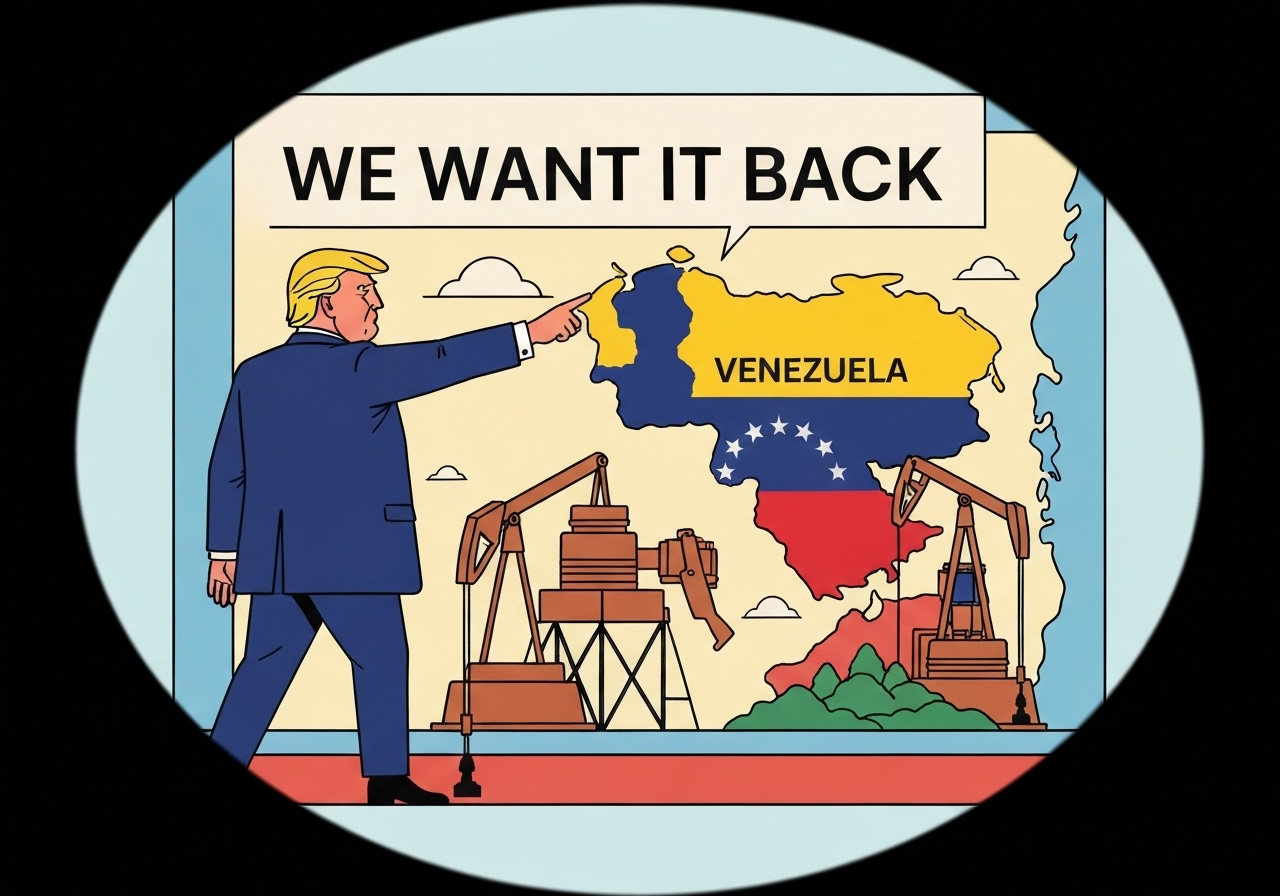
On Dec. 17, 2025, from Mexico City and Washington, President Donald Trump ordered a partial blockade of oil tankers linked to Venezuela and declared that the United States will seek to reclaim claimed U.S. assets, saying, “We want it back.” The move targets tankers already under U.S. sanctions and accompanies an increased U.S. military presence in the Caribbean, strikes on vessels alleged to be carrying illicit drugs, and a rare labeling of Venezuela as a “foreign terrorist organization.” Caracas denounced the measures as an attempt to seize resources belonging to the Venezuelan people, while regional leaders and the U.N. urged restraint to avoid wider escalation.
Key Takeaways
- The president announced a partial blockade on Dec. 17, 2025, aimed at tankers already sanctioned for transporting Venezuelan crude.
- U.S. officials say more than two dozen boats alleged to be carrying illicit drugs have been struck in recent operations tied to the campaign in the Caribbean and Pacific.
- Experts estimate 33%–50% of tankers serving Venezuela belong to the so-called “dark fleet,” which has been targeted by sanctions.
- Trump declared Venezuela a “foreign terrorist organization” and placed a $50 million bounty on President Nicolás Maduro.
- The Senate approved a $900 billion defense policy bill requiring disclosure of orders and unedited videos related to the deadly boat strikes, with enforcement tied to Defense travel funds.
- Major regional actors—Mexico and Brazil—called for de-escalation, while Chile’s president-elect said regime change would address migration concerns.
Background
Venezuela’s economy has been heavily dependent on oil since the 20th century nationalizations that concentrated production under state control. Over decades, declining output, mismanagement and capital flight have eroded refining and export capacity. U.S. administrations since the 2010s have applied sanctions targeting Venezuelan crude exports, state oil company operations and networks of vessels and intermediaries—a pressure campaign that critics say has compounded domestic shortages.
President Nicolás Maduro’s government has been accused by the U.S. of ties between elements of the military and drug trafficking; U.S. officials refer to those links with the shorthand “Cartel de los Soles.” Scholars caution that the term describes fragmented illicit activity among officers rather than a centralized cartel. Washington’s latest escalation follows years of diplomatic pressure, economic sanctions and intermittent covert and overt actions aimed at weakening Maduro’s hold on power.
Main Event
On Dec. 17, President Trump announced a targeted blockade that applies to tankers already on U.S. sanction lists, saying the administration intends to recover assets it portrays as stolen from Americans. He also asserted that the U.S. would seek land and oil rights tied to those claims, a move that legal advisers and international observers say raises novel diplomatic and legal questions. The announcements were made alongside social-media posts and briefings that framed the measures as part of a broader effort to curb drug trafficking and punish what the White House calls illicit networks tied to Venezuela.
Alongside the blockade, the administration has increased U.S. forces in the Caribbean and authorized strikes on vessels alleged to be transporting narcotics; officials say more than two dozen boats have been destroyed in operations across the Caribbean and Pacific. Those strikes drew immediate congressional scrutiny: the Senate included language in a defense policy package requiring the administration to provide lawmakers with the underlying orders and unedited footage of the engagements. If the executive branch does not comply, the bill would restrict a portion of Defense Secretary travel funding.
Venezuela’s government condemned the blockade as an attempt to “rob the riches that belong to our people” and warned that economic coercion risks humanitarian harm. Regional leaders reacted unevenly: Mexican President Claudia Sheinbaum and Brazilian President Luiz Inácio Lula da Silva urged diplomacy and restraint, while Chile’s president-elect signaled support for a government change. U.N. Secretary-General António Guterres called for calm and urged U.N. members to de-escalate tensions after speaking with Maduro.
Analysis & Implications
Even though the blockade explicitly targets tankers already sanctioned by the U.S., experts warn it could sharply reduce Venezuela’s already diminished oil revenues. Analysts estimate that a sustained curtailment of tanker services would cut exports and limit Caracas’s primary source of foreign exchange, further constraining imports of food, medicine and parts for infrastructure. Suppliers and insurers typically charge higher premiums to vessels risking sanctions exposure, and continued U.S. action could push remaining buyers to demand steep discounts or to stop purchases altogether.
There are legal and diplomatic complications to U.S. assertions of ownership or recovery of foreign assets and territory. International law generally protects state sovereignty and property within a state’s borders; any U.S. attempts to transfer or seize land or production rights could provoke legal challenges and diplomatic backlash from allies and international institutions. The designation of Venezuela as a “foreign terrorist organization”—a label usually reserved for non-state armed groups—adds another layer of uncertainty about sanctions implementation and potential third-party liabilities.
Regionally, escalation risks sparking migration flows, supply-chain disruptions and political polarization among Latin American governments. Countries with leftist administrations have consistently warned against intervention, citing risks of instability; right-leaning leaders have been more open to measures aimed at toppling Maduro. Economically, secondary effects could reach global crude markets if suppliers or buyers alter contracts or routing in response to broader sanctions targeting vessels and insurers.
Comparison & Data
| Metric | Estimated Value |
|---|---|
| Share of tankers in “dark fleet” | 33%–50% |
| Reported boat strikes | More than two dozen |
| Bounty on Maduro | $50 million |
| Defense bill value | $900 billion |
These figures illustrate the campaign’s scale: a sizable portion of Venezuela’s tanker traffic has been connected to sanctioned networks, the U.S. has conducted lethal strikes on dozens of small vessels, and Congress moved a major defense package that tightens oversight of the military actions. Together they show how policy, enforcement and legislative checks are converging around a disputed U.S. strategy toward Caracas.
Reactions & Quotes
U.S. leadership framed the actions as pressure to disrupt alleged illicit networks and to reclaim what the administration claims were wrongfully taken. The White House tied the blockade to anti-narcotics objectives and to long-standing grievances over expropriations of foreign-owned oil interests in Venezuela.
“We want it back.”
President Donald Trump
This brief statement underscored the administration’s posture but left open legal and operational details. It also prompted immediate diplomatic concern across the hemisphere, with some governments calling for nonmilitary solutions and others supporting stronger measures to remove the Maduro government.
Mexican and Brazilian leaders emphasized diplomacy and warned against intervention. Their responses reflected both regional institutional concerns and domestic political calculations about migration and stability.
“No to intervention, no to foreign meddling,”
President Claudia Sheinbaum of Mexico
Her statement framed Mexico’s official stance in favor of a U.N.-led peaceful solution, urging safeguards against armed conflict and civilian harm. Leaders in other countries, by contrast, described the situation as requiring decisive action to address migration and organized-crime links to state actors.
The U.N. secretary-general urged de-escalation to preserve regional stability, signaling the international body’s priority for dialogue over coercion.
“Exert restraint and de-escalate tensions to preserve regional stability,”
U.N. Secretary-General António Guterres
Unconfirmed
- It is not confirmed whether President Trump planned additional, detailed announcements in the televised address referenced on Dec. 17, 2025.
- The concrete legal consequences and international recognition of labeling Venezuela as a “foreign terrorist organization” remain unresolved and untested.
- Projections that further tankers’ sanctions would produce a nationwide famine in Venezuela are disputed and depend on future policy choices, humanitarian access and third-party responses.
Bottom Line
The U.S. move on Dec. 17, 2025 represents a marked escalation in pressure on Maduro’s government by combining targeted maritime restrictions, military operations and an extraordinary rhetorical claim of entitlement to Venezuelan assets. While focused on sanctioned tankers for now, the policy creates pathways for rapid expansion of restrictions that could sharply curtail Caracas’s oil revenues and deepen humanitarian strain.
Diplomatically, the decision complicates relations with key regional partners and international institutions that favor negotiation and caution. Observers should watch three things closely: whether the U.S. expands the list of sanctioned vessels, how major buyers like China respond to changing risk and pricing, and whether Congress’s oversight demands produce greater public disclosure of the military campaign’s legal basis and operational record.