
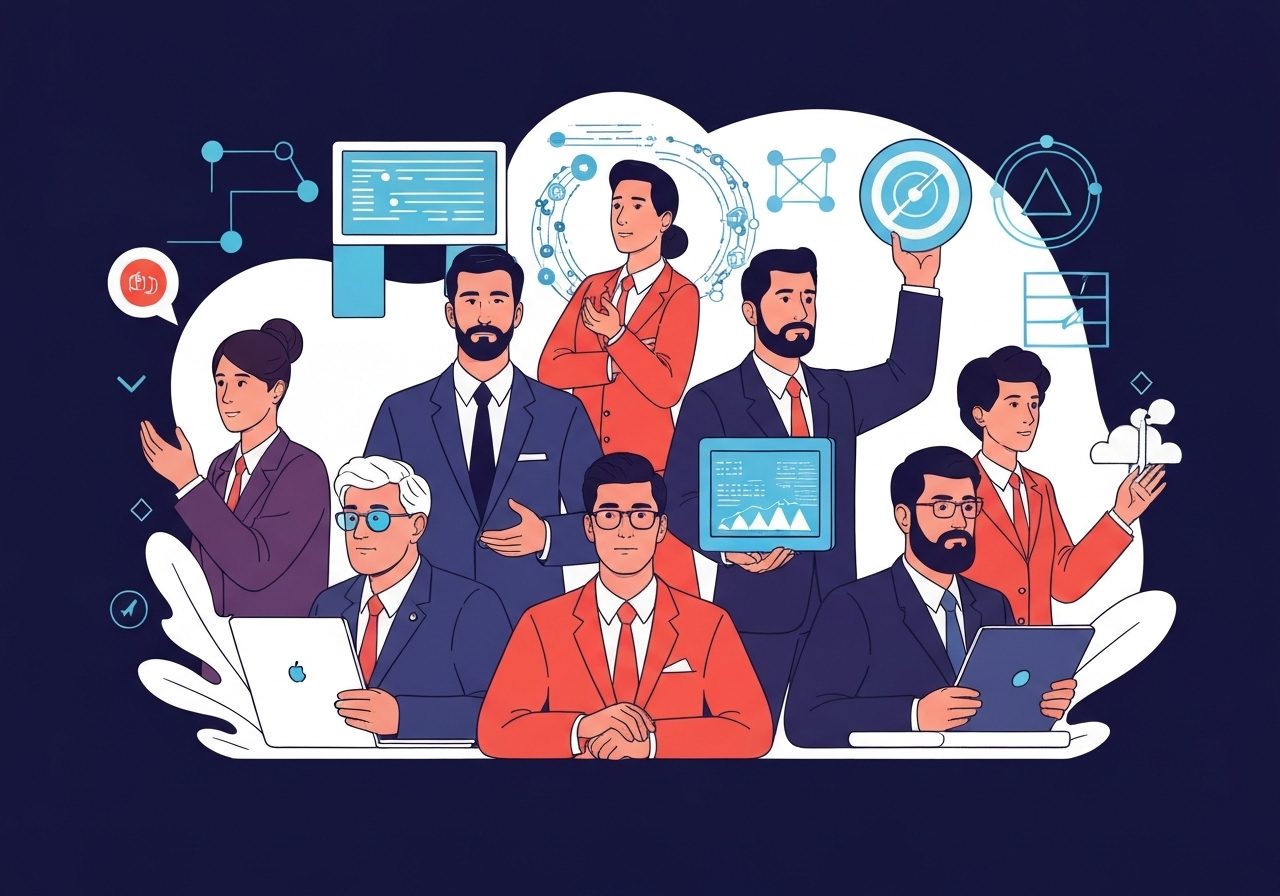
Who: Top executives from major U.S. technology companies. When: A White House State Dining Room dinner on Thursday evening (published Sept. 5, 2025). Where: The White House. What: CEOs including Mark Zuckerberg, Bill Gates, Tim Cook, Satya Nadella, Sam Altman and others publicly praised the administration’s AI agenda and announced large U.S. investment plans. Result: Multiple firms reiterated multi‑billion dollar commitments while key industry concerns such as immigration, energy and consumer costs received little attention.
Key Takeaways
- Senior tech leaders met with President Trump in a publicized State Dining Room dinner.
- Executives publicly described major U.S. investment plans; Apple and Meta figures cited roughly $600 billion commitments through 2028.
- Most guests praised the administration’s AI initiatives, including a Presidential Artificial Intelligence Challenge led by the first lady.
- Several prominent industry figures were absent or did not speak; speaking slots and seating drew attention.
- Topics that could affect the sector—immigration policy, tariffs’ consumer impact, and energy implications of AI—went largely unaddressed.
- Remarks included references to recent foreign‑policy events and a white‑house hosted education AI task force meeting earlier the same day.
Verified Facts
On Thursday evening, senior executives from major technology companies attended a dinner at the White House State Dining Room where President Donald Trump hosted them and invited remarks. Attendees publicly named in media coverage include Mark Zuckerberg (Meta), Bill Gates, Tim Cook (Apple), Satya Nadella (Microsoft), Sam Altman (OpenAI), Sergey Brin, Sundar Pichai (Google), Lisa Su (AMD) and Safra Catz (Oracle).
Several CEOs used the opportunity to outline U.S. investment plans. Mark Zuckerberg was reported to describe Meta’s domestic infrastructure investment as “something like $600 billion through ’28.” Tim Cook referenced Apple’s previously announced commitment to expand U.S. manufacturing and investment, citing a $600 billion figure. Microsoft and other firms also stressed U.S. investments tied to AI development.
Executives broadly commended the administration’s approach to artificial intelligence. The first lady, Melania Trump, launched a Presidential Artificial Intelligence Challenge and hosted an education‑focused AI task force meeting earlier on the same day; speakers at the dinner referenced those efforts as part of the administration’s AI priorities.
Seating and speaking order attracted notice: Mark Zuckerberg sat adjacent to the president; Bill Gates sat near the first lady; some executives—like OpenAI CEO Sam Altman—spoke, while others present did not. Reports named David Sacks as a senior White House adviser on AI and crypto who received speaking time; Alexandr Wang was present but not recorded as speaking. Elon Musk, Jeff Bezos and Jensen Huang were reported absent.
Context & Impact
This dinner follows months of increased engagement between large technology firms and the federal government on AI, trade and supply‑chain issues. For companies investing heavily in advanced computing and onshoring manufacturing, a cooperative relationship with regulators and the executive branch can influence tariffs, export controls and domestic incentives.
Taken together, the pledges and public praise signal industry willingness to make large capital commitments in the U.S. market—though several observers note such commitments often follow policy incentives or regulatory pressure. Apple’s prior manufacturing pledge, for example, was made amid threats of tariffs on smartphones.
Absent from the public remarks were responses to several policy areas that matter to the sector and its workforce. Immigration, which affects talent pipelines for many companies with immigrant founders and employees, was not a topic of public discussion at the dinner. Likewise, there was little public engagement on the environmental and energy demands of large‑scale AI infrastructure or on how tariff decisions might affect consumer prices.
- Potential near‑term effects: renewed investment pledges could bring jobs and factory projects but may also be contingent on tax, trade or regulatory terms.
- Longer‑term issues: balancing rapid AI deployment with energy, climate and consumer cost considerations remains unresolved.
“It’s an honor to be here with this group of people. They’re leading a revolution in business and in genius,”
President Donald Trump (opening remarks, White House dinner)
Unconfirmed Items
- Whether Elon Musk, Jeff Bezos, and Jensen Huang were invited or declined invitations has not been publicly confirmed by the White House or the companies named.
- Context and full content of Sergey Brin’s remarks were reported by attendees; a precise transcript has not been published.
- Attribution and full investigation details of a reported U.S. drone strike that killed 11 people on an alleged drug‑cartel boat two days earlier are still subject to official review and multiple news reports and are therefore listed as unconfirmed here.
Bottom Line
The White House dinner showcased a rare, public convergence of political leadership and major technology executives, with firms publicly committing large U.S. investments and endorsing the administration’s AI priorities. However, the event highlighted strategic alignments more than policy resolution: key labor, trade, environmental and immigration questions that will shape how those investments play out remain largely unanswered.