
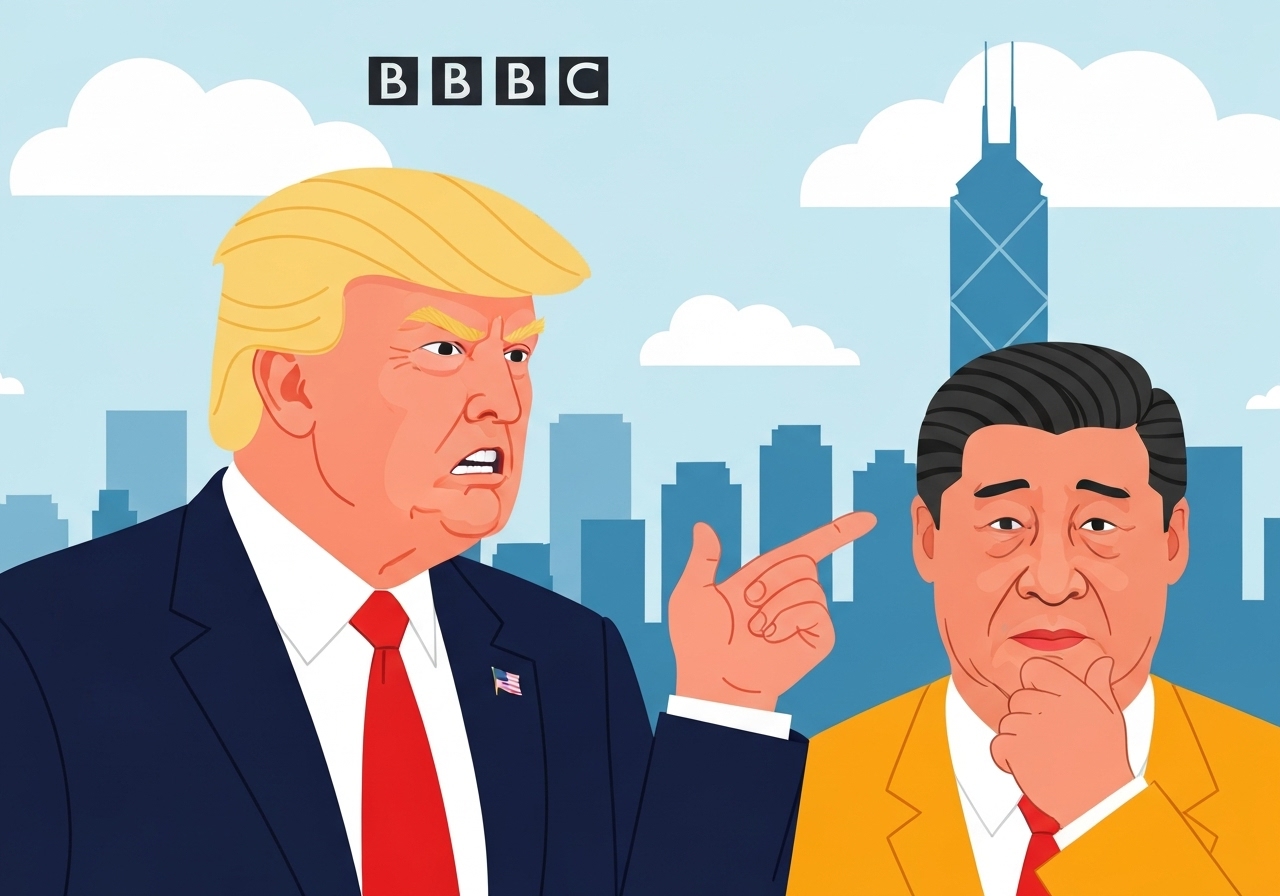
US President Donald Trump told reporters on Monday that he raised the case of Jimmy Lai with Chinese President Xi Jinping and asked Xi to “consider” releasing the 78-year-old Hong Kong pro-democracy publisher, who was found guilty this week under the city’s national security law. The conviction, handed down on Monday in Hong Kong, has drawn immediate rebukes from rights groups and the UK government, which called for Lai’s “immediate release.” Lai, a British citizen arrested in December 2020, faces sentencing early next year and could receive a life term under the charges he now carries.
Key Takeaways
- President Trump said he asked President Xi Jinping to “consider” freeing Jimmy Lai; he made the remark at the White House on Monday but did not specify when the conversation occurred.
- Lai, 78, was convicted on Monday under Hong Kong’s national security law for collusion with foreign forces and separately found guilty of publishing seditious material; he remains in custody and is due to be sentenced early next year.
- The UK government summoned the Chinese ambassador and called for Lai’s immediate release, describing the verdict as politically motivated and a violation of the rights of a British citizen.
- Hong Kong Chief Executive John Lee welcomed the conviction as protecting national interests, while rights groups described the trial process as unjust and repressive.
- Lai has been detained since December 2020; his family has publicly expressed grave concerns about his health and ageing while imprisoned.
- The Chinese foreign ministry dismissed international criticisms as unfounded, calling them defamation of Hong Kong’s judicial system.
Background
Jimmy Lai founded Apple Daily and Next Digital and became a high-profile critic of Beijing and Hong Kong authorities. His media outlets and activism helped make him a central figure in the 2019 pro-democracy movement and a frequent target of local and mainland authorities. Beijing imposed a national security law on Hong Kong in June 2020, citing the need to restore order and stability after mass protests; critics contend the law has since been used to curtail dissent and press freedom.
Since his arrest in December 2020, Lai has faced multiple charges under both the national security legislation and a colonial-era sedition statute tied to his publications. International governments, human rights organisations and media freedom advocates have repeatedly urged his release and protested the broader erosion of civic freedoms in Hong Kong. Lai holds British citizenship, which has added diplomatic pressure from the UK and drawn attention to consular and human-rights dimensions of the case.
Main Event
On Monday, a Hong Kong court found Jimmy Lai guilty of colluding with foreign forces under the national security law; the same day he was also convicted of publishing seditious material. The verdict followed a protracted legal process that began with his initial detention in December 2020 and included multiple charges and court appearances. Officials in Hong Kong framed the rulings as enforcement of laws meant to safeguard state security and public order.
President Trump made a brief statement to reporters at the White House saying he had spoken to Xi about Lai and had asked for his release, adding that Lai is older and not well. Trump did not provide details about when the conversation with Xi took place or whether any response had been received. Separately, Hong Kong’s leader, John Lee, publicly praised the court decision as aligned with protecting national interests and the welfare of Hong Kong residents.
The UK government described the conviction as politically motivated and summoned the Chinese ambassador to protest. Rights groups and Lai’s family have highlighted concerns over his health in detention and warned that prolonged imprisonment poses serious medical risks given his age. China’s foreign ministry rejected criticisms of the trial, characterising outside statements as defamatory to Hong Kong’s judicial institutions.
Analysis & Implications
The immediate diplomatic impact is multifold: a US president publicly intervening on an individual case signals heightened bilateral sensitivity and could complicate already tense US–China relations. Even a private exchange between Trump and Xi, if confirmed, suggests Washington is willing to press Beijing on individual human-rights cases despite competing strategic interests. That dynamic may increase pressure on both capitals to manage the optics and possible fallout carefully.
Domestically in Hong Kong, the conviction reinforces the message that authorities will apply national security provisions to prominent critics, which could dampen remaining opposition activity and press freedom. Businesses and foreign nationals watching the legal precedent may reassess political and operational risk in the city, potentially accelerating capital and talent shifts already underway since 2020. International firms often cite rule-of-law stability when making regional decisions; high-profile prosecutions can influence those calculations.
For diplomatic channels, the case narrows practical options. The UK’s summoning of the ambassador and public statements increase political cost for Beijing, but punitive diplomatic steps (sanctions, restrictions) risk further reciprocal tensions. Multilateral human-rights mechanisms offer platforms for censure but have limited direct leverage over judicial outcomes in Hong Kong. Ultimately, the most immediate lever remains political and reputational pressure rather than legal remedies.
Comparison & Data
| Event | Date | Consequence/Potential Penalty |
|---|---|---|
| Initial detention | December 2020 | Detention and multiple charges |
| Conviction under national security law | Monday (this week) | Up to life imprisonment possible |
| Conviction for seditious publication | Monday (this week) | Additional penalties under colonial-era law |
The table summarises the timeline of Lai’s detention and recent convictions, underlining the overlap of national-security and older sedition statutes. Observers note that the combined legal exposure raises the stakes for sentencing next year, with life imprisonment listed as a statutory maximum for the most serious national-security charge.
Reactions & Quotes
“I spoke to President Xi about it and I asked to consider his release,”
President Donald Trump, White House briefing
Trump’s remark was concise and offered no timeline or further detail on Xi’s response; reporters pressed for clarification but the statement remained short. The comment nonetheless became a focal point for media coverage because it signals direct presidential engagement on a judicial matter in Hong Kong.
“He has been targeted by the Chinese and Hong Kong governments for peacefully exercising his right to freedom of expression,”
Yvette Cooper, UK Foreign Secretary, statement to Parliament
The UK official framed the conviction as a rights violation and announced that the Chinese ambassador was summoned to underline the government’s position. That diplomatic step is a formal protest intended to register serious bilateral concern.
“His actions had damaged the country’s interests and the welfare of Hong Kongers,”
John Lee, Hong Kong Chief Executive
Hong Kong authorities defended the prosecution as aligned with national-security interests and public welfare, contrasting sharply with rights groups’ assessments that the trial undermines civil liberties.
Unconfirmed
- The precise timing and length of President Trump’s conversation with President Xi on Lai’s case have not been confirmed beyond Trump’s brief remark.
- Claims that Lai could “die in prison” reflect his family’s grave concerns but are not a formal medical prognosis made public by prison health authorities.
- Allegations that the trial process was conducted solely for political ends are asserted by rights groups; courts and Hong Kong authorities maintain the proceedings were lawful and security-driven.
Bottom Line
Jimmy Lai’s conviction and President Trump’s public appeal to Xi concentrate international attention on Hong Kong’s changing legal and political landscape. The case underscores tensions between calls for individual rights and states’ assertions of security prerogatives; it will remain a touchstone for assessments of rule-of-law and press freedom in the city.
Diplomatically, the episode raises the likelihood of persistent friction between China and Western governments, but practical leverage over judicial outcomes in Hong Kong is limited. Observers and businesses will continue to monitor sentencing, any diplomatic follow-up, and the broader implications for civil liberties and foreign engagement with Hong Kong.