
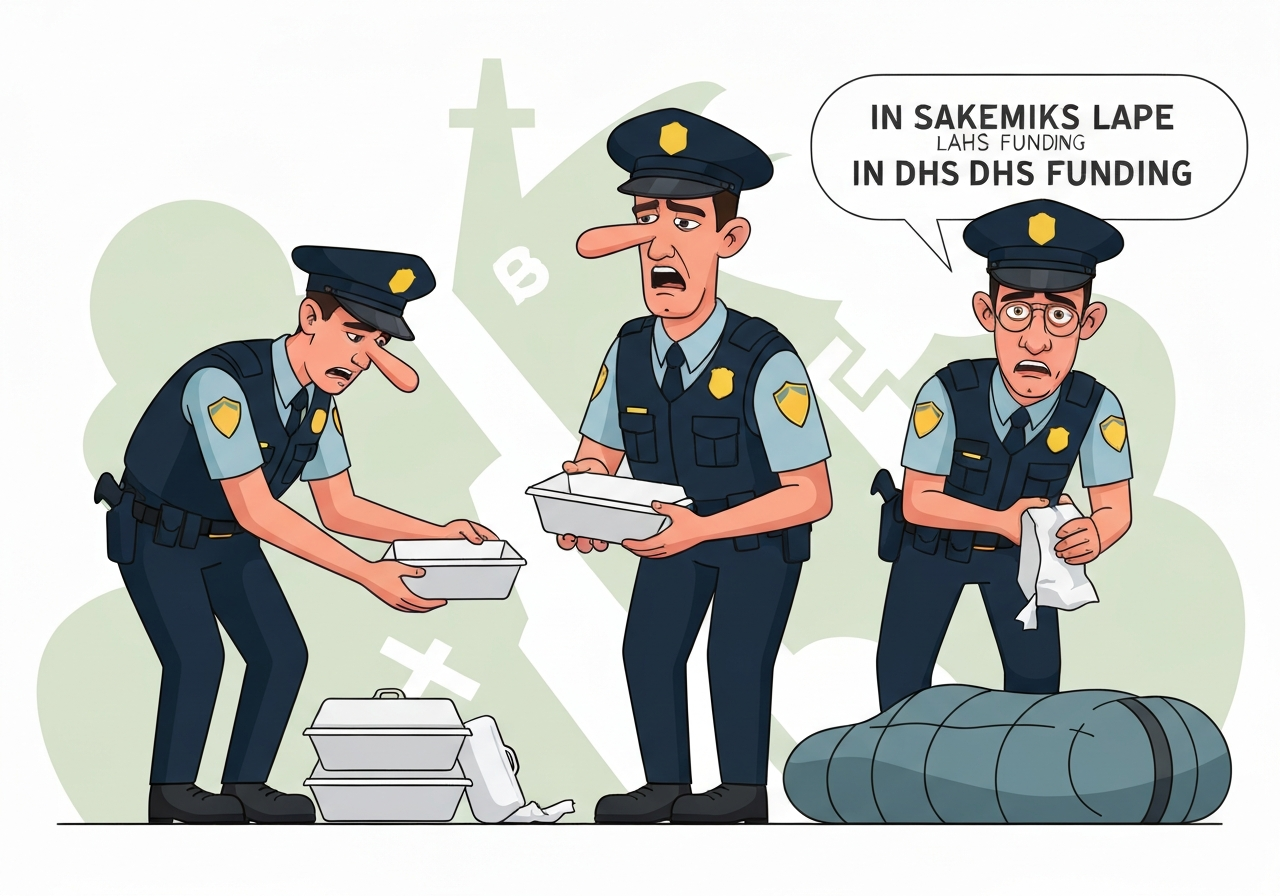
Federal Transportation Security Administration officers across the United States are facing a prolonged pay interruption as a dispute in Congress has left the Department of Homeland Security without full funding. About 50,000 screeners expected another $0 paycheck this week, forcing some to use food banks, tap savings or consider selling personal assets to cover rent and bills. The lapse, which left many employees without a regular paycheck since mid-February, has contributed to higher absenteeism at several major airports and prompted at least 455 resignations, according to DHS figures. Workers interviewed in Indiana, Florida, Idaho, Massachusetts and Utah described mounting financial stress and wrenching choices between showing up for duty and feeding their families.
Key Takeaways
- Roughly 50,000 TSA officers were set to receive no pay this week because DHS funding was stalled in Congress; the pause began in mid-February.
- At least 455 TSA employees had resigned amid the uncertainty, a figure reported by the Department of Homeland Security.
- Some officers received partial or nominal checks: one Boise officer reported a Feb. 28 paycheck of $13.53; several said their last full paycheck was Feb. 14.
- Absenteeism rose at some busy airports, producing longer security lines and frustrated travelers as understaffed checkpoints struggled to keep pace.
- Employees reported turning to food banks, depleting savings, and planning to sell cars or seek loans to cover essential expenses.
- Union leaders warn that prolonged funding gaps risk further attrition and long-term staffing shortfalls in aviation security.
Background
The current pay interruption stems from a congressional impasse over funding the Department of Homeland Security; appropriations have been delayed since mid-February. TSA officers—who screen passengers and luggage at airports nationwide—are paid from DHS appropriations, so a lapse in those funds can mean delayed or reduced payroll processing for employees. Federal workers have faced multiple funding disruptions in recent years; some workers cited a record 43-day shutdown last fall as precedent for repeated financial strain.
TSA positions range from new hires to career employees with decades of service; many entered federal service for steady pay and benefits. Union chapters, including the American Federation of Government Employees (AFGE), represent many screeners and have raised alarm about the human toll of interrupted pay. DHS and airport authorities balance staffing, security requirements and passenger flow, but prolonged workforce stress complicates those operational demands.
Main Event
In Indianapolis, Taylor Desert, a TSA officer of seven years, said she visited a food bank before her shift to pick up basic groceries. Desert reported her last full paycheck arrived on Feb. 14 and said agency policies have limited time-off approvals during the funding lapse, complicating her ability to schedule needed dental surgery. She said if the funding lapse continued another 21 days she would likely seek employment elsewhere.
At Orlando International Airport, Oksana and Deron Kelly—both TSA agents with two young children—said they have begun drawing down savings; Deron has supplemented income with DoorDash deliveries. Oksana, a local union organizer, described the emotional strain of choosing between coming to work or ensuring the family has food and childcare.
In Boise, 53-year-old Rebecca Wolf, an AFGE local president and long-time TSA employee, said a Feb. 28 paycheck for $13.53 left her scrambling. Without savings, she plans to sell her car to cover upcoming rent and is seeking nonprofit rental help. Wolf said repeated funding interruptions threaten the stability she gained in federal employment after earlier homelessness.
Other officers reported a range of coping strategies: some have six months of reserves and can temporarily absorb the shock, while many live paycheck to paycheck. At Salt Lake City International Airport, one former TSA agent, Robert Echeverria, said he resigned after repeated shutdowns, citing family needs and the emotional toll of recurring instability.
Analysis & Implications
Operationally, sustained pay interruptions can degrade staffing levels at checkpoints and raise the likelihood of longer passenger wait times, especially at peak travel hubs. While many screeners continue to report for duty out of professional commitment, the loss of experienced employees through resignations amplifies training and scheduling pressures on remaining staff.
Economically, the ripples extend beyond individual households. Screeners who deplete savings or take secondary work reduce disposable income in local economies near airports. Increased turnover imposes hiring and training costs on the agency and airport operators, and persistent uncertainty could push some workers into permanent exits from federal service.
Politically, the situation underscores how appropriations standoffs translate into tangible effects for front-line federal workers and the traveling public. Union leaders are using these personal stories to press lawmakers for a resolution; if Congress remains deadlocked, pressure may build for stopgap measures or targeted support for affected employees.
Security implications are primarily operational rather than structural: TSA screening protocols remain in force, but gaps in staffing and morale can weaken throughput and create public frustration. Airport operators assessing contingency plans may shift resources or adjust staffing models, but such measures are costly and not a substitute for stable appropriations.
Comparison & Data
| Item | Detail |
|---|---|
| Number of affected TSA officers | About 50,000 (expected $0 paycheck this week) |
| Reported resignations | More than 455 (DHS count) |
| Last full paycheck for many | Feb. 14 |
| Example partial pay | $13.53 (Feb. 28 for one officer) |
This table summarizes reported figures from interviews and DHS reporting. Local conditions vary: some airports report higher absenteeism than others, and exact staffing impacts fluctuate day to day. The numbers above reflect the snapshot described by employees and DHS at the time of reporting.
Reactions & Quotes
“Stop asking me about the long lines. Ask me if somebody’s gonna eat today.”
Hydrick Thomas, AFGE national council president
Thomas made the remark to highlight the immediate human costs of the funding lapse beyond operational inconveniences.
“I never thought I would be in a position where, working for the federal government, I would need to go to a food bank to supplement my groceries.”
Taylor Desert, TSA officer, Indianapolis
Desert’s comment illustrates how even long-serving federal employees can face acute hardship when pay is disrupted.
“We were barely recovering from the last shutdown.”
Robert Echeverria, former TSA agent, Salt Lake City
Echeverria described why repeated funding gaps have pushed some employees to leave federal service for more predictable work.
Unconfirmed
- Exact absentee rates at every major airport vary day to day and are not uniformly reported; localized staffing shortfalls cited in interviews require airport-specific confirmation.
- The long-term retention impact—how many more officers will resign if the lapse extends beyond current reporting—remains uncertain.
Bottom Line
Thousands of TSA officers are making immediate, practical adjustments—using food banks, borrowing, or selling assets—while continuing to staff airport checkpoints during a funding lapse. The human cost is clear in individual accounts from Indiana to Idaho: households are strained, and morale is frayed even as security duties continue.
If funding is not resolved quickly, the agency may face growing attrition, higher operational costs for recruitment and training, and continued service disruptions at airports. Lawmakers and agency leaders face a choice between an expedited funding solution or a protracted period of diminished staffing resilience in a sector that underpins national aviation security.