
Lead
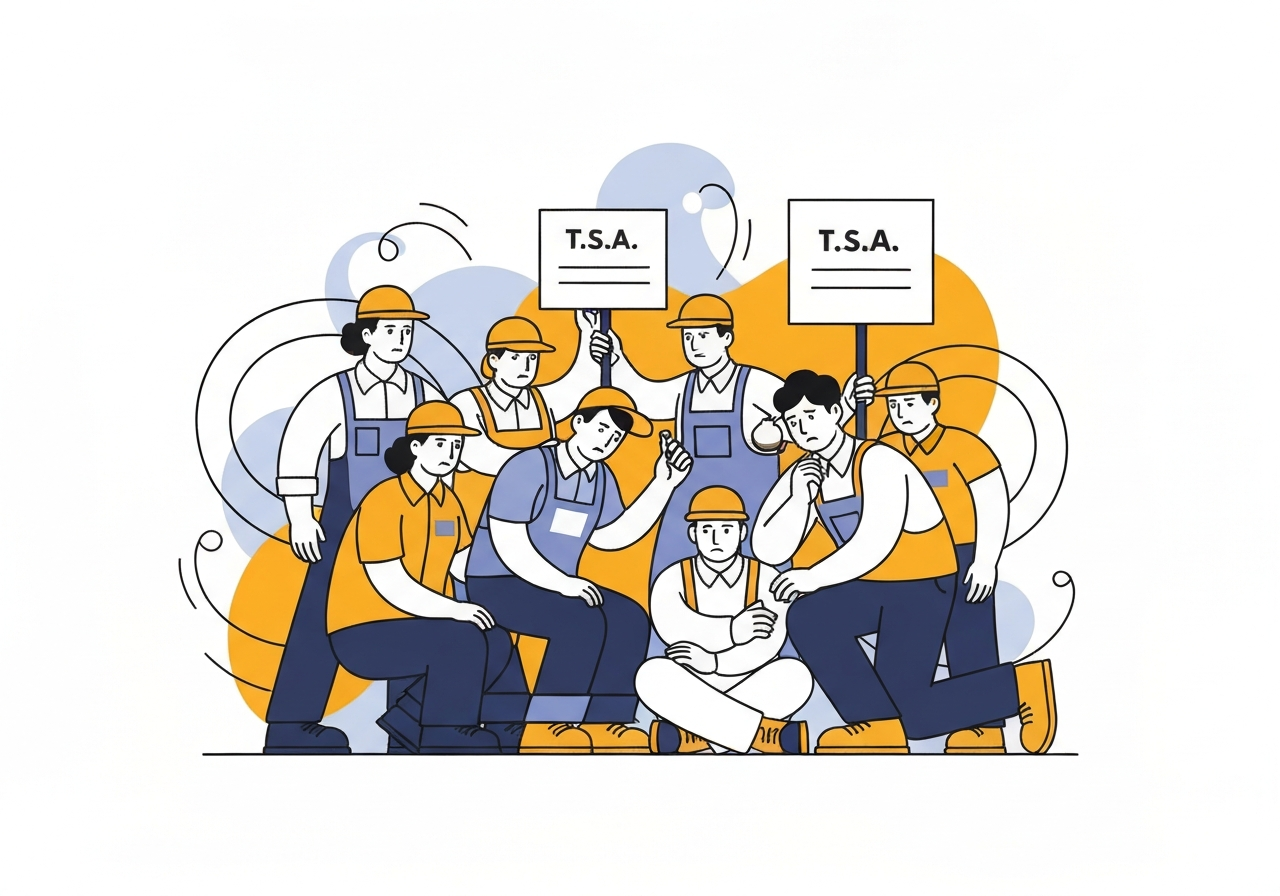
On Feb. 14, 2026, the Department of Homeland Security ran out of funding, thrusting Transportation Security Administration employees into another unpaid work cycle while Congress remains deadlocked. Many T.S.A. officers — who screen passengers and luggage at U.S. airports — are again on the front lines of a political impasse they did not create. Workers say the new lapse arrives as they are still recovering from last year’s 43-day shutdown, which caused evictions, missed medicine and other severe financial strain. For many, the near-term result will be unpaid paychecks and mounting bills while airports continue operating.
Key Takeaways
- T.S.A. staff are working without pay beginning Feb. 14, 2026, after the Department of Homeland Security funding expired.
- Many employees are still recovering from a 43-day shutdown last year that caused housing and healthcare hardships for some workers.
- Officials expect pressure on traveler services may emerge in about two weeks, when employees miss their first full paycheck while continuing to report for duty.
- Some workers hoped for a $10,000 bonus promised by Homeland Security Secretary Kristi Noem for “exemplary service” during the prior shutdown; that payment has not been distributed to many eligible staff.
- At Salt Lake City International Airport, lead officer Roberto Echeverria reported colleagues working extra overtime in recent weeks to build a financial cushion.
- Lawmakers remain divided over immigration enforcement policies, the dispute cited as the cause of the funding standoff.
Background
Federal funding for the Department of Homeland Security expired early on Saturday, Feb. 14, 2026, after Congress left Washington without an agreement. The impasse centers on a push by some lawmakers to change immigration enforcement rules implemented by the Trump administration, and opponents say those changes are politically unacceptable. T.S.A. operations are funded through DHS appropriations, so a lapse in funding means employees are ordered to work without pay to maintain aviation security.
This is not the first time T.S.A. officers have been placed in this position. During the 43-day shutdown last year, many frontline workers faced deep financial anxiety: some reported eviction, missed prescriptions, and unaffordable childcare and commuting costs. Officials and lawmakers have historically relied on the visibility of strained airport operations to accelerate negotiations, because when staffing pressures begin to cause traveler delays, public attention rises and political incentives shift.
Main Event
On the morning the funding lapsed, T.S.A. supervisors across the country instructed officers to continue screening travelers, checking IDs and running baggage inspections despite the lack of pay. Many employees arrived at airports as normal, aware they might not receive a paycheck in roughly two weeks when the typical pay cycle completes. Management emphasized that security procedures must continue to avoid threats to the aviation system, while employees reported rising worry about household bills and immediate expenses.
At Salt Lake City International Airport, Roberto Echeverria, a lead transportation security officer, said several colleagues had been picking up overtime shifts during the prior month to build a small financial buffer. His account reflects informal preparations that many workers described: drawing on savings where possible, cutting discretionary spending, and seeking temporary loans. Still, workers said last year’s losses left little margin for error now; those who were evicted or who delayed medical care have fewer resources to absorb another pay interruption.
Public-facing pressure points could appear soon. Historically, operational strain that inconveniences travelers — long lines at checkpoints, delayed flights from slower processing, or staff shortages — has prompted more immediate congressional action. Officials warned such pressure might surface in about two weeks when the first missed full paychecks land, but as of Feb. 14, airport security functions were continuing without large public disruptions.
Analysis & Implications
The recurring reliance on frontline federal employees to shield the public from political standoffs raises broader questions about institutional resilience. When T.S.A. staff maintain services without pay, the federal government preserves day-to-day security but shifts financial risk onto lower-paid workers. This dynamic creates moral and operational stress: employees are expected to perform critical duties while facing personal economic hardship that can erode morale and long-term retention.
Politically, the dispute highlights how unrelated policy fights can trigger wide operational consequences. A disagreement over immigration enforcement within Congress has halted DHS funding, yet the immediate effects manifest at airport checkpoints nationwide. That disconnect complicates accountability: voters experience the symptom (possible airport delays) while the cause remains a legislative policy fight that may receive less attention from travelers until service degradation becomes visible.
Economically, repeated unpaid work cycles could force some T.S.A. workers to seek alternative employment or reduce hours, worsening staffing stability. Recruiting and training replacements is costly and time-consuming; if turnover rises after repeated shutdowns, the system may face longer-term capacity constraints. For airports and carriers, that risk translates into potential disruptions during peak travel periods and higher operational costs down the line.
Comparison & Data
| Event | Duration | Immediate effects on T.S.A. staff |
|---|---|---|
| Last year shutdown | 43 days | Evictions, missed medicine, commuting hardship |
| Current lapse (Feb. 14, 2026) | Ongoing | Working without pay; first full missed paycheck expected in ~2 weeks |
The table summarizes recent and current fiscal interruptions affecting the T.S.A. The 43-day shutdown last year produced significant personal and financial consequences for many officers; the ongoing lapse, though shorter so far, risks repeating those harms if funding is not restored quickly. Quantifying long-term staffing effects will require weeks to months of data on turnover, overtime costs and staffing levels.
Reactions & Quotes
“Everybody’s really nervous,”
Roberto Echeverria, lead transportation security officer, Salt Lake City International Airport
That remark captures frontline sentiment: anxiety over bills and uncertainty about how many times staff can sustain unpaid work. Echeverria’s comment echoes accounts from officers at multiple airports who said they had been trying to earn overtime to prepare for this possibility.
“We have to keep the system secure while people figure out the politics,”
Anonymous T.S.A. supervisor (staff comment)
Supervisors emphasize operational continuity, noting legal and safety obligations require continued passenger screening. The supervisor framed the workforce as fulfilling a public-service duty despite the funding lapse.
“Exemplary service will be recognized,”
Kristi Noem, Secretary of Homeland Security (on prior bonus)
Secretary Noem previously announced a $10,000 bonus for employees described as providing exemplary service during the last shutdown; workers say many eligible staff have not received that payment, which feeds distrust and frustration among rank-and-file employees.
Unconfirmed
- Whether the promised $10,000 bonus has been disbursed to all eligible employees remains unclear and varies by office; full nationwide accounting was not available at the time of reporting.
- The precise timing and scale of any traveler service disruptions tied directly to this lapse are uncertain; official estimates project possible pressure in about two weeks but outcomes depend on overtime usage and local staffing.
Bottom Line
The immediate consequence of the DHS funding lapse on Feb. 14, 2026, is that T.S.A. employees continue to secure airports while not receiving pay—repeating a pattern that forced many workers into hardship during a 43-day shutdown last year. Policymakers face a trade-off: extend negotiations over immigration enforcement and risk repeated operational strain, or resolve funding and address policy disputes through other channels. For workers, the crucial near-term concern is financial survivability: missed paychecks, unpaid bills and the prospect of long-term workforce erosion if the pattern repeats.
Travelers and airports should monitor staffing notices in the coming weeks; public visibility of delays has historically been the catalyst for congressional action. Restoring funding quickly would limit further harm to employees and reduce the risk of operational disruptions. In the absence of a prompt resolution, the costs—human, economic and operational—are likely to grow.
Sources
- The New York Times (national news media)
- U.S. Department of Homeland Security (official press and notices)