
Lead
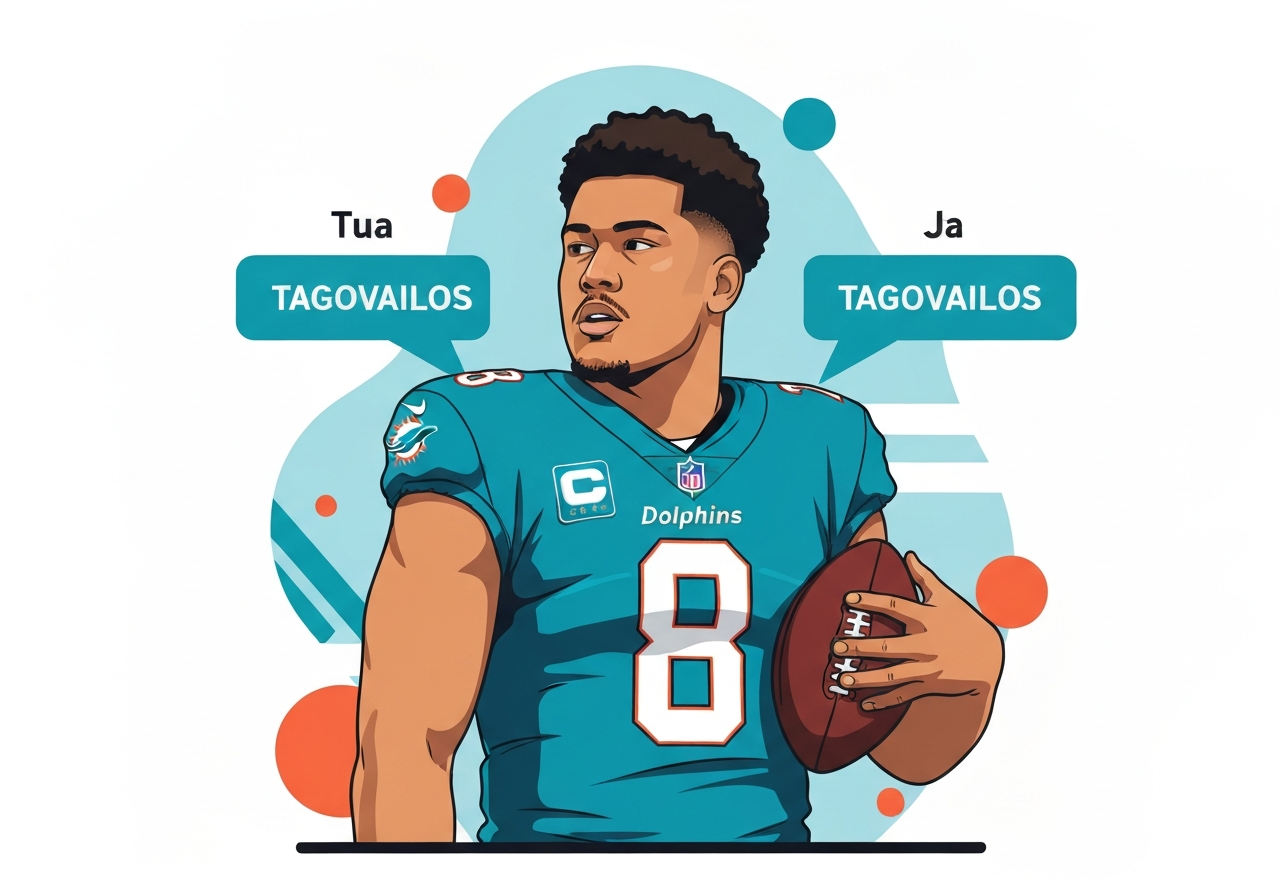
Former Miami Dolphins quarterback Tua Tagovailoa is expected to sign with the Atlanta Falcons after reports said the teams agreed to terms Monday. Miami announced it will formally release Tagovailoa on Wednesday, absorbing a $99.2 million dead-money charge on its 2026 salary cap. The structure of the deal leaves the Falcons with minimal 2026 payroll risk while Miami shoulders most of the remaining guarantees. The move closes a turbulent Miami tenure defined by injuries, intermittent strong play and no playoff victories.
Key Takeaways
- Tua Tagovailoa, 28, reached terms with the Atlanta Falcons Monday, according to league sources; Miami will process his release on Wednesday.
- The Dolphins will take a $99.2 million dead-money hit in 2026, leaving the Falcons to pay as little as $1.2 million for Tagovailoa this season.
- Miami still owes roughly $54 million to Tagovailoa in 2026 before crediting the value of any Falcons contract.
- Tagovailoa signed a large extension in summer 2024 and missed six games in the first season under that deal, including four after a Week 2 concussion.
- In 2025 Tagovailoa struggled and was benched after a Week 15, 28-15 loss to the Pittsburgh Steelers.
- The Dolphins’ new front office — GM Jon-Eric Sullivan and coach Jeff Hafley — opted to move on despite the significant cap penalty.
- The Falcons’ new leadership team (president Matt Ryan, GM Ian Cunningham, coach Kevin Stefanski) will insert Tagovailoa as a top-two quarterback behind recovering Michael Penix Jr.
- Michael Penix Jr. is rehabilitating from an ACL tear suffered in Week 11 of 2025; Penix is 4-8 as an NFL starter to date.
Background
Miami selected Tagovailoa with the No. 5 pick in the 2020 NFL Draft and extended him to a high-value, multiyear contract in the summer of 2024. That second contract made him one of the league’s highest-paid players and reflected Miami’s belief in his upside despite an early-career injury history. Over the first season of that deal he missed six games, including a concussion that sidelined him after Week 2, yet he produced steady numbers across 11 starts.
By 2025 the narrative shifted. Tagovailoa’s on-field performance declined, and he drew critical attention for certain public comments. Miami hovered near the bottom of the league through midseason before a late four-game winning streak. The situation culminated in a Week 15 benching after a 28-15 loss to Pittsburgh, accelerating the franchise’s reassessment of its quarterback plan.
The Dolphins entered 2026 with new leadership: Jon-Eric Sullivan as general manager and Jeff Hafley as head coach. That regime evaluated the roster and, after failing to trade the quarterback, decided releasing Tagovailoa was the preferred path despite a record-sized dead-money penalty.
Main Event
League sources reported Monday that Tagovailoa and the Falcons agreed to terms, with Miami scheduling an official release for the first day of the new league year on Wednesday. The contract mechanics make Atlanta’s short-term financial exposure modest while Miami absorbs the vast majority of remaining guarantees. Falcons officials framed the signing as a low-cost way to secure experienced quarterback depth while Michael Penix Jr. continues his rehabilitation from an ACL tear.
Within Atlanta’s reorganized football operation, President Matt Ryan, GM Ian Cunningham and coach Kevin Stefanski have weighed how Tagovailoa fits alongside Penix. The immediate outcome is clear: Tagovailoa and Penix will occupy the No. 1 and No. 2 roster spots at quarterback, though the ordering and long-term starter designation remain open. The Falcons can add a developmental third QB later in the draft if they choose.
From Miami’s perspective, failing to find a trade partner forced the franchise’s leadership to accept a huge cap charge to expedite a quarterback change. Team officials concluded that moving on now — rather than retaining Tagovailoa under a problematic dynamic and costly contract — better serves the franchise rebuild under the new regime.
Analysis & Implications
Financially the transaction is straightforward: Miami will eat roughly $99.2 million in dead money in 2026, while the Falcons acquire a veteran passer for minimal roster cost, likely around the $1.2 million league minimum in 2026 after accounting for offsets. That structure makes the signing an attractive, low-risk gamble for Atlanta if Tagovailoa can provide competent short-term play and veteran leadership.
Sporting implications are less certain. If Penix returns to full form, Tagovailoa may be a bridge or insurance option; if Penix is not ready for Week 1, Tagovailoa offers a proven starter who can lead an offense shaped by left-handed quarterbacks. The similarity in throwing handedness could reduce offensive installation friction for coordinator Tommy Rees and teammates.
There is also reputational and roster-management risk. The fact Miami chose to absorb such a large cap hit signals serious reservations about Tagovailoa’s long-term fit there. The Falcons will need strong medical evaluations, a clear role definition, and careful locker-room management to avoid repeating prior dysfunction.
For the broader league, the deal illustrates how backloaded contracts can create trade dead zones and force releases that redistribute financial risk. Teams with cap flexibility may increasingly consider low-cost acquisitions of once-premium players when the originating club elects to carry the guarantees.
Comparison & Data
| Item | Miami | Atlanta |
|---|---|---|
| 2026 cap/dead money | $99.2M (dead) | Minimal (approx. $1.2M) |
| 2026 cash owed before offsets | ~$54M | Payable at minimum salary after offsets |
| Draft/age | 2020 Rd 1, Pick 5; age 28 | Acquiring team — veteran depth |
The table highlights the asymmetry of financial responsibility: Miami takes the immediate cap penalty while Atlanta gains quarterbacking depth at very low cash cost in 2026. That arithmetic underpins why a team would release a former high-paid starter rather than attempt to trade him at full contract value.
Reactions & Quotes
Team and league reactions were measured publicly while analysts offered sharper takes on the risk-reward balance.
“I’m excited about Michael’s trajectory,”
Kevin Stefanski, Atlanta Falcons head coach (statement regarding Michael Penix Jr.)
Stefanski’s comment frames Atlanta’s optimism about Penix’s recovery even as the team secures an experienced backup. The quote underscores why the Falcons may view Tagovailoa as temporary insurance rather than a definitive long-term starter.
“You have to be a bit worried when your team signs a player who another team just ate $99.2 million of dead money to get out of the locker room… the price for the Falcons is so low, it’s probably worth the (low) risk.”
Josh Kendall, sports analyst
Kendall’s assessment — a succinct risk-reward read — captures the prevailing analytical view: significant warning signs remain, but cost structure makes the move reasonable for Atlanta.
Unconfirmed
- It is not yet confirmed whether Atlanta intends Tagovailoa as the Week 1 starter or strictly as insurance until Michael Penix Jr. is cleared medically.
- Details of Tagovailoa’s physical evaluation with Atlanta, including any undisclosed injury concerns, have not been fully released.
- Specifics about why no trade partner accepted Miami’s contract — beyond the size and structure of the guarantees — remain unverified.
Bottom Line
Atlanta has acquired a low-cost, experienced quarterback in Tua Tagovailoa while Miami agreed to a record dead-money charge to move on. The financial mechanics make the signing a logical, low-risk acquisition for a Falcons team balancing short-term competitiveness and Penix’s recovery timeline.
On the field, the move creates flexibility for Atlanta but also raises questions about long-term quarterback clarity: if Penix returns at full strength, Tagovailoa can be a harmless insurance piece; if Penix struggles or is delayed, Tagovailoa will face separate pressure to lead a rebuilding offense. For Miami, accepting a $99.2 million hit signals a firm decision to reset at quarterback and under a new front office direction.
Sources
- The New York Times (news outlet reporting The Athletic) — March 9–10, 2026.