
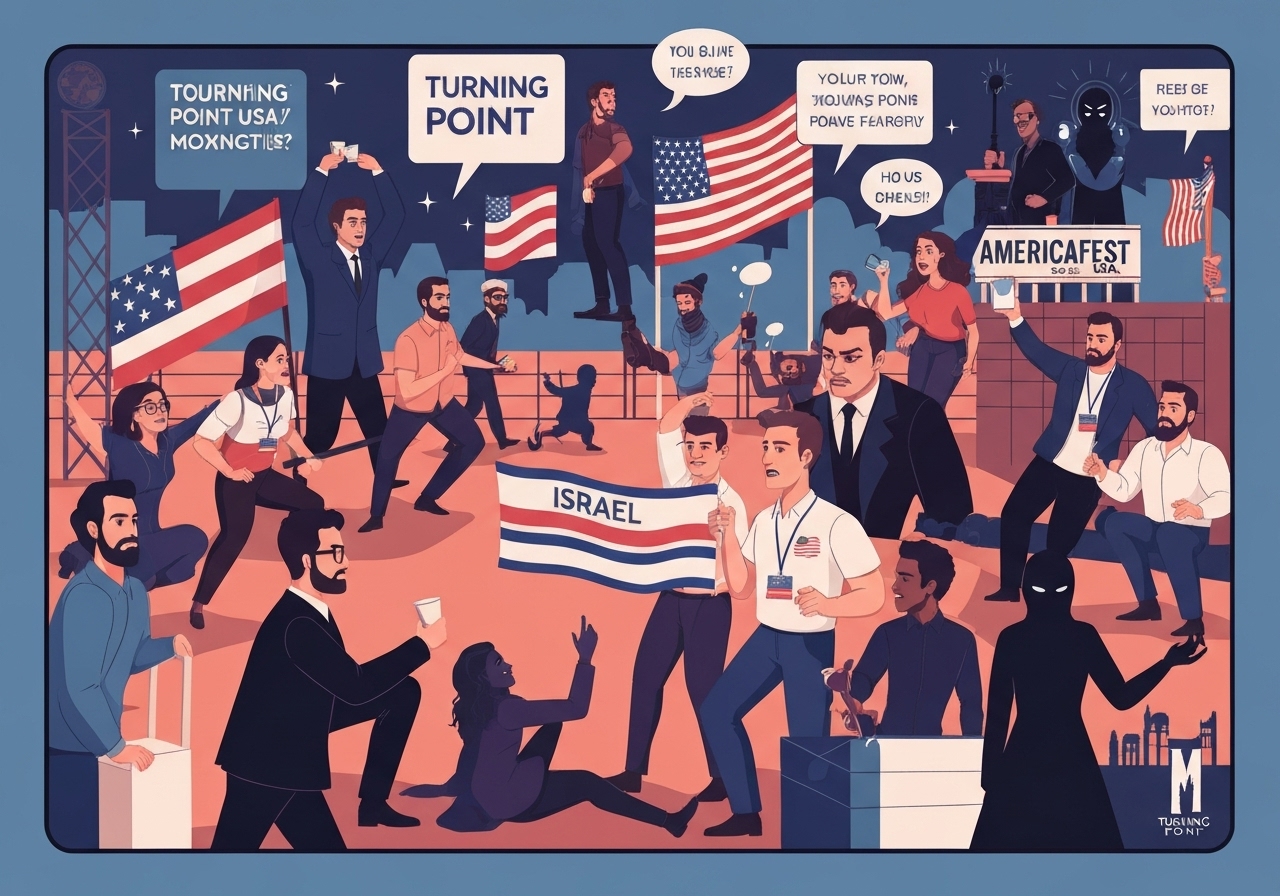
Lead: At the halfway mark of Turning Point USA’s four-day AmericaFest in Phoenix, a pattern of internecine confrontation and policy jockeying dominated the agenda. Speakers traded personal attacks and rivalries on the main stage while debates over Israel, the Make America Healthy Again (MAHA) movement and endorsements for JD Vance signaled deeper contests over the Republican coalition. Organizers and high-profile guests framed the gathering as both a show of strength and a flashpoint for future splits. The weekend’s clashes could shape who defines the party’s priorities in early primary states and beyond.
Key takeaways
- The conference ran four days in Phoenix; Erika Kirk, now leading Turning Point USA since her husband Charlie’s death in September, moderated the opening tone.
- Ben Shapiro delivered the first major address and sharply criticized fellow right-wing personalities, setting an adversarial tone for the convention.
- Tucker Carlson rebutted Shapiro within an hour on the same stage, mocking attempts to ostracize dissenting conservatives.
- Steve Bannon and Megyn Kelly added combustible rhetoric: Bannon compared Shapiro to a spreading cancer, while Kelly said their friendship had ended and framed some disputes as Israel-related.
- Candace Owens was not invited to the event but responded on her podcast, escalating the public spat with personal insults.
- Israel and the 1967 USS Liberty incident surfaced repeatedly, exposing fractures over foreign-policy instincts within the conservative movement.
- Erika Kirk publicly pledged Turning Point’s backing of Vice President JD Vance as a future Republican standard-bearer; Vance was scheduled to close the convention on Sunday.
- The MAHA movement, associated with HHS leader Robert F. Kennedy, staged a visible presence and pressed the EPA on regulatory rollbacks, prompting outreach from EPA leadership.
Background
Turning Point USA has grown into a major conservative organizing force with an extensive volunteer network concentrated in early primary states. The group’s annual AmericaFest is both a rally and a forum where media figures, activists and political operatives consolidate messaging and endorsements. That network givesTurning Point outsize influence over grassroots activation and candidate grooming, especially in presidential cycles.
Recent months have seen the Republican coalition strained by competing priorities: hardline nationalism, free-market conservatism, and populist policy initiatives such as MAHA. Personal alliances—like the Kirk–Vance link—and media personalities who command loyal followings have amplified those tensions. The Phoenix gathering arrived at a moment when intra-party dispute is increasingly public and could reconfigure who speaks for the right.
Main event
Opening remarks by Erika Kirk sought to frame the convention as lively and consequential; she used familiar, conversational metaphors to describe the atmosphere. The tone shifted quickly when Ben Shapiro took the stage and sharply rebuked prominent figures on the right, accusing some colleagues of moral failures and spreading baseless claims. His speech was pointed and personal, and it established a theme of policing rhetoric within the movement.
Within an hour, Tucker Carlson returned fire on the same main stage, ridiculing what he described as attempts to deplatform dissenting voices. Carlson’s response underscored a broader strategic rift: whether discipline and purity tests should be applied to media allies or whether an expansive tent that tolerates heated rhetoric is preferable.
Other speakers continued the pattern. Steve Bannon used inflammatory language to brand Shapiro a contagion, while Megyn Kelly dismissed Shapiro’s standing and tied part of the dispute to differing views on Israel. Candace Owens, excluded from the event, answered on her podcast with sharp insults, keeping the feud in the public square. These personal clashes frequently eclipsed critiques of left-wing opponents.
On policy fronts, Israel dominated several panels and exchanges, with some attendees invoking the 1967 USS Liberty incident to question longstanding assumptions. The disagreements were not purely rhetorical; they revealed divergent foreign-policy instincts that could influence candidate positioning. Meanwhile, Erika Kirk signaled institutional support for Vice President JD Vance, promising Turning Point’s organizational muscle for a future presidential bid.
MAHA activists and allied wellness influencers were prominent on the floor, demanding regulatory shifts—especially at the Environmental Protection Agency. Speakers urged a break from corporate interests they allege would split MAGA from MAHA, and they publicly called for the removal of EPA Administrator Lee Zeldin. The EPA reportedly engaged MAHA actors and indicated plans to publish a MAHA-related agenda; the agency did not provide an immediate comment at the time of reporting.
Analysis & implications
The convention exposed a conservative movement in which media personalities now function as power brokers, shaping who gets credibility and access. When commentators publicly target each other, they not only trade personal blows but also redraw the boundaries of acceptable rhetoric and policy for the broader coalition. That process can accelerate realignments as activists and donors pick sides.
Turning Point’s organizational reach means its endorsements and mobilization capacity matter in primary states. Erika Kirk’s pledge for JD Vance signals an attempt to translate media influence into electoral horsepower; if Turning Point activates its volunteer network on Vance’s behalf, it could alter candidate trajectories in early contests. That influence will depend on whether the group can hold together amid factionalism.
The Israel debates at AmericaFest point to an emerging cleavage that crosses traditional partisan lines: some speakers voiced skepticism about unconditional alignment with Israel on grounds aligned with an “America First” stance, while others defended historical commitments. Such disputes could complicate GOP foreign-policy unity and affect relationships with pro-Israel constituencies and donors.
MAHA’s prominence at the convention suggests a potential policy lever for the right in areas like health and environmental regulation. If MAHA-aligned figures succeed in shaping agency agendas (the EPA was explicitly referenced), that would mark a substantive policy shift with national implications. The resulting policy fights could further fracture coalitions already divided by personality and ideology.
Comparison & data
| Speaker | Main Target(s) | Tone |
|---|---|---|
| Ben Shapiro | Fellow right-wing media figures | Critique / denunciatory |
| Tucker Carlson | Deplatforming advocates | Mocking / defiant |
| Steve Bannon | Ben Shapiro | Combative / incendiary |
| Megyn Kelly | Shapiro, movement gatekeeping | Dismissive / personal |
The table highlights how a handful of high-profile speakers used the same platform to attack different targets—often each other—rather than focusing on external opponents. That pattern amplifies internal competition and makes coalition-building more fraught ahead of nominating contests.
Reactions & quotes
Speakers’ remarks drew immediate responses from allies, rivals and attendees, keeping disputes in the headlines and on social platforms.
“Say what you want about AmFest, but it’s definitely not boring,”
Erika Kirk, Turning Point USA leader (opening remarks)
Kirk used familiar social metaphors to describe the convention’s contentious energy while announcing institutional endorsements. Her comments framed the gathering as both a cultural touchstone and an organizational mobilizer.
“I laughed,”
Tucker Carlson (on Ben Shapiro’s attempt to denounce dissenters)
Carlson’s terse reaction emphasized his rejection of intra-right gatekeeping and signaled a strategy of defamation minimization through mockery rather than measured rebuttal.
“Ben Shapiro is like a cancer,”
Steve Bannon (address)
Bannon’s metaphorical attack illustrated the intensity of the personal animus on display and the willingness of some figures to use inflammatory language to discredit rivals.
Explainer
Unconfirmed
- Allegations linking specific figures to organized campaigns to silence opponents remain partially sourced or anecdotal and lack full documentary confirmation.
- Claims that the 1967 USS Liberty attack was deliberate are debated among historians; assertions presented at panels reflect contested interpretations rather than settled fact.
- Reported internal calls for firing EPA Administrator Lee Zeldin were described on stage, but the extent of formal personnel moves or administration plans was not independently verified at the time of reporting.
Bottom line
AmericaFest showcased a conservative movement in active contest with itself: personalities, policy agendas and foreign-policy instincts all collided on a single stage. Personal feuds among high-profile media figures drew as much attention as policy proposals, signaling that media-driven rivalries will continue to shape who speaks for the right.
Institutional moves—Turning Point’s declared backing of JD Vance and MAHA’s pressure on regulatory agencies—suggest the convention’s consequences could reach beyond rhetoric into mobilization and policy. Whether those initiatives cohere into a unified strategy or fragment into competing power centers will influence the trajectory of Republican politics in the months ahead.