
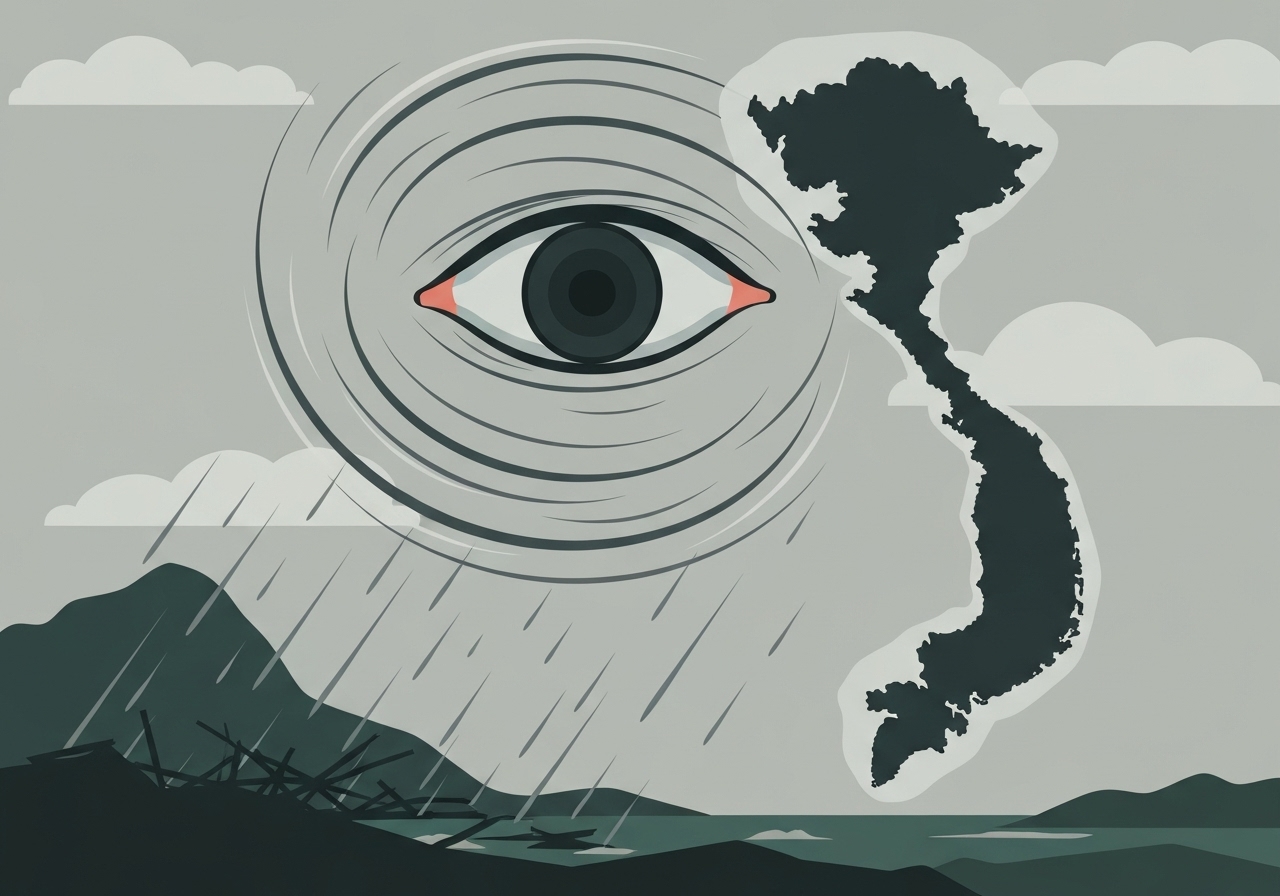
Typhoon Kalmaegi made landfall in central Vietnam on Thursday after ravaging parts of the Philippines and killing at least 114 people. The storm struck Vietnam’s Dak Lak and Gia Lai provinces at 19:29 local time (12:29 GMT), bringing sustained gusts up to 92 mph (149 km/h) and forecasts of waves as high as 8 m (26 ft). Vietnamese authorities have mobilised more than 260,000 troops and thousands of vehicles to rescue and relief operations, while six airports were forced to close and hundreds of flights were expected to be disrupted. In the Philippines the storm dumped a month’s worth of rain in 24 hours, sweeping away vehicles, destroying homes and prompting a national state of emergency.
Key takeaways
- At least 114 confirmed fatalities in the Philippines after Typhoon Kalmaegi struck, with tens of thousands evacuated from central islands including Cebu.
- Kalmaegi made landfall in Vietnam at 19:29 local time (12:29 GMT) in Dak Lak and Gia Lai provinces, producing winds up to 92 mph (149 km/h).
- Vietnam has placed more than 260,000 soldiers and personnel on standby, deploying over 6,700 vehicles and six aircraft for response and relief.
- Six Vietnamese airports were ordered closed and hundreds of flights were expected to be affected as coastal provinces faced storm surge and heavy rain.
- Meteorological forecasts warned of waves up to 8 m (26 ft) in the South China Sea and flooding and landslide risk across hundreds of localities in seven provinces and cities.
- The Philippines saw intense flooding and landslides; entire neighbourhoods in poorer districts were wiped out and heavy mud has hampered rescue and recovery.
- Vietnam had already been coping with record rains and river overflows in UNESCO-listed Hue and Hoi An before Kalmaegi’s arrival, increasing the risk of compound impacts.
Background
Southeast Asia’s typhoon season routinely brings destructive storms, but Kalmaegi — locally named Tino — arrived amid unusually heavy rains in Vietnam that had already overflowed rivers and inundated historic towns. Vietnam’s National Center for Hydro-Meteorological Forecasting had flagged elevated risks of flooding and landslides across multiple provinces, and officials cited previous storms such as Typhoon Damrey in 2017 as a reminder of how quickly coastal communities can be devastated. The Philippines, particularly central islands like Cebu, frequently faces deadly flash floods and landslides when typhoons stall and drop intense rainfall. Many affected areas are densely populated and include poorer neighbourhoods built with lighter materials that are more vulnerable to flood and wind damage.
National and local governments in both countries routinely issue evacuation orders and mobilise military and emergency assets for storms of this scale, but the speed and concentration of rainfall — in some places equivalent to a month’s precipitation in 24 hours — overwhelmed defences and local capacities. Transport infrastructure is especially vulnerable: airports, roads and bridges are key nodes that, when closed or damaged, hamper both immediate rescues and subsequent supply deliveries. Coastal fisheries and aquaculture can also suffer catastrophic losses from storm surge and wave action, with long-term economic consequences for communities dependent on the sea.
Main event
Kalmaegi first battered the central Philippines, where heavy rain and violent currents swept cars through streets and tore away homes in low-income districts. Witnesses described buses and shipping containers thrown about in floodwaters, and images showed entire neighbourhoods reduced to mud and wreckage. Local authorities reported mass evacuations, and President Ferdinand Marcos Jr declared a state of emergency to unlock resources and coordinate the national response.
After crossing the South China Sea, Kalmaegi made landfall in Vietnam late Thursday, striking Dak Lak and Gia Lai provinces. Vietnamese weather services warned that hundreds of localities across seven provinces and cities faced imminent flooding and landslides within hours. Reports from provincial media described roofs ripped from houses, shattered hotel glass, uprooted trees and fallen debris blocking main roads, particularly around Quy Nhon and other coastal communities.
Vietnam’s defence ministry and government portal said more than 260,000 soldiers and personnel, alongside over 6,700 vehicles and six aircraft, were mobilised to reach isolated areas, evacuate residents and deliver food, water and essentials. Officials in some coastal communes were knocking on doors to urge last-minute evacuations and to transport vulnerable people to shelters. Airports in six provinces were ordered closed, and authorities warned of significant disruption to scheduled flights.
Analysis & implications
Humanitarian impact: The immediate toll in the Philippines — at least 114 dead — underlines how quickly extreme rainfall can translate into mass casualties, especially in mountainous and urban-watershed zones where mudslides and flash floods are common. Displacement and damage to homes mean prolonged shelter, sanitation and health needs, and the muddy, debris-strewn environment complicates both search-and-rescue and disease-prevention efforts.
Economic consequences: Beyond the tragic immediate losses, Kalmaegi threatens fishing livelihoods and agricultural seasons in both countries. Forecasts of 4–6 m localised sea-level rises and high waves risk capsizing boats and destroying fish farms, while inland flooding can ruin rice paddies and other crops. The closure of airports and damage to roads will also interrupt supply chains, tourism, and commerce in affected provinces.
Governance and preparedness: Vietnam’s large-scale military mobilisation demonstrates robust national capacity for rapid response, but the storm highlights gaps in infrastructure resilience and early-warning reach, particularly for remote communes. The comparison to Typhoon Damrey (2017) — which caused severe coastal damage at lower intensity — suggests that increasing storm intensity and sea-level rise will make adaptation more urgent. For the Philippines, the event reinforces long-standing challenges in urban drainage, slope management and housing quality in vulnerable communities.
Comparison & data
| Location | Confirmed fatalities | Evacuations | Response assets | Max winds / wave |
|---|---|---|---|---|
| Philippines (central, incl. Cebu) | At least 114 | Tens of thousands | Local/National emergency teams | Heavy rainfall; severe flooding |
| Vietnam (Dak Lak, Gia Lai & coastal provinces) | Not finalised | Large-scale evacuation orders | 260,000+ soldiers, 6,700+ vehicles, 6 aircraft | Winds up to 92 mph (149 km/h); waves up to 8 m |
The table summarises known figures at the time of reporting: fatalities are confirmed in the Philippines, while casualty totals in Vietnam remain preliminary. The concentration of military resources in Vietnam — over a quarter-million personnel — is indicative of a major national emergency response. Rainfall intensity, rather than wind alone, has been the principal driver of devastation in the Philippines, where rapid runoff produced destructive mudflows and urban inundation.
Reactions & quotes
“We must reach isolated areas and ensure people have food, drinking water, and essential supplies. No one should be left hungry or cold.”
Prime Minister Pham Minh Chinh (Vietnam, quoted by local media)
Vietnamese leadership emphasised rapid outreach to isolated communities and the provision of essentials. The quote framed the government’s mobilisation and the priority to prevent secondary humanitarian crises.
“We didn’t expect the surge of rain and wind. We’ve experienced many typhoons before, but this one was different.”
Mely Saberon, Talisay City survivor (Philippines)
Survivors in the Philippines described shock at the speed and ferocity of flooding that destroyed homes and livelihoods. Their accounts highlight how extraordinary rainfall intensity can overwhelm typical local preparations.
“Officials were going house to house warning people to evacuate.”
AFP reporter on the ground (news agency observation)
News agency reporters observed door-to-door evacuation efforts in coastal communities prior to landfall, underscoring both urgent community-level action and the reliance on local officials to convey warnings.
Unconfirmed
- Full casualty and displacement totals in Vietnam remain provisional as local reports are still being compiled and verified.
- Detailed damage assessments to fisheries and aquaculture farms in the coastal provinces are not yet confirmed and require aerial and field surveys.
- Specific counts of flights cancelled or the final list of closed airports may change as authorities update operational status.
Bottom line
Typhoon Kalmaegi has delivered a lethal punch to the central Philippines and then struck Vietnam amid already-extreme seasonal rains, creating a compound disaster across national borders. The confirmed death toll in the Philippines — at least 114 — and extensive damage to homes and transport infrastructure underscore the immediate humanitarian priority of search, rescue and emergency shelter. Vietnam’s large-scale military deployment and evacuation orders aim to limit loss of life, but numbers on casualties and economic damage will likely rise as assessments continue.
In the medium term, both countries face reconstruction, livelihood recovery and infrastructure repairs that could take months to complete. The event also reinforces the urgent need for climate-resilient planning in coastal and flood-prone areas, improved early-warning reach for remote communities, and investments in drainage and slope stabilization to reduce future casualties from extreme rainfall. International and regional coordination for relief supplies and technical support may be required if damage proves widespread.