
Lead
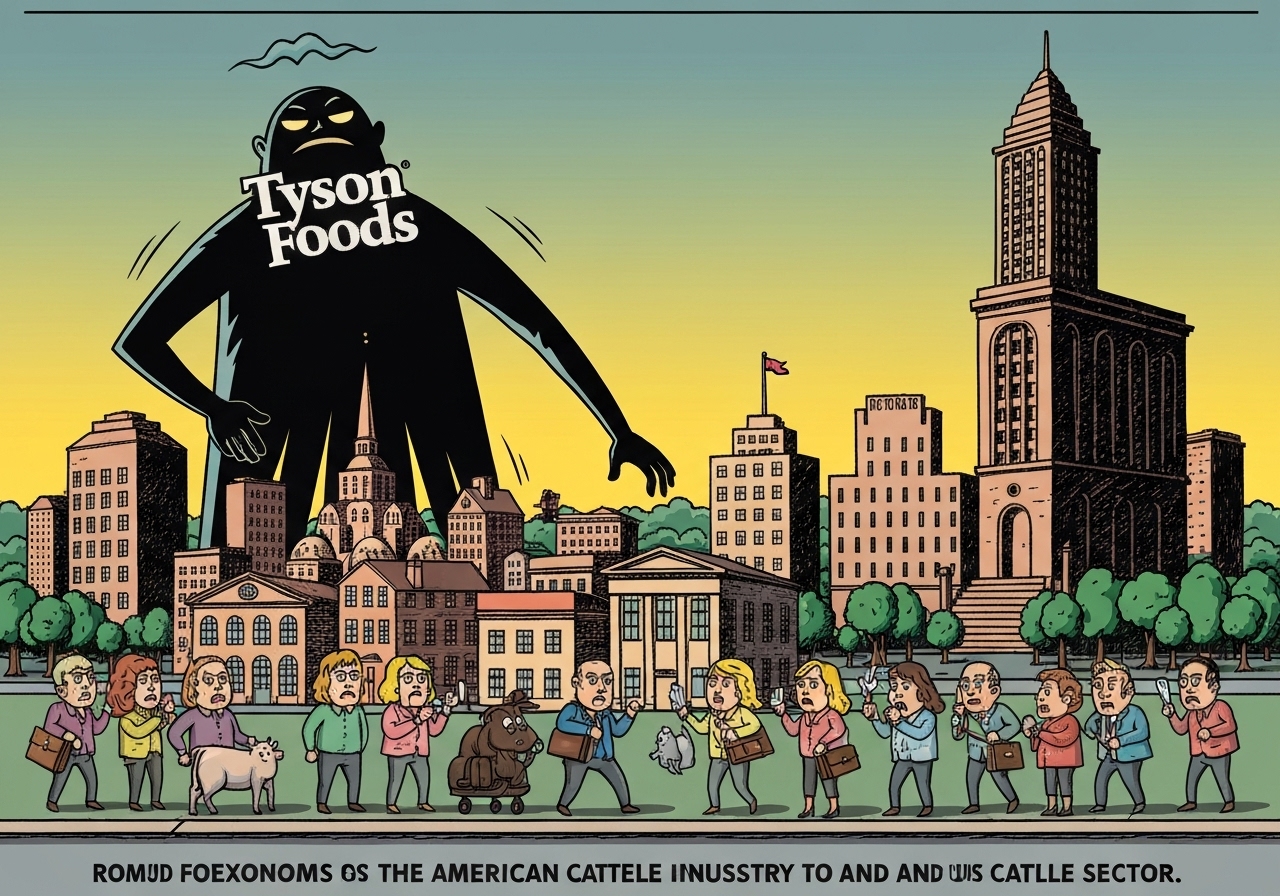
Tyson Foods announced it will close its Lexington, Nebraska beef plant in January, a facility that employs about 3,200 people in a city of roughly 11,000 and can slaughter about 5,000 cattle per day. The company also plans to cut one shift at its Amarillo, Texas plant, eliminating about 1,700 jobs; together those actions will reduce U.S. beef processing capacity by an estimated 7–9%. Short-term grocery prices may not jump immediately because cattle currently destined for slaughter will still be processed, but analysts warn the closure and other pressures could push beef prices higher over the longer term. Ranchers and local businesses face an abrupt shock to incomes and markets while national supply dynamics shift amid changing tariff policy and rising imports.
Key Takeaways
- The Lexington, Nebraska plant employs roughly 3,200 people in a town of about 11,000 and can process about 5,000 head of cattle per day.
- Tyson will eliminate about 1,700 jobs by cutting a shift at its Amarillo, Texas plant; combined moves reduce U.S. beef processing capacity by an estimated 7–9%.
- Tyson expects to lose more than $600 million on beef this year after about $720 million of losses over the prior two years.
- Brazil accounted for about 24% of the beef imported into the United States this year; tariff changes could further boost imports.
- Average U.S. beef consumption is projected at about 59 pounds (27 kilograms) per person this year, supporting continued consumer demand despite record prices.
Background
The Lexington plant opened in 1990 and later became a major employer after acquisition by Tyson Foods, helping to revive a town that had been shrinking and attracting thousands of immigrant workers. Over decades the plant became the economic backbone of Lexington, prompting new housing, small-business ventures and public services that now depend on steady payrolls. At the national level, the meatpacking industry has seen both consolidation and the rise of smaller, government-encouraged slaughterhouses intended to increase competition with large firms like Tyson.
Those structural changes sit atop broader market pressures: prolonged drought in parts of the West, fluctuating feed costs, and evolving trade policy that has altered the flow of beef imports. Political shifts in tariff policy have opened the door to more foreign beef, particularly from countries such as Brazil, which already supplies a sizable share of U.S. imports. The combination of excess domestic slaughter capacity and shifting trade flows has left the sector vulnerable to both plant-level closures and price swings for ranchers.
Main Event
Tyson announced late last week that it will close the Lexington beef plant in January and cut a shift at its Amarillo facility, actions the company described as steps to improve efficiency across its beef operations. Company statements said workers at Lexington will be offered opportunities to transfer to other Tyson locations, but those moves would require many employees to relocate hundreds of miles away. Local leaders and residents were informed in briefings and town meetings, where officials outlined transition assistance but acknowledged large gaps remain.
Local business and civic leaders characterized the announcement as a severe blow to Lexington’s economy. Clay Patton, vice president of the Lexington-area Chamber of Commerce, said the decision felt like a “gut punch” to a community that has grown around the plant for decades. Churches and social-service organizations have already expanded food pantry hours, counseling and transportation aid to meet rising immediate needs among affected families.
In cattle markets, the loss of a major regional buyer and the prospect of increased imports have placed downward pressure on feeder cattle prices while raising uncertainty about producers’ incentives to expand herds. Analysts say the immediate supply of animals scheduled for slaughter will still be processed in the near term, but longer-term market balance will depend on ranchers’ willingness to rebuild herds and on how much imported beef fills domestic demand.
Analysis & Implications
Closing a single large plant has ripple effects beyond lost jobs; it alters regional supply chains for feed, trucking, veterinary services and small businesses that rely on plant payrolls. Lexington’s recent urban development and demographic gains were tied closely to the plant’s presence; reversing those trends will take time and substantial external investment if out-migration of workers occurs. Local tax revenues and school enrollments could decline, pressuring municipal budgets already built around steady employment levels.
For ranchers, the closure reduces a nearby outlet for livestock and contributes to a national processing capacity drop estimated at 7–9%, which can compress prices received at the farm gate. Many producers face high input costs for feed and land; absent clearer profit signals, they have limited incentive to rebuild herds, potentially tightening future supply and exerting upward pressure on retail beef prices. Economists note that U.S. per-capita beef consumption has held near record levels, which complicates how quickly retail prices might react or how imports could substitute for domestic production.
Trade policy is a key wild card. Increased beef imports from Brazil—already a major supplier—can blunt retail price hikes for consumers but exacerbate downward pressure on domestic cattle prices, squeezing ranchers and feedlots. Tariff reductions or further changes could shift import volumes rapidly; market participants and analysts warn that policy volatility increases planning risk across the supply chain. Meanwhile, Tyson’s multiyear losses in beef production suggest the firm is pursuing capacity and cost realignments to restore profitability, and that may prompt further consolidation or modernization across the sector.
Comparison & Data
| Metric | Value |
|---|---|
| Lexington plant employment | ~3,200 employees |
| Lexington population | ~11,000 residents |
| Plant slaughter capacity | ~5,000 head/day |
| Amarillo job cuts | ~1,700 jobs (one shift cut) |
| Estimated national processing capacity loss | 7–9% |
| Brazil share of U.S. beef imports (year-to-date) | ~24% |
| U.S. per-capita beef consumption (this year) | 59 lb (27 kg) |
| Tyson beef business losses | >$600M (this year); $720M prior two years |
These figures show the local scale of the Lexington closure and its national market context. The plant’s daily capacity and local employment underline why the closure is a major shock for a small city, while the import share and consumption data help explain why domestic and international flows both matter for prices and producer incentives.
Reactions & Quotes
Local officials, faith leaders and industry groups responded quickly, emphasizing both immediate needs and longer-term concerns about community viability and market stability.
“It felt like a gut punch to our community — this plant has been central to Lexington’s recovery and growth,”
Clay Patton, Lexington-area Chamber of Commerce
Patton framed the closure as a sudden reversal of decades of economic gains tied to the plant and said local organizations are mobilizing emergency supports for affected families.
“People are completely worried. The economy in Lexington is based in Tyson,”
Elmer Armijo, First United Methodist Church leader
Armijo described expanded church services already under way, including counseling and food assistance, and noted the stress on social services if large numbers of households lose income.
“There’s just a lack of confidence in the industry right now; producers are unwilling to make the investment to rebuild,”
Bill Bullard, R-CALF USA (industry group)
Bullard highlighted how price expectations and input costs affect ranchers’ decisions about herd size, stressing that prolonged low margins discourage expansion even if processors later need more cattle.
Unconfirmed
- Whether the majority of Lexington workers will accept relocation offers and successfully reestablish employment at other Tyson plants is unknown and depends on family and housing constraints.
- The extent and timing of tariff changes that will determine future Brazilian beef import volumes remain uncertain and subject to further policy decisions.
Bottom Line
The closure of Tyson’s Lexington plant is both a local economic crisis and a national signal that the beef sector is undergoing structural adjustment. For Lexington, the immediate priority is supporting displaced workers and stabilizing services; for the industry, the event alters processing capacity and exacerbates price uncertainty for ranchers and feedlots.
Policy choices on trade and any further industry consolidation will shape whether consumers see muted price effects or sharper retail increases over the next several years. Observers should watch cattle prices at the farm gate, shifts in import volumes, and whether Tyson or competitors accelerate modernization or further closures as they pursue profitability in a challenging beef market.
Sources
- Associated Press — original report (news media)
- Tyson Foods — corporate statements and press releases (official)
- Kansas State University — agricultural economics analysis (academic)
- Creighton University — economic impact studies (academic)
- R-CALF USA — rancher advocacy statements (industry advocacy)