
Lead
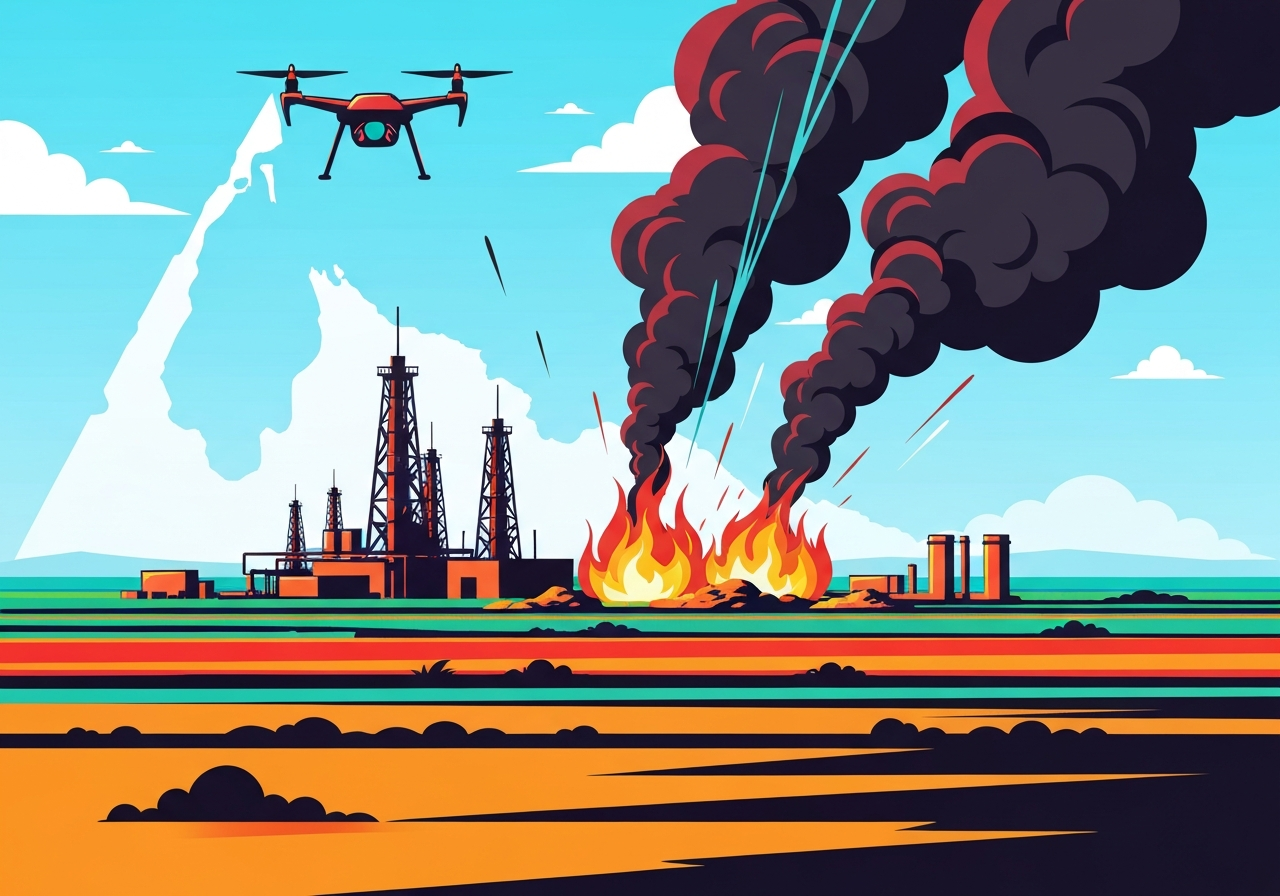
On March 16, 2026, a drone strike struck the Shah natural gas field in the United Arab Emirates, triggering a large fire and prompting Abu Dhabi to suspend operations while damage is assessed. The incident occurred amid a wave of attacks on Persian Gulf energy infrastructure that also included strikes on an Iraqi oil field and a key Emirati port. Abu Dhabi publicly attributed the Shah blaze to a drone attack as the wider conflict entered its third week. The strikes add immediate strain to an already tense global fuel-supply environment.
Key Takeaways
- Attack date: March 16, 2026 — a drone hit the Shah natural gas field in the UAE, setting a fire and halting operations for assessment.
- Multiple targets: Iranian drones and missiles were reported to have also struck an Iraqi oil field and a major Emirati port on the same day.
- Operational impact: Abu Dhabi announced suspension of activities at Shah while officials evaluate damage and safety conditions.
- Conflict timeline: The attacks come as the broader conflict enters its third week, marking an intensification of strikes on energy infrastructure.
- Market signal: Analysts warn the strikes increase short-term supply risk for regional gas and oil flows that serve global markets.
Background
The Persian Gulf region supplies a significant share of the world’s oil and gas, and infrastructure there has been repeatedly vulnerable during periods of regional tension. Over recent weeks the conflict involving Iran and opposing forces has seen a stepped-up campaign targeting energy facilities, shipping and port nodes that underpin export routes. Attacks on production and export infrastructure can ripple quickly through global commodity markets because spare pipeline and export capacity in the Gulf is limited. Key stakeholders include producing states such as the UAE and Iraq, regional security actors, shipping insurers, and importers in Europe and Asia that depend on stable flows of hydrocarbons.
Historically, even brief interruptions or attacks near export terminals have prompted price volatility and raised insurance and shipping costs. Gulf producers have invested in redundancy and security, but the use of low-cost precision munitions such as drones and cruise missiles complicates defense. Diplomatic channels and multinational naval patrols have at times attempted to deter attacks, but the current pattern reflects a more dispersed and persistent threat environment. Governments and companies therefore face both immediate operational questions and longer-term strategic planning challenges.
Main Event
According to Abu Dhabi authorities, a drone strike on March 16 ignited a fire at the Shah natural gas field, one of the UAE’s gas-producing assets. Emergency crews responded and operators halted production at the site while safety checks and damage assessments were carried out; officials provided a public update as the situation evolved into the early hours of March 17. The same day, reports indicated that an Iraqi oil field and a major Emirati port were targeted by a mix of drones and missiles, suggesting coordinated or concurrent strikes across multiple points in the Gulf energy network.
Abu Dhabi’s statement focused on operational suspension and damage assessment rather than casualty figures or estimates of material loss. On-the-ground accounts and official briefings have emphasized containment of the blaze but left the full scope of structural or subsurface damage under evaluation. The incidents came amid heightened alerts across Gulf facilities, with some ports and terminals increasing security postures and rerouting certain shipments as a precaution. Operators and regulators have been exchanging situational reports to determine immediate implications for exports and domestic supply.
The targeting pattern — energy fields, a port and an oil facility in Iraq — underscores the attackers’ apparent focus on critical nodes that influence export volumes and logistics. While emergency response priorities have centered on personnel safety and preventing escalation of fires, authorities are concurrently cataloguing damage to wells, process equipment and export infrastructure. The multi-site nature of the strikes complicates repair timelines because specialized crews, parts and safety clearances will be required before normal operations can safely resume.
Analysis & Implications
In the short term, the Shah field suspension reduces available regional gas output and raises immediate questions about the timing of any supply disruptions to local power systems or LNG feedstock chains. Even if physical damage is limited, temporary closures and heightened security checks can slow throughput and constrain exports for days to weeks. That window is enough to affect spot markets and raise costs for buyers who rely on prompt deliveries, especially during seasonal demand periods.
Medium-term implications hinge on the extent of damage and the duration of systemic disruption. If strikes continue to target production and export points, companies may need to reassess risk premia, insurance coverage and logistics routing, increasing operating costs. Prolonged outages would also pressure downstream industries in importing countries and could accelerate strategic stock releases or diplomatic efforts to stabilize flows. Policymakers face a trade-off between rapid repair and ensuring secure, defensible infrastructure.
Geopolitically, attacks that visibly damage energy assets increase incentives for third-party states to pressure de-escalation or to offer security assistance to Gulf producers. Conversely, they also raise the risk of miscalculation if targeted states respond militarily. For markets, the immediate effect is higher risk pricing; for Gulf states, there is a renewed impetus to harden installations, diversify export routes and engage in contingency planning with international partners.
Comparison & Data
| Date | Target | Weapon reported | Status |
|---|---|---|---|
| March 16, 2026 | Shah natural gas field (UAE) | Drone | Fire; operations suspended |
| March 16, 2026 | Iraqi oil field | Drones/Missiles | Targeted; assessments ongoing |
| March 16, 2026 | Key Emirati port | Drones/Missiles | Targeted; security measures heightened |
The table summarizes reported hits on March 16; official damage and production-impact figures remain under verification. While each incident involved different asset types, the common thread is an offensive focus on nodes that influence export capacity and maritime logistics. Analysts will track how quickly operators can certify safety and resume output, which will determine how enduring any market effects become.
Reactions & Quotes
UAE officials released operational updates and emphasized assessment and containment efforts, framing the immediate priority as safety and infrastructure evaluation.
“Operations at the Shah site have been suspended while authorities assess the damage and safety of the facility.”
Abu Dhabi authorities
Regional and market analysts noted the broader implications for energy security, pointing to increased premium on risk and potential rerouting of shipments while uncertainty persists.
“The strikes raise near-term risk to Gulf hydrocarbon flows and could prompt higher insurance and freight costs until routes and facilities are verified secure.”
Regional energy analyst
Local communities and commercial operators near affected sites reported heightened alertness and a focus on emergency response rather than public comment, underscoring the operational priority of containing hazards and protecting personnel.
“Emergency teams are focused on firefighting and ensuring personnel safety; detailed impact assessments will follow.”
Site operator statement (paraphrased)
Unconfirmed
- Casualty and injury figures have not been fully released; initial official updates did not provide definitive casualty counts.
- The full extent of subsurface or long-term structural damage at Shah and other affected sites remains under verification by technical teams.
Bottom Line
The March 16 strikes that set fire to the Shah gas field and hit other Gulf energy nodes mark an escalation with tangible operational consequences: immediate suspensions, safety assessments and the prospect of short-term supply tightness. Markets and policymakers should expect heightened volatility in the near term as information about damage and outage duration is clarified. Repair timelines and the continuity of maritime and export operations will determine whether the impact is transient or more persistent.
For now, the priority for affected states and companies is to complete thorough safety evaluations and to communicate verified findings to buyers and partners. International actors and importers will be watching both the technical recovery and diplomatic signals that could either calm or further unsettle regional energy flows.
Sources
- Bloomberg — media/press reporting and official statements (March 16–17, 2026)