
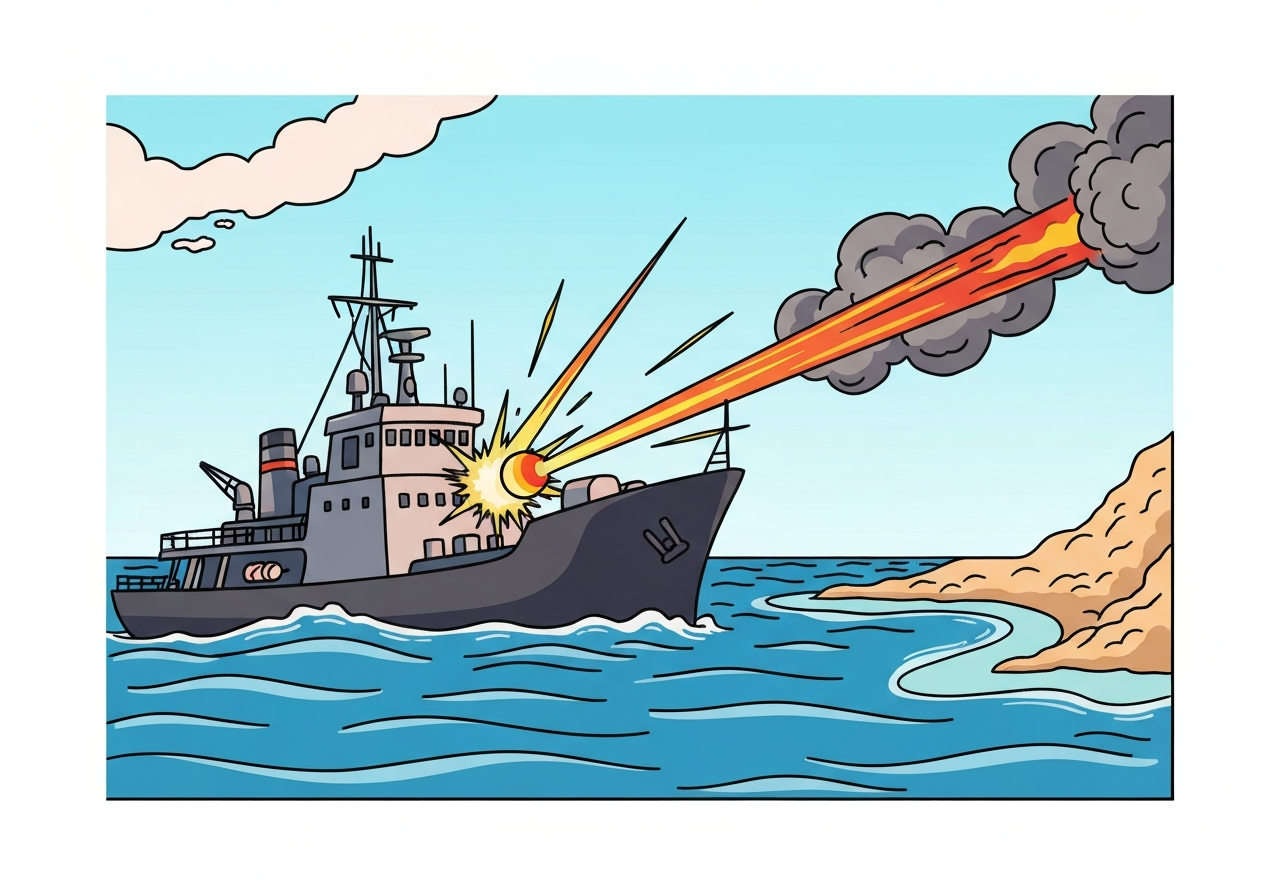
In the latest escalation of the Iran-linked conflict, an unknown projectile hit a commercial vessel 15 nautical miles north of Sharjah on Saturday; the UK Maritime Trade Operations reported all crew were safe. The strike comes amid a broader series of attacks and retaliatory threats across the Gulf, including warnings by former US president Donald Trump that he would target Iranian power plants unless the Strait of Hormuz is reopened within 48 hours. Tehran has replied by threatening to strike US energy infrastructure in the region if its facilities are attacked, while multiple countries pledge to secure shipping lanes.
Key takeaways
- The UK Maritime Trade Operations (UKMTO) reported an unknown projectile struck a vessel 15 nautical miles north of Sharjah; the crew were reported safe.
- Former US president Donald Trump issued a 48-hour ultimatum demanding the Strait of Hormuz be reopened or he would order strikes on Iranian power plants.
- Iran threatened retaliation against US energy and related infrastructure if its own fuel and power facilities are struck, according to state-linked media.
- More than 1,000 cargo ships — mainly oil and gas tankers — have been prevented from transiting the strait since the wider conflict began, disrupting global energy flows.
- The Strait of Hormuz carries just over 20 million barrels of oil per day and is the world’s most constrained Gulf chokepoint for crude and LNG exports.
- Saudi authorities reported three missiles launched toward Riyadh, one intercepted and two falling in an uninhabited area; separate incidents have been reported across the region.
- Several allied nations pledged to help ensure safe passage through Hormuz but have not detailed operational plans for escorting or clearing routes.
Background
The current flare-up traces to a broader US–Israel campaign of strikes on Iran-linked assets and a series of Iranian retaliatory actions targeting shipping and military facilities. Over recent weeks, attacks on merchant vessels and reported mine-laying in Gulf waters have sharply reduced commercial transits through the Strait of Hormuz, a narrow chokepoint that links Gulf producers to global markets.
The strait’s strategic importance stems from its role in moving crude oil and liquefied natural gas; disruption quickly ripples into international markets and national fuel supplies across Asia, Europe and beyond. Regional actors — including Saudi Arabia, Kuwait, Qatar and the UAE — have reported missile or drone activity near population centers and infrastructure, raising the risk calculus for maritime and energy operators.
Main event
The projectile strike near Sharjah was confirmed by UKMTO and reported by international agencies; initial notices stated the vessel sustained a strike but the crew were uninjured. Local authorities and shipping operators are coordinating to assess damage, secure other commercial traffic and determine whether the ship’s route can be safely resumed.
Separately, media reports and social posts said Israeli forces launched strikes on targets in Tehran early on Sunday; Israeli authorities issued brief statements describing operations against what they called regime targets. Iran’s military leadership responded by warning of wider energy-sector retaliation should its facilities be attacked.
In Washington and on social media, the situation intensified after a post by Donald Trump setting a 48-hour deadline for reopening the Strait of Hormuz. The message threatened targeted attacks on Iranian power-generation facilities if the waterway remained closed. US officials and allied partners have since been engaged in consultations about force posture and possible convoy or escort operations.
Analysis & implications
The projectile strike off Sharjah is significant chiefly because it highlights the spillover risk to neutral commercial shipping and the difficulty of isolating military objectives in a crowded maritime environment. Even single-ship incidents raise insurance costs, prompt diversion of shipping routes, and create logistical bottlenecks that reverberate through refining and delivery schedules worldwide.
Trump’s 48-hour ultimatum — framed on a social platform and delivered outside formal government channels — complicates coordination among allies and may reduce diplomatic space for de-escalation. Iran’s declared willingness to target foreign energy infrastructure marks an escalation in threat posture that could shift strategic calculations for states that currently limit direct military involvement.
Energy markets already reacted to the prolonged closure of parts of the strait, with supply-sensitive Asian economies reporting localized shortages and some governments adjusting public-sector work patterns to conserve fuel. Longer-term disruption could accelerate permanent supply-chain adjustments, including rerouting, increased strategic petroleum reserve releases, and accelerated investment in alternate energy suppliers or modes of delivery.
Comparison & data
| Route | Approx. barrels/day |
|---|---|
| Strait of Hormuz | ~20 million barrels/day |
| Strait of Malacca | ~23.2 million barrels/day |
The table above shows that while Malacca moves slightly more crude overall, Hormuz is far harder to bypass for Gulf exports because of geography and the absence of practicable alternate sea routes. The strait’s constrained shipping lanes — two narrow 2-mile-wide channels — make large commercial convoys and mine-clearance operations especially challenging.
Reactions & quotes
Authorities reported the vessel strike and stressed the crew’s safety while investigations continue.
UK Maritime Trade Operations (UKMTO)
The 48-hour demand to reopen Hormuz was framed as a direct ultimatum, warning of strikes on power infrastructure if the passage remains closed.
Former President Donald Trump (Truth Social post, paraphrased)
Iran warned that attacks on its fuel and energy installations would be met with strikes on energy and related infrastructure belonging to adversaries in the region.
Iranian Armed Forces / Fars news agency (state-linked media)
Unconfirmed
- Reports that Iranian forces have systematically laid mines throughout the strait have not been independently verified by open-source imagery or third-party naval authorities.
- Claims that more than 1,000 vessels are physically trapped in port or at anchor are based on aggregated shipping notices and industry counts and have not been fully reconciled with port authority manifests.
- Attribution of the Sharjah-area projectile to any specific state or non-state actor remains unconfirmed pending forensic inspection and intelligence assessments.
Bottom line
The strike off Sharjah underscores how quickly targeted incidents at sea can escalate into broader strategic confrontations when national leaders and state militaries exchange public threats. For commercial shipping and energy markets, the immediate risk is operational disruption and sharply higher insurance and freight costs; for diplomats, the priority is preventing a miscalculation that draws more states directly into hostilities.
In the coming days, watch for independent maritime incident reports, formal statements from coalition partners on escort or clearance missions, and corroborated intelligence on the presence of mines or attack platforms in Gulf waters. Policymakers face a narrow window to craft a coordinated response that preserves freedom of navigation while minimizing further escalation.