
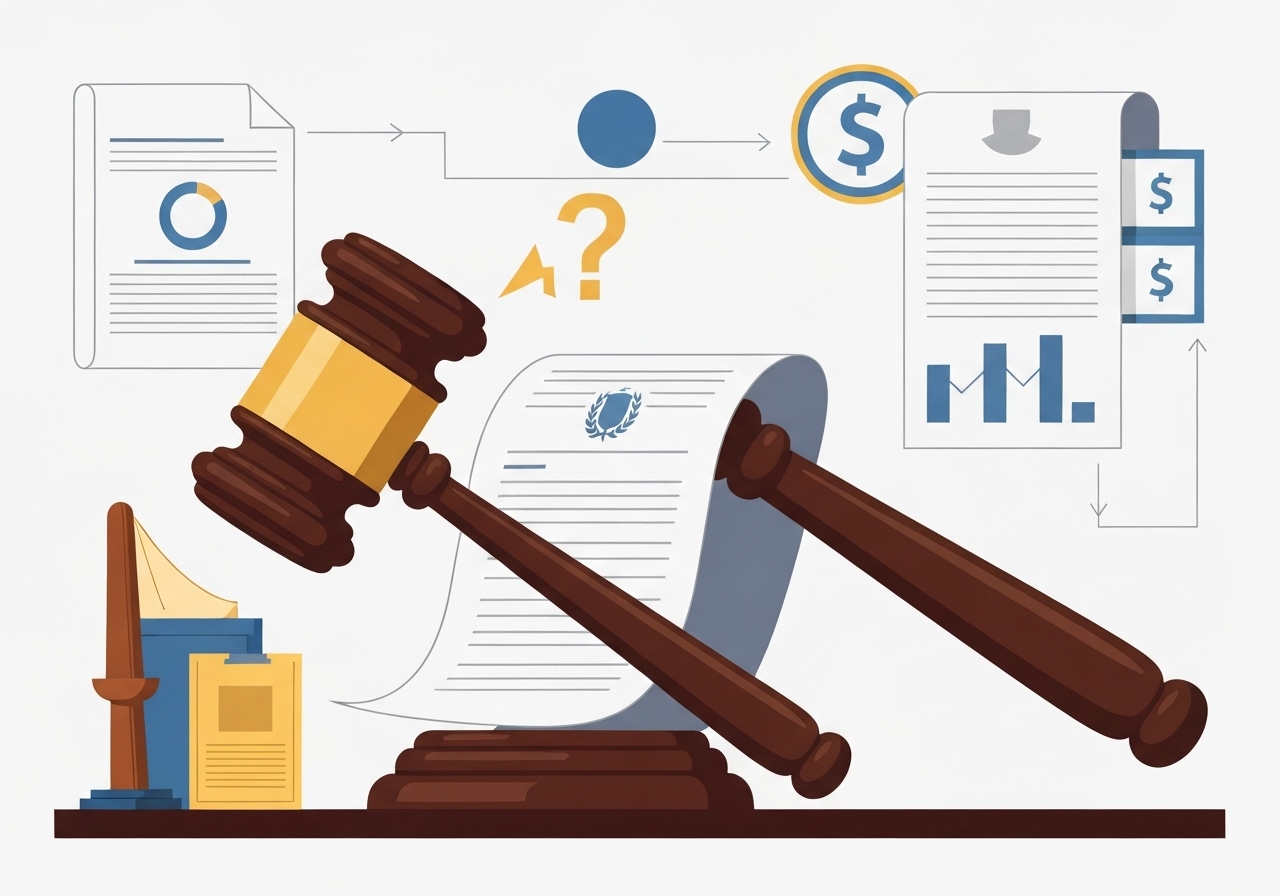
On Friday, November 14, 2025, U.S. District Judge Rita F. Lin of the Northern District of California issued a preliminary injunction preventing the Trump administration from enforcing a proposed $1.2 billion penalty and sweeping campus mandates against UCLA. The court order pauses a government settlement offer that accompanied the suspension of $584 million in federal research grants to UCLA and halts immediate conditions that would have required extensive institutional changes. The decision was brought by more than a dozen faculty and staff unions across the University of California system, which argued the federal actions violated First Amendment and due process rights. For now, the injunction preserves UCLA’s ability to pursue new grants while the litigation proceeds.
Key Takeaways
- Judge Rita F. Lin issued a preliminary injunction on November 14, 2025, blocking the federal government from imposing a $1.2 billion fine and associated settlement terms on UCLA.
- The government had suspended $584 million in medical, science and energy research grants to UCLA while proposing a 7,000-plus-word settlement with wide-ranging conditions.
- The settlement proposal sought changes including limits on diversity programs, restrictions on foreign student enrollment, and directives on gender recognition and speech policies.
- More than a dozen UC faculty and staff unions filed the suit; UC itself was not a named plaintiff but has expressed alarm at the proposed fine.
- The injunction does not permanently resolve the dispute; the government may appeal to the 9th Circuit and Lin will consider whether a permanent injunction is warranted.
- Other institutions — Columbia, Brown and Cornell — previously agreed to pay large sums in related government actions; University of Pennsylvania and Virginia reached narrower settlements addressing transgender recognition and DEI programs.
- The UC system receives roughly $17.5 billion in federal funding annually; UC President James B. Milliken said a $1.2 billion penalty would “completely devastate” the system.
Background
The dispute traces to a federal campaign of civil-rights investigations and funding suspensions directed at leading universities. In August 2025 the Department of Justice sent the University of California a detailed settlement proposal after pausing nearly $584 million in grants to UCLA, alleging violations that included the use of race in admissions, recognition of transgender identities, and inadequate responses to alleged antisemitism during 2024 pro-Palestinian protests. UC has denied those allegations and has pushed back against conditions that critics describe as politically motivated mandates to reshape campus policy.
Administrations in recent years have used civil-rights and regulatory tools to pressure higher-education institutions, and several universities have reached settlements with the federal government. Columbia, Brown and Cornell agreed to pay significant sums in related matters, while other campuses negotiated more narrowly tailored agreements. The broader context includes political rhetoric from senior officials characterizing some universities as biased or “very bad,” and federal officials have publicly outlined approaches to use funding leverage to prompt institutional changes.
Main Event
The immediate legal action culminated in Judge Lin’s written opinion, which described a government “playbook” of investigations followed by settlement offers that demand ideological and operational shifts at universities. Lin found that plaintiffs face imminent harm because UCLA is being denied the opportunity to compete for new federal grants while the suspension remains in place. The judge characterized the proposed settlement’s demands as conditions that could affect teaching, research, and protest practices across the University of California.
Department of Justice officials have framed the settlement offer as a response to alleged legal violations; DOJ did not immediately respond to requests for comment in coverage of Friday’s ruling. At a recent hearing a government lawyer argued the settlement was speculative and not an actionable agreement, but Lin concluded that the government’s actions had already imposed real harms and chilled speech among UC faculty and staff.
Plaintiffs included faculty and staff unions and associations from all 10 UC campuses; they alleged violations of the First Amendment and procedural due process. Veena Dubal, general counsel for a plaintiff association and a UC Irvine law professor, called the injunction a turning point for academic freedom. UC administrators, while not party to the suit, have publicly warned of existential financial harm should the proposed fine be enforced.
Analysis & Implications
The injunction has immediate practical effects: it preserves UCLA’s ability to seek new federal research funds while litigation advances, stalling a pressure tactic that would have forced campuses to weigh academic autonomy against the loss of substantial grant revenue. If the government ultimately prevails and imposes sweeping conditions, public research universities could face new limits on curricular choices, personnel policies and campus protest rules, with ripple effects for research productivity and recruitment.
Politically, the case highlights the tension between federal enforcement mechanisms and university governance. The court’s language frames the dispute as a confrontation over viewpoint neutrality and administrative overreach; a ruling for the plaintiffs would constrain the executive branch’s ability to attach broad ideological conditions to federal funding. Conversely, an appellate reversal could embolden future administrations to use funding levers to press policy changes on campuses.
Economically, the stakes are large: the UC system’s $17.5 billion in federal funding supports research, medical care, and graduate training. A multi-hundred-million- or billion-dollar penalty would not only strain budgets but could necessitate program cuts, hiring freezes, or the redirection of private funds to cover gaps. That fiscal pressure is a key reason faculty and staff moved to litigate even as UC leadership negotiated quietly with the government.
Comparison & Data
| Institution | Reported Settlement / Action | Focus |
|---|---|---|
| Columbia | Hundreds of millions (reported) | Alleged violations tied to protests and discrimination claims |
| Brown | Hundreds of millions (reported) | Related allegations addressed by settlement |
| Cornell | Hundreds of millions (reported) | Similar pattern of federal pressure |
| University of Pennsylvania | Targeted agreement | Ending recognition of transgender people (reported focus) |
| University of Virginia | Targeted agreement | Restrictions on DEI initiatives (reported focus) |
Those reported settlements illustrate a spectrum: several private institutions reached large-money settlements, while some public universities negotiated narrower terms. The UCLA case differs because the injunction halts proposed conditions before they can be imposed, setting a possible precedent that could change the bargaining dynamics in ongoing and future negotiations.
Reactions & Quotes
University leaders and faculty groups framed the ruling as a defense of institutional autonomy and free expression. UC officials said the system remains focused on research and public service while safeguarding academic governance; faculty leaders described relief and vindication.
This injunction is a turning point in the fight to save free speech and research in the finest public school system in the world.
Veena Dubal, UC Irvine law professor; counsel for plaintiff association
Union and campus leaders highlighted the coordinated legal challenge across UC campuses as an unusual, systemwide defense against federal pressure. UC President James B. Milliken had warned earlier that a $1.2 billion fine would “completely devastate” the university system, a comment plaintiffs cited to illustrate the penalty’s potential harm.
UCLA faculty are honored to stand with this coalition, which shows that when faced with an administration targeting the very heart of higher education, fighting back is the only option.
Anna Markowitz, UCLA faculty association president
Unconfirmed
- Whether the DOJ intended to finalize the 7,000-plus-word settlement soon is contested; DOJ lawyers said the offer was conceptual and not agreed, but internal timing plans were not publicly verified.
- Reported settlement amounts for Columbia, Brown and Cornell were widely reported but some specific payment figures and terms remain subject to nondisclosure and have not been fully documented in public court filings.
- It is not yet confirmed whether the government will file an immediate appeal to the 9th Circuit in this specific injunction; officials have appealed other related funding rulings.
Bottom Line
Judge Lin’s preliminary injunction temporarily blocks a high-stakes move by the federal government to extract substantial financial penalties and policy concessions from a leading public university. The order preserves UCLA’s ability to apply for federal research grants and prevents immediate imposition of sweeping settlement conditions while the courts weigh constitutional and procedural claims. The case lays bare the broader conflict over the role of federal funding as a lever of policy influence over higher education and may shape how future administrations engage with universities.
Expect prolonged litigation and potential appeals: a permanent resolution could take months and may land at the 9th Circuit or higher. Meanwhile, university leaders, faculty and policy-makers will watch closely for how courts balance funding prerogatives against academic freedom, campus governance, and constitutional protections.
Sources
- Los Angeles Times (news reporting)
- U.S. Department of Justice (federal agency statements; official documents where cited)
- University of California (official university statements)