
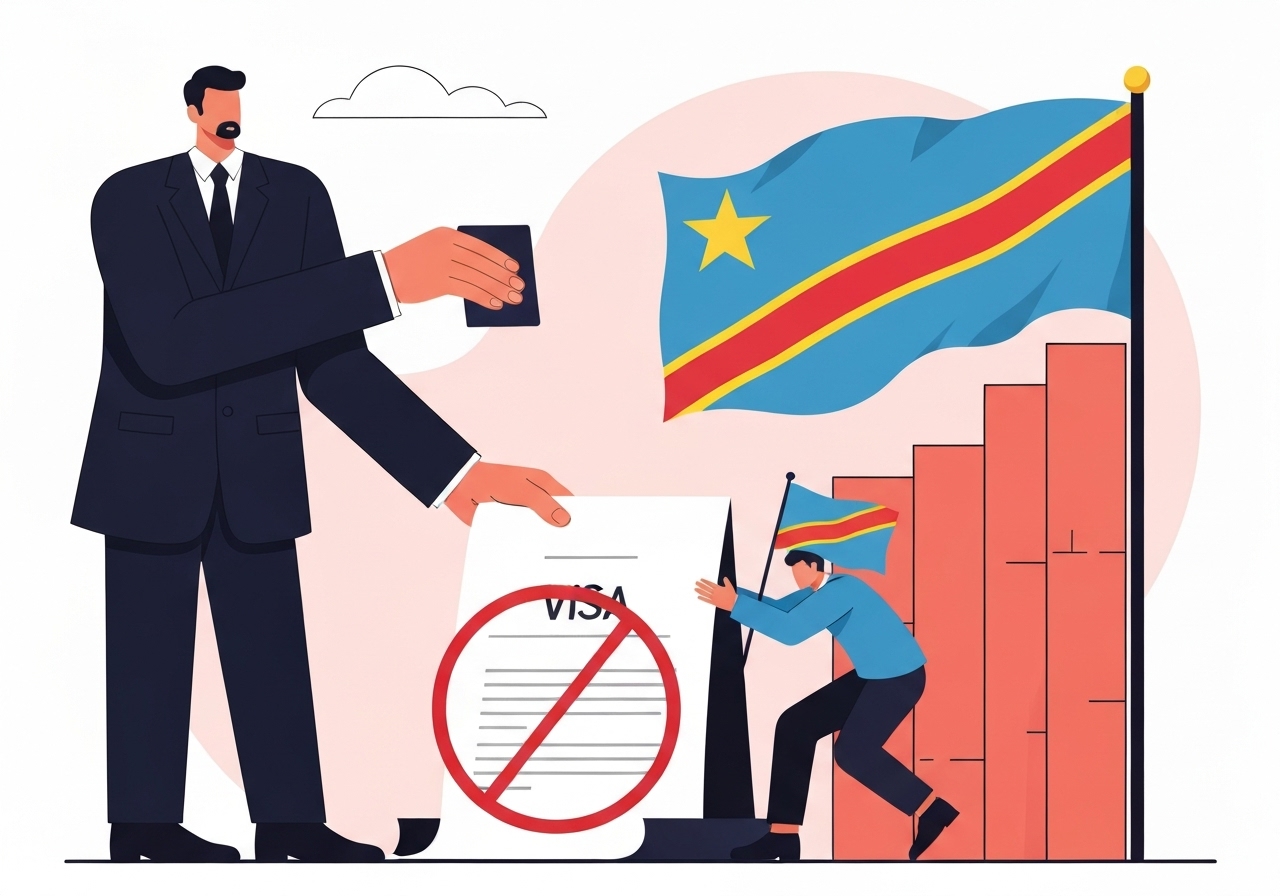
The UK government announced new visa limits on people travelling from the Democratic Republic of Congo after Kinshasa did not agree to measures to accept returned migrants and foreign national offenders. Ministers said the DRC failed to make the changes required under the asylum rule changes set out in November, prompting the removal of fast-track visa processing and an end to preferential entry for VIPs and politicians. Angola and Namibia, previously warned alongside the DRC, have accepted steps to intensify returns, a Home Office statement said. The move signals London will use visa levers to press countries to cooperate on removals.
Key takeaways
- The UK has suspended fast-track visa processing for travellers from the Democratic Republic of Congo after talks on return arrangements did not deliver required changes.
- VIPs and visiting politicians from the DRC will no longer receive expedited or preferential entry treatment, the Home Office said.
- Angola and Namibia have agreed to step up readmissions, described by the Home Office as the “first delivery success” from November’s asylum reforms.
- The government warned the DRC could face further measures, including a complete visa ban, if co-operation does not improve rapidly.
- Home Office sources estimate the new agreements with Angola and Namibia could enable “thousands” of removals, though exact figures were not published.
- The wider asylum package announced in November makes refugee status temporary, ends guaranteed housing support for asylum seekers and creates capped “safe and legal” routes into the UK.
Background
The UK introduced a package of asylum reforms in November aimed at reducing irregular arrivals and speeding up returns. Those measures include new capped legal routes, time-limited refugee status and reduced housing guarantees for asylum applicants, coupled with stronger incentives for origin countries to accept returns. London said the reforms also included an “emergency brake” on visas for states with high numbers of citizens claiming asylum in the UK if they obstruct removal processes.
For months the Home Office has flagged administrative obstacles in certain partner states — paperwork delays, requirements for returnees to sign documents in person and slow consular responses — as barriers to removals. The government identified Angola, Namibia and the DRC as countries with particularly obstructive procedures, warning they faced visa penalties unless cooperation improved. The use of visa restrictions is intended as a diplomatic tool to alter behaviour without immediate large-scale expulsions.
Main event
Today the government confirmed fast-track visa routes will no longer apply to people from the DRC and that VIPs and politicians from the country will lose preferential treatment when travelling to the UK. The Home Office framed the steps as targeted pressure designed to secure practical agreements on accepting nationals who have no legal right to remain in the UK. Officials said the decision follows engagement with Kinshasa that has not yet produced the necessary administrative changes.
By contrast, the Home Office said Angola and Namibia have agreed specific process improvements and increased co-operation on removals. The department called that development the first tangible outcome from the November reforms and said it could lead to thousands of returns, though it gave no audited figure or timeline for those removals. A government source added the Home Secretary would not hesitate to extend visa bans to other countries that continue to refuse to accept returnees.
Ministers stressed the measures are reversible: improved co-operation can restore visa services. The emphasis from Downing Street and the Home Office has been on incentivising practical, documented steps from partner governments — such as timely issuance of travel documents and consular verification — rather than punitive isolation. Nevertheless, officials did not rule out escalation if progress stalls.
Analysis & implications
Diplomatically, the use of visa restrictions as leverage is a calibrated escalation: it imposes inconvenience on travellers and political visitors while stopping short of broader sanctions. For the DRC, which has significant economic and political ties with the UK and other partners, the reputational cost may prompt quicker administrative fixes. However, such measures can also harden bilateral relations and complicate co-operation in other areas, including security and development.
For migrants and asylum seekers, the immediate effect is indirect: the policy targets the origin state’s co-operation rather than asylum applications themselves. But by weakening legal and support pathways in the UK — for example, ending guaranteed housing for new applicants and capping safe routes — the reforms may reduce overall legal options and increase pressure on irregular routes, with humanitarian groups warning of greater vulnerability for displaced people.
Legally, the measures could face scrutiny. NGOs and lawyers may challenge aspects of the wider asylum package or particular removals on human-rights grounds, especially where returnees risk persecution or where individual identity and nationality are contested. The government will need robust evidence that partner states’ procedures meet standards for safe returns to withstand judicial review and maintain international obligations.
Comparison & data
| Country | Home Office finding | Immediate UK response |
|---|---|---|
| Democratic Republic of Congo | Insufficient co-operation on paperwork and certification | Fast-track visas removed; VIP preferential entry ended; further sanctions threatened |
| Angola | Previously obstructive; now agreed to improve processes | Agreed steps noted as a delivery; potential removals envisaged |
| Namibia | Previously obstructive; now agreed to improve processes | Agreed steps noted as a delivery; potential removals envisaged |
The table summarises the Home Office’s public stance and immediate actions. While officials have characterised Angola and Namibia’s commitments as potentially enabling “thousands” of returns, the department has not published granular data on case numbers, timelines or the administrative changes those countries have promised. Independent monitoring will be needed to verify outcomes and quantify removals.
Reactions & quotes
Government spokespeople framed the measures as a necessary enforcement of agreed rules. The Home Secretary set out the UK’s expectations clearly and linked visa privileges to states’ willingness to accept returnees.
“We expect countries to play by the rules. If one of their citizens has no right to be here, they must take them back.”
Shabana Mahmood, Home Secretary
The Home Office characterised the agreements with Angola and Namibia as the first practical delivery from the November reforms.
“Angola and Namibia agreeing to improve their processes marks the first delivery success from last month’s asylum reforms.”
Home Office statement
Opposition politicians and refugee groups have signalled concern about rights and humanitarian impacts; NGOs are likely to press for transparency on numbers and safeguards for those at risk if returned.
Unconfirmed
- The Home Office’s estimate that agreements with Angola and Namibia “could see thousands” removed lacks a published, audited breakdown by case or timetable.
- It remains unclear which specific administrative steps the DRC will accept, and whether those would meet the Home Office’s stated standards for returns.
- Potential further visa bans on other countries are contingent on future negotiations and were not specified with a timeline or legal threshold.
Bottom line
The UK has moved to use visa rules as an enforcement tool after the DRC failed to provide the co-operation the Home Office says is necessary to carry out removals. Angola and Namibia’s agreements represent a partial policy success for ministers, but the practical effect will depend on implementation and independent verification of returns.
Expect diplomatic negotiations to intensify: London has signalled it will escalate further if partner states do not deliver, while rights groups and legal advocates are likely to scrutinise both the returns and the broader asylum reforms in court and public debate. The next weeks will show whether visa pressure yields the administrative fixes the government seeks or deepens tensions without producing safe, lawful returns.
Sources
- BBC News — UK restricts DR Congo visas over migrant return policy (media/UK public broadcaster)
- UK Home Office — organisation pages and official statements (official/government)