
Lead
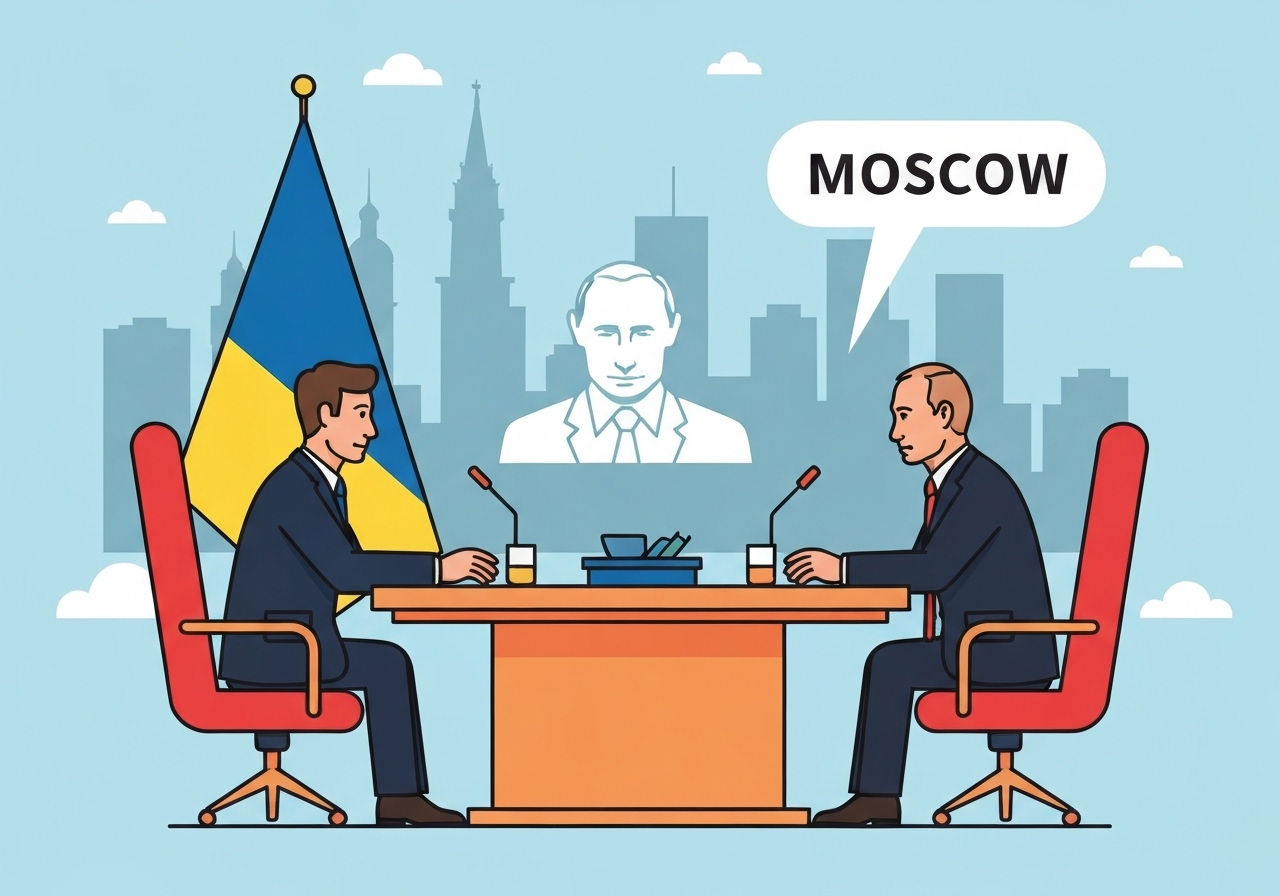
This week diplomacy around a U.S.-backed 19-point peace plan for Ukraine shifts to Moscow as U.S. Special Envoy Steve Witkoff travels to meet President Vladimir Putin on Tuesday. Kyiv has given tentative support to the amended framework, handing momentum to negotiators but leaving the central question open: will the Kremlin accept the terms. The outreach follows intensive talks in Florida and months of back-and-forth diplomacy involving Washington, Kyiv and Moscow. The immediate result hinges on Russia’s response in Moscow and how its military and political leadership weigh battlefield gains against diplomatic openings.
Key Takeaways
- Steve Witkoff, U.S. Special Envoy, is scheduled to meet President Vladimir Putin in Moscow on Tuesday, according to the Kremlin; the talks focus on a U.S.-backed 19-point peace plan.
- Ukraine has given tentative backing to the amended 19-point framework, moving the ball to Russia on whether to accept or negotiate further terms.
- The 19-point proposal is a revision of an earlier 28-point draft reportedly drafted by U.S. and Russian officials weeks earlier without Ukraine’s direct involvement.
- Russian leaders have given cautious signals of willingness to discuss the amended plan while stressing battlefield gains; Putin reiterated that fighting would end only after Ukrainian withdrawals from key positions (comments noted during his November 27, 2025 CSTO visit).
- Analysts at the Institute for the Study of War reported on November 30, 2025 that Russian military commentators express skepticism that the Kremlin will concede on territorial demands, particularly concerning Donbas.
- U.S. officials described weekend talks in Florida, including Ukrainian delegates and U.S. aides such as Jared Kushner, as “productive” but emphasized the process remains delicate and incomplete.
Background
The current diplomatic push follows months of intermittent negotiations and shifting U.S. posture on how a settlement should be structured. An initial 28-point draft emerged in recent weeks — reported to have been produced in consultations between U.S. and Russian officials — and was criticized for having favored Russian terms and for excluding Kyiv from its drafting. The 19-point plan now under discussion is an amended, U.S.-backed version that Washington says better reflects Ukrainian concerns and international norms; Kyiv has given tentative approval while reserving final judgment pending Russian response.
Russia has signaled a mix of openness and caution. President Putin, speaking during a trip to Kyrgyzstan and at the Collective Security Treaty Organisation meeting in Bishkek on November 27, 2025, said the amended plan could serve as a basis for future agreements and that the United States appeared to be taking Russian positions into account. At the same time, Kremlin statements and domestic commentary underscore Moscow’s sense that battlefield dynamics and geopolitical leverage— including perceived U.S. political shifts—strengthen its hand.
Main Event
The most immediate development is Witkoff’s arrival in Moscow for a scheduled Tuesday meeting with Putin that the Kremlin has confirmed. U.S. and Ukrainian officials had intensified consultations over the preceding days, including a four-hour session in Florida involving Witkoff, senior U.S. advisers such as Jared Kushner, and a Ukrainian delegation led by National Security and Defense Council Secretary Ustem Rumerov. U.S. Secretary of State Marco Rubio characterized the Florida session as “delicate” and said progress was made but that significant work remained.
Details of the 19-point revision have not been fully published, but officials describe it as narrowing and clarifying elements of the earlier 28-point draft while attempting to incorporate Ukrainian concerns. Kyiv’s provisional endorsement reflects a strategic choice to test whether a negotiated framework can limit further bloodshed and create conditions for longer-term settlement talks. The waiver of immediate veto by Ukraine shifts diplomatic pressure onto Moscow to respond substantively.
Moscow’s public posture combines cautious receptivity with reminders of military gains. Putin has publicly praised recent advances in Ukraine and asserted that Russian forces will pursue objectives if opposing forces do not withdraw from key positions — language that signals a continuing emphasis on territorial aims, notably in the Donbas. Russian domestic commentary and military bloggers, cited by analysts, remain skeptical that Kremlin leadership will accept proposals that would require major territorial concessions.
Analysis & Implications
If Moscow engages seriously with the 19-point framework, the talks could open a pathway to a limited ceasefire or phased disengagements; however, the devil is in the details. Key sticking points include sovereignty and control over Donetsk and Luhansk regions, security guarantees, the sequencing of withdrawals, and mechanisms for verification and enforcement. Any agreement that leaves core territorial questions unresolved would likely be temporary and vulnerable to collapse once battlefield calculations change.
Russia’s calculation is shaped by two concrete advantages: battlefield positions in parts of eastern and southern Ukraine and perceived political leverage in Washington after policy oscillations. U.S. domestic politics have complicated consistent signaling; President Donald Trump’s variable statements on Ukrainian territorial concessions have created uncertainty about the durability of U.S. commitments and the incentives that might persuade Moscow to accept compromise.
For Kyiv, tentative acceptance of a framework is a high-stakes gamble. Accepting a negotiated outline risks domestic political backlash if it is seen as conceding occupied territory, yet rejecting a diplomatically plausible path could leave Ukraine isolated if Russia refuses to negotiate and Western support wanes. For Europe and NATO, any deal that freezes lines without a credible enforcement mechanism could entrench a long-term frozen conflict with strategic consequences for regional security and deterrence.
Comparison & Data
| Draft | Origin | Points | Ukraine’s Role | Perceived Tilt |
|---|---|---|---|---|
| Initial draft | Reported U.S.-Russia consultations (weeks earlier) | 28 | Minimal direct involvement | Viewed as favoring Russia |
| Amended plan | U.S.-backed revision | 19 | Kyiv gave tentative support | Presented as more balanced |
The table illustrates the two-stage process: an earlier 28-point draft reportedly produced with limited Ukrainian input and a 19-point revision that Kyiv has tentatively endorsed. While the numerical reduction signals consolidation, it does not by itself resolve core disputes over territory, sequencing, or guarantees. The practicality of any plan will depend on enforceable verification, timelines for withdrawals, and the role international observers might play.
Reactions & Quotes
U.S. officials framed recent diplomacy as careful and measured. After the Florida talks Secretary Rubio called the session “productive” but stressed more work remained and that Russia’s position needed to be factored into any sustainable deal.
“So much work remains, but today was, again, a very productive and useful session where I think additional progress was made.”
U.S. Secretary of State Marco Rubio (press remarks)
From Moscow, Kremlin language has been cautious: officials have said the amended plan could be a basis for talks but reiterated military objectives and conditions for cessation.
“In general, we agree that this can be the basis for future agreements,”
President Vladimir Putin / Kremlin statement (Nov. 2025)
Independent analysts highlighted skepticism within Russia’s information space — including military bloggers — that the Kremlin will abandon territorial aims, suggesting domestic narratives could constrain negotiators in Moscow.
“Russian information space voices continue to argue that the Kremlin will likely reject a ceasefire or any iteration of the U.S.-proposed peace plan because the Kremlin views these efforts as inconsequential.”
Institute for the Study of War (analysis)
Unconfirmed
- Whether Moscow will accept the 19-point framework in whole or propose substantial revisions remains uncertain and unconfirmed publicly.
- The exact content of concessions Kyiv would be expected to make under the proposed plan has not been published in full, and specific territorial arrangements remain unclear.
- The degree to which U.S. domestic politics — including statements by President Trump — will materially influence Kremlin calculations is debated and not definitively established.
Bottom Line
The shift of talks to Moscow marks a critical diplomatic juncture: Kyiv’s provisional acceptance of the amended 19-point plan moves pressure onto Russia to respond. A constructive Russian reception could produce a limited pathway toward de-escalation, but only if disputes over territory, sequencing and verification are resolved in concrete terms.
Conversely, if Moscow leverages battlefield gains or domestic political narratives to reject key elements, the talks may stall and fighting could continue. Observers should watch the specifics of any Russian counterproposal, the agreed verification mechanisms, and whether international parties are prepared to enforce or monitor compliance — those details will determine whether diplomacy produces lasting change or a temporary pause.