
Lead
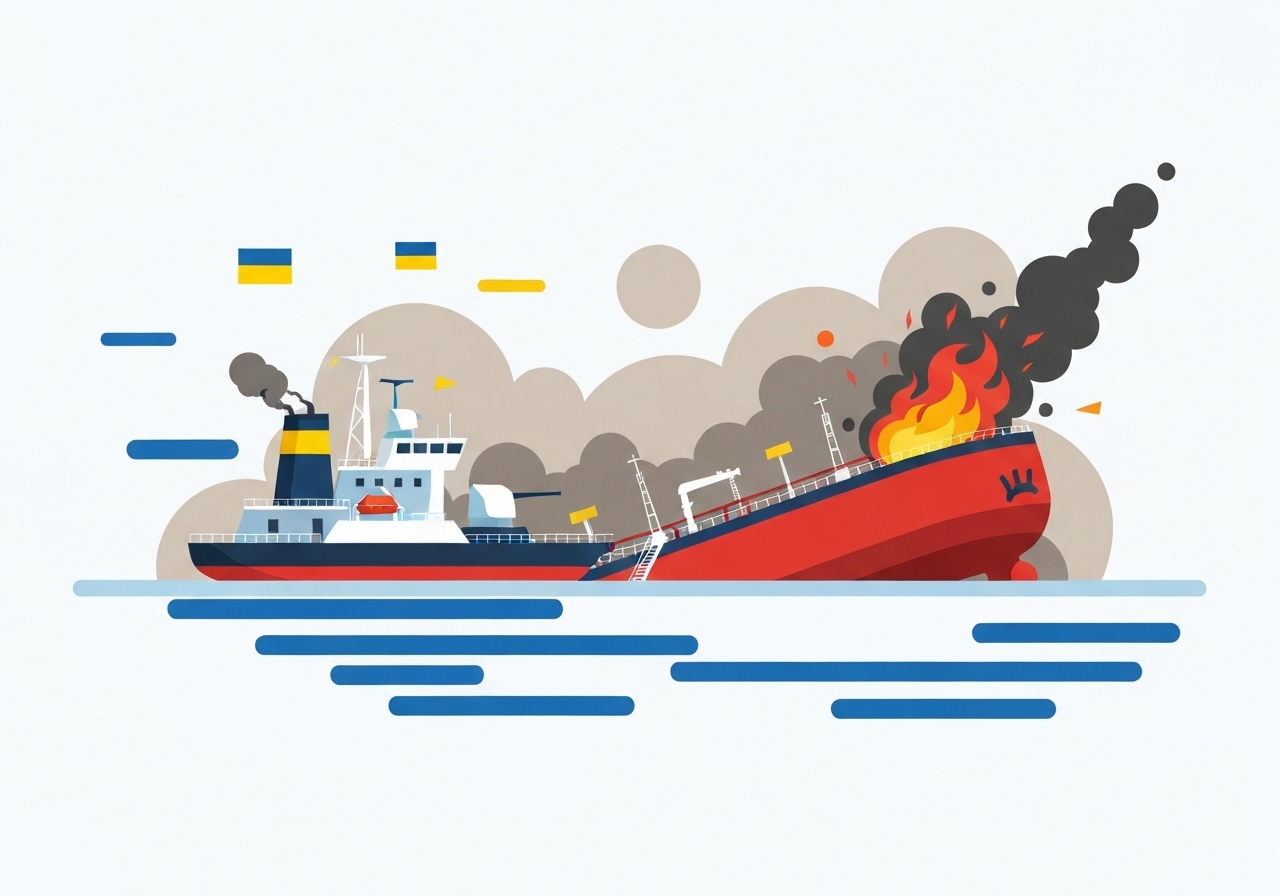
Ukraine has carried out at least four recent drone strikes on vessels linked to Russia’s shadow oil fleet and on offshore production sites, signaling a purposeful effort to reduce Moscow’s wartime revenue. The incidents include one aerial-drone strike in the Mediterranean Sea—reported more than 1,200 miles from Ukraine—and three sea-drone hits in the Black Sea. Kyiv’s security service has publicly acknowledged the tanker strikes and reported four separate attacks on Caspian Sea oil platforms in the past 10 days, including one on Thursday. The moves mark a notable expansion of the maritime dimension of the conflict and a direct assault on the logistics that help Russia evade Western sanctions.
Key Takeaways
- Ukraine reported four recent drone strikes on vessels linked to Russia’s “shadow fleet,” the first tanker attacks Kyiv has publicly acknowledged since the 2022 invasion.
- One strike occurred in the Mediterranean Sea, more than 1,200 miles from Ukraine’s borders, indicating long-range reach via aerial systems.
- Three additional tanker hits were carried out with sea drones in the Black Sea, according to Kyiv’s security service.
- The Ukrainian agency also said it struck Russian oil production platforms in the Caspian Sea four times over the previous 10 days, including on Thursday.
- Analysts warn the strikes are meant to disrupt sanction-evasion routes that funnel oil profits to Moscow and to increase Kyiv’s leverage in diplomatic talks.
- Ukraine is deploying satellite-controlled explosive speedboats nicknamed “Sea Babies” and other drone types, expanding both tactics and target sets in maritime zones.
- Western sanctions and global energy markets may feel pressure if vessel losses or heightened risk prompt rerouting, heavier insurance costs, or reduced cargo flows.
Background
After Russia launched a full-scale invasion of Ukraine in 2022, Western governments imposed sweeping sanctions aimed at curbing Moscow’s oil and gas revenues. In response, Russian traders and state-linked firms developed a covert logistical network—the so-called shadow fleet—made up of older tankers, opaque ownership, and frequent ship-to-ship transfers to disguise cargo origins.
For Kyiv and its Western partners, undermining that network has become a strategic objective because oil proceeds are a core funding source for Russia’s military operations. Over time, both state and private actors have worked to trace shipments and block sanctioned sales, but the shadow fleet has allowed significant volumes to move to markets in Asia with limited transparency.
Ukraine’s use of naval and aerial drones reflects an adaptation to that maritime challenge: small, low-cost systems extend Kyiv’s reach into sea lanes long thought relatively insulated from direct strikes. The security service’s recent public claims represent a more overt attribution than earlier, deniable incidents at sea.
Main Event
According to Kyiv’s statements and media reporting, four tankers tied to Russia’s sanction-evasion network were hit within weeks. One vessel was struck by aerial drones while transiting the Mediterranean Sea; reporters noted the hit occurred more than 1,200 miles from Ukraine’s coast. The other three were reportedly attacked with sea-launched drones in the Black Sea, where Ukrainian forces have previously harassed Russian logistics and naval units.
The security service also said it had targeted Russian offshore oil-production platforms in the Caspian Sea on four occasions during the prior 10-day span, including an attack on Thursday. Kyiv framed those strikes as part of a campaign to choke off revenue streams that sustain Moscow’s war effort.
Ukrainian forces are employing a mix of platforms, from aerial drones capable of long-range strikes to small, satellite-guided explosive speedboats known in reporting as “Sea Babies.” These systems can be launched from coastal positions or vessels and navigate autonomously to fixed or moving targets.
Operational details released by Kyiv were limited: officials emphasized the strategic intent while providing only selective tactical information. Independent verification of each strike’s damage, ownership of targeted vessels, and precise cargoes remains incomplete in open-source reporting.
Analysis & Implications
These maritime strikes have immediate tactical and longer-term strategic implications. Tactically, they increase the operational risk for vessels associated with shadow-fleet activities, potentially raising insurance premiums, diverting shipping routes, and slowing clandestine transfers. That could impose real costs on entities purchasing discounted oil through opaque channels.
Strategically, Kyiv’s campaign aims to transform maritime logistics into a pressure point that reduces Moscow’s financial capacity for protracted warfare. If sustained, attacks on tankers and platforms could incrementally degrade revenues and complicate Russia’s ability to supply its forces at current levels.
However, the measures carry escalation risks. Russia may respond with stepped-up naval patrols, defensive strikes on Ukrainian maritime assets, or retaliatory actions elsewhere. International commercial actors may seek clearer protections or avoid contested waters altogether, with knock-on effects for global energy markets and trade routes.
Politically, Kyiv’s strikes also serve a diplomatic purpose. By demonstrating offensive reach against sanction-evasion mechanisms, Ukraine strengthens its bargaining position in any talks—explicitly noted by Kyiv as a counterweight to proposals emerging from external mediators, including the administration of President Trump, which has pressed for negotiations.
Comparison & Data
| Incident Type | Count (recent period) | Location | Reported Weapon |
|---|---|---|---|
| Tanker strikes | 4 | Black Sea, Mediterranean | Sea drones, aerial drones |
| Platform attacks | 4 | Caspian Sea | Unspecified (reported by Kyiv) |
The pattern shows a near-simultaneous increase in both tanker and platform strikes across distinct maritime theaters. That dispersion suggests Kyiv is applying pressure wherever sanction-evasion infrastructure and extraction sites are reachable, rather than limiting operations to a single sea zone.
Reactions & Quotes
No money, no war machine.
Benjamin Jensen, Center for Strategic and International Studies (CSIS)
Jensen’s comment was offered by a nonpartisan Washington think tank expert to summarize why targeting revenue channels matters to Kyiv and Western strategists.
“Sea Babies”
Nickname reported for Ukrainian satellite-guided explosive speedboats
The informal name for one class of small, remote-controlled strike boats has entered coverage as a shorthand for Ukraine’s new seaborne tactics; Kyiv and independent observers have used the term while describing the systems’ role in recent attacks.
Unconfirmed
- Precise ownership and cargo manifests for the struck tankers remain unverified in independent open-source records.
- The full extent of damage to each vessel and whether any shipments were permanently disrupted is not yet confirmed by neutral observers.
- Attribution of all Caspian platform incidents to specific Ukrainian units lacks independent verification beyond Kyiv’s public statements.
Bottom Line
Kyiv’s recent maritime strikes represent a clear, purposeful campaign to target revenue streams that subsidize Russia’s war effort. By striking oil tankers tied to the shadow fleet and hitting production platforms, Ukraine is attempting to translate tactical operations at sea into strategic pressure ashore.
The approach could erode some sanction-evasion mechanisms and complicate Moscow’s energy exports, but it also risks escalation, commercial disruption and geopolitical fallout if attacks spread or provoke retaliatory measures. Observers should watch insurance markets, rerouting decisions by shipping companies, and official responses from Moscow and intermediary states to gauge how sustained and effective this pressure will be.
Sources
- The New York Times — International news reporting (original coverage of the incidents).
- Center for Strategic and International Studies (CSIS) — Nonpartisan policy research (expert commentary on sanctions and wartime finance).