
Lead
On Monday, 2 February 2026, Ukrainian authorities reported a renewed wave of Russian strikes targeting transport and logistics infrastructure across multiple regions, including Dnipro and Zaporizhzhia. The strikes have focused heavily on railway lines and facilities, prompting the national rail operator to advise passengers in the east to use buses on high‑risk routes. Separately, a drone strike in Pavlohrad killed at least 12 coal miners and injured 16 more, while diplomatic talks between Kyiv and Moscow, brokered in part by the US, were confirmed to continue in Abu Dhabi on Wednesday and Thursday.
Key Takeaways
- Russian forces have intensified attacks on transport infrastructure, with recent strikes reported in the Dnipro and Zaporizhzhia regions targeting rail facilities.
- Ukrzaliznytsia urged eastern passengers to switch to buses as several rail routes were declared “high risk” for travel disruptions and safety concerns.
- A Russian drone strike on Pavlohrad killed at least 12 miners and injured 16 people, nine of them seriously, according to Ukrainian officials and the mine operator DTEK.
- Russian and Ukrainian delegations are set to meet again in Abu Dhabi on Wednesday–Thursday after an initial round deemed “constructive,” Kremlin spokesman Dmitry Peskov confirmed.
- German authorities arrested five suspects in raids tied to an alleged export network that sent at least €30 million in goods to Russian defence companies, reportedly involving some 16,000 deliveries.
- US President Donald Trump had urged a temporary restraint on strikes against Kyiv during a cold snap; Ukrainian officials said no new energy-targeted attacks occurred in the prior 24 hours, but other infrastructure remained under attack.
Background
The conflict that escalated in 2022 has repeatedly seen adversaries strike logistics nodes to disrupt military resupply and civilian mobility. Rail lines are a longstanding strategic target in modern warfare because they carry large volumes of fuel, materiel and civilians; damage to these arteries amplifies shortages and paralyses commercial and military movement.
Over recent months, both sides have alternated between localized ceasefire gestures and renewed strikes tied to changing weather, frontline dynamics and diplomatic pressures. International mediators, including the US and Gulf hosts, have tried to convene talks to freeze or reduce operations around humanitarian windows, but such pauses have been temporary and uneven in scope.
Main Event
Ukrainian President Volodymyr Zelenskyy publicly accused Russian forces of concentrating on what he called “terror against our logistics,” specifically naming attacks on rail infrastructure in the Dnipro and Zaporizhzhia regions. State rail operator Ukrzaliznytsia reported that safety concerns have made several eastern routes unreliable and recommended alternative road travel where feasible.
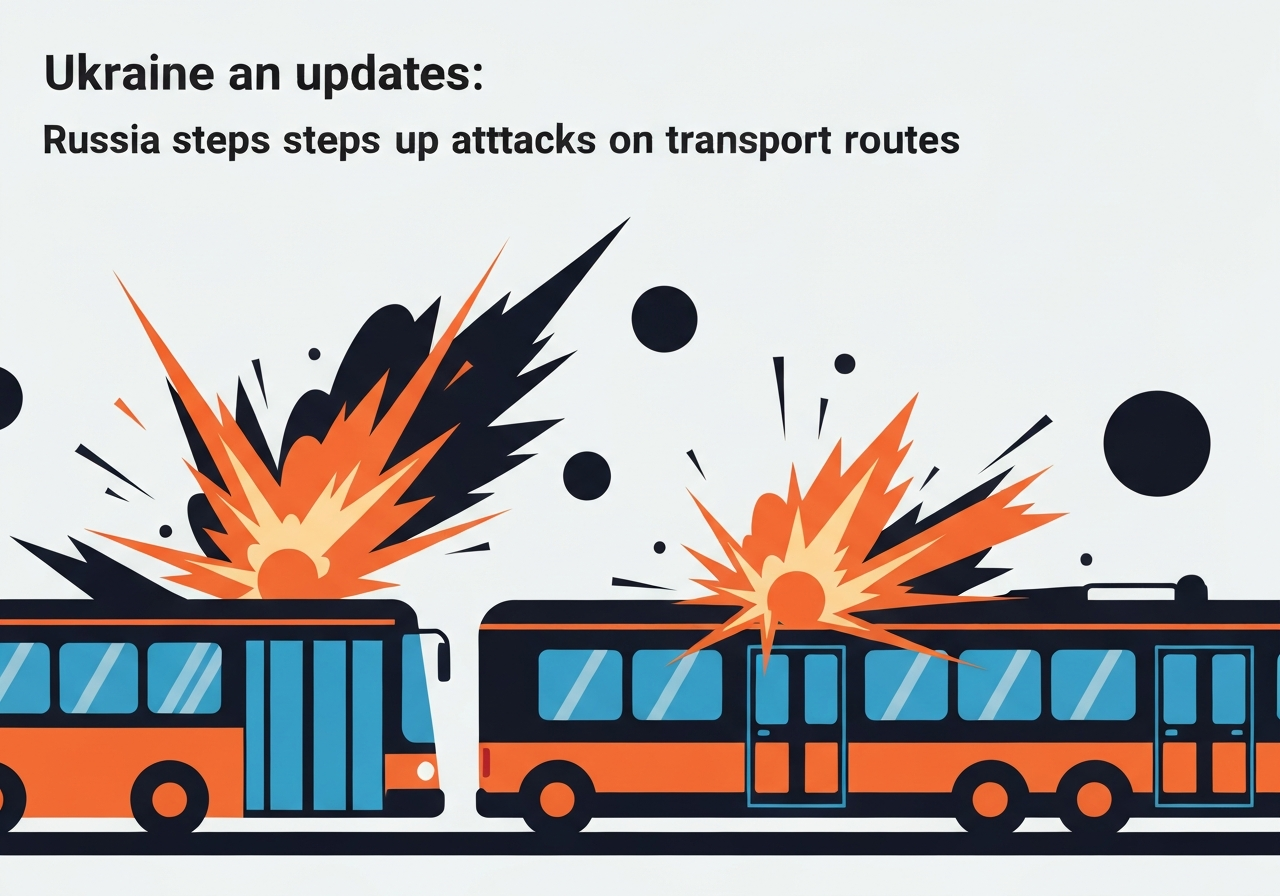
In Pavlohrad, a drone strike on a bus transporting miners home after a shift reportedly killed at least 12 people and wounded 16, with nine in serious condition, the operator DTEK stated. Ukrainian officials said multiple drones also struck the mining site, compounding civilian casualties and disrupting local services.
Separately, Russian drones struck a maternity facility in Zaporizhzhia, wounding at least nine people. Ukrainian authorities characterized these incidents as signs of escalation even as some external actors pressed for de-escalatory measures during adverse weather.
The Kremlin confirmed that the next trilateral round of talks—postponed from Sunday, 1 February—would take place in Abu Dhabi on Wednesday and Thursday, with spokesman Dmitry Peskov noting progress on some issues but remaining gaps on more complex matters.
Analysis & Implications
Strikes against rail and transport nodes aim to degrade Ukraine’s logistical backbone, slowing military resupply and amplifying civilian hardship. Railway damage increases reliance on road transport, which is slower and often more vulnerable to attack, raising costs and complicating humanitarian deliveries to front‑line and occupied areas.
Attacks on mining workers and civilian medical facilities risk broadening domestic and international condemnation and can erode any political capital for external actors pressing for negotiated pauses. Civilian fatalities also strengthen Kyiv’s case for continued military and humanitarian assistance from Western partners.
If rail infrastructure remains under sustained attack, economic consequences will ripple beyond immediate transport delays: agricultural exports, industrial supply chains and internal displacement patterns could all worsen, affecting markets and aid planning well into 2026.
The scheduled Abu Dhabi talks carry potential diplomatic value but face structural obstacles. Even if parties find agreement on limited technical matters, core security and territorial questions remain unresolved. Any progress is likely incremental and contingent on concurrent developments on the battlefield.
Comparison & Data
| Item | Recent figure |
|---|---|
| Miners killed (Pavlohrad) | 12 |
| Injured (Pavlohrad) | 16 (9 serious) |
| Alleged value of illegal exports (Germany) | €30 million |
| Reported deliveries to Russian defence firms | ~16,000 |
Those figures highlight the human toll of recent strikes and the scale of alleged sanctions‑busting trade uncovered in Germany. While the casualty numbers are direct operational impacts, the trade figures point to a parallel economic front where enforcement and supply‑chain controls remain critical.
Reactions & Quotes
“The Russian army remains focused on terror against our logistics — primarily railway infrastructure,”
President Volodymyr Zelenskyy
Zelenskyy’s statement framed the strikes as a deliberate campaign against civilian and military mobility, a characterization used to mobilize domestic resilience measures and international sympathy.
“Now, on Wednesday-Thursday, the second round will indeed take place. It will be held in Abu Dhabi,”
Kremlin spokesman Dmitry Peskov
Peskov acknowledged scheduling delays but presented the talks as moving forward, while also flagging remaining differences on complex topics—an implicit signal that breakthroughs are uncertain.
German raids uncovered an export network that reportedly sent at least €30 million worth of goods to Russian defence firms, leading to five arrests,
German authorities (law enforcement statement)
Authorities described a cross‑border investigation and said suspects included German, Russian and Ukrainian nationals; probes are ongoing to determine the full scope and any state linkage.
Unconfirmed
- Claims that Russia agreed not to strike energy infrastructure for a week during the cold snap remain partially based on public statements and lack independent, immediate verification of full compliance across all fronts.
- Allegations that Russian state agencies directly operated the sanctions‑busting export network are reported by investigators; formal attribution and legal findings are pending.
- Details about the precise number and types of rail nodes hit across regions — and the full extent of repair needs — are still being compiled by Ukrainian authorities.
Bottom Line
Recent strikes show a tactical focus on transport and logistics that has immediate humanitarian consequences and longer‑term economic implications for Ukraine. The human cost—exemplified by the deaths in Pavlohrad—and the disruption to rail corridors underscore the fragility of critical infrastructure in protracted conflict.
Diplomatic channels, including the Abu Dhabi talks, could yield technical agreements or temporary de‑escalation measures, but substantive resolution of territorial and security disputes is unlikely in a single round. International attention to both battlefield developments and sanctions‑evading supply chains will remain crucial in shaping outcomes over the coming months.
Sources
- Deutsche Welle (media report) — live update summarising strikes, casualties and diplomatic notes on 2 February 2026.