
Lead
Researchers at the University of Rochester reported on Feb. 15, 2026, that they have engineered narrow aluminum tubes that can trap air and remain buoyant even when punctured or subjected to harsh conditions. The devices—about one-fifth of an inch in diameter—use a superhydrophobic surface to hold pockets of air, allowing stacks of tubes to form larger floating assemblies. The team suggests those assemblies could be scaled into floating platforms or wave-energy harvesters. Early laboratory and field tests, described in a January 2026 paper in Advanced Functional Materials, indicate robust buoyancy after damage.
Key Takeaways
- Researchers: The work was led by Chunlei Guo (University of Rochester) and published in Advanced Functional Materials in January 2026.
- Design: Tubes are aluminum, roughly 0.2 inch (one-fifth inch) in diameter, treated to be superhydrophobic to trap air pockets that provide lift.
- Performance: Stacked arrays of the tubes remain afloat when punctured and during aggressive handling in tests reported by the authors.
- Applications: The team proposes using assembled sheets of tubes for floating platforms and devices that convert ocean wave motion into electricity.
- Inspiration: Surface treatment drew biological inspiration from diving bell spiders and water-repellent behaviors of some insects like fire ants.
- Independent view: An outside expert described the development as “really interesting,” noting potential but emphasizing the need for long-term testing.
- Publication date and provenance: Results were reported to the press on Feb. 15, 2026, with the peer-reviewed article appearing in Advanced Functional Materials (Jan. 2026 issue).
Background
Harvesting energy from ocean waves has long been an attractive but technically challenging goal. Wave energy converters must survive corrosive saltwater, biofouling, mechanical stress from storms, and the economics of deployment and maintenance in deep water. Most prototypes rely on relatively large moving parts or anchored buoys; longevity and reliable flotation remain central hurdles.
Surface engineering—making materials repel water—has advanced rapidly in the past decade, drawing on biomimicry of natural water-repellent surfaces. Diving bell spiders trap air with hairy surfaces to live underwater, while some social insects use trapped air layers to survive flooding; researchers have adapted those principles with microscopic surface textures and chemical coatings to produce superhydrophobic metals and polymers.
Main Event
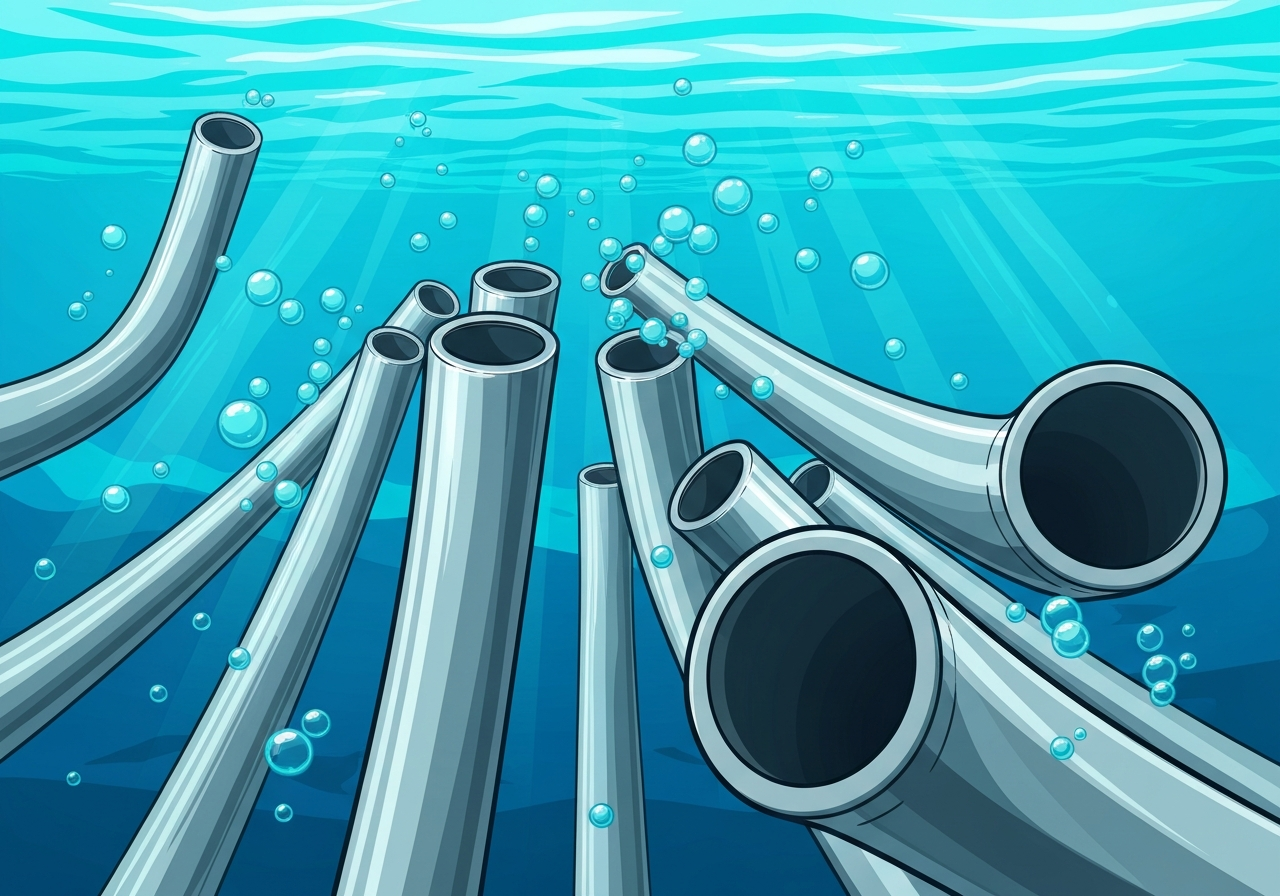
The Rochester team manufactured thin aluminum tubes treated to be superhydrophobic so that they retain thin layers or pockets of air when submerged. Each tube is about one-fifth of an inch across; when bundled, they form a continuous, air-filled lattice. In lab and field work described by the authors, assembled panels of tubes floated even after deliberate punctures and mechanical abuse intended to mimic rough sea conditions.
Lead author Chunlei Guo explained that trapped air provides persistent buoyancy: when one tube is compromised, neighboring tubes and the surface treatment prevent catastrophic flooding of the assembly. The researchers conducted a series of environmental tests—mechanical strikes, immersion cycles and simulated punctures—and reported the structure retained sufficient trapped air to stay afloat in their test protocols.
The team also suggested that stacked arrays could be connected to wave energy converters: the flexible floats would move with surface motion and feed that motion into generators or other transduction systems. The authors highlighted the material advantages of aluminum—lightweight, relatively inexpensive and already used in marine structures—when combined with scalable surface treatments.
Analysis & Implications
From an engineering perspective, the concept converts a materials-science advance into a systems-level benefit: reliable, distributed buoyancy that tolerates damage would reduce maintenance risks for wave-energy platforms. If panels made of microtubes can be mass-produced and joined reliably, they could lower replacement costs and extend operational windows in higher sea states, improving capacity factors for wave farms.
Economically, the key questions are manufacturing cost per square meter, longevity in saline environments, and integration with power take-off systems. Aluminum offers advantages versus polymers in thermal and mechanical stability, but coatings that deliver superhydrophobicity must resist abrasion, ultraviolet degradation and marine fouling to be viable for multi-year deployments.
Environmentally, floating, open-structure assemblies could have lower seabed footprint than fixed-bottom devices, but large deployments raise concerns about entanglement, changes in local currents, and impacts on marine life that seek shelter within floating structures. Regulatory and ecological assessments would be necessary before commercial-scale deployment.
Comparison & Data
| Parameter | Reported Value |
|---|---|
| Tube diameter | ~0.2 inch (1/5 inch) |
| Material | Aluminum with superhydrophobic treatment |
| Publication | Advanced Functional Materials (Jan. 2026) |
| Damage tolerance | Remains buoyant after puncture and harsh handling (reported) |
The table summarizes the factual, reported parameters from the Rochester team. The authors provided qualitative descriptions of environmental testing and examples of puncture resilience, but did not, in the public paper summary, disclose multi-year durability metrics or cost-per-unit-area production figures. Those gaps matter for comparing this approach to established buoyancy materials used in marine engineering.
Reactions & Quotes
“I think the ocean is still a vast untapped resource.”
Chunlei Guo, University of Rochester (lead researcher)
Guo framed the development as one building block in a broader effort to capture ocean energy, emphasizing materials innovation as the enabler for new hardware concepts.
“Really interesting.”
Andreas Ostendorf, Ruhr-University Bochum (applied laser technology, independent)
Ostendorf, not involved in the work, noted the novelty of combining microtextured metal surfaces with buoyant air capture but cautioned that independent, long-duration trials will be critical to assess real-world performance.
Unconfirmed
- Long-term durability: Multi-year corrosion resistance and abrasion life in open ocean conditions remain unreported in publicly available summaries.
- Commercial scalability: Cost estimates and manufacturing throughput for producing treated-aluminum tubes at scale have not been disclosed.
- Energy conversion efficiency: No independent field demonstrations have yet published measured energy-capture efficiency for devices using these tube assemblies.
- Ecological impact: Effects on marine life and local hydrodynamics from large-area deployments are unassessed in the public record.
Bottom Line
The Rochester team’s tubes represent a materials-driven, low-profile approach to persistent flotation that tolerates damage—an attractive property for wave-energy systems where maintenance at sea is costly. The concept leverages well-understood physics (trapped air, hydrophobic surfaces) in a novel geometric form factor, and early tests reported in January 2026 show promising resilience to puncture and mechanical stress.
However, key questions remain before the approach can be called a practical step toward commercial wave farms: long-term durability in saltwater, manufacturing economics, integration with power take-off hardware, and environmental assessments. Independent, long-duration sea trials and transparent cost metrics will determine whether these “unsinkable” tubes move from laboratory curiosity to a commercially viable building block for ocean energy.
Sources
- The New York Times — news report on Feb. 15, 2026 (press coverage)
- Advanced Functional Materials — peer-reviewed journal (academic publisher; article published Jan. 2026)
- University of Rochester News — institutional press releases and lab information (official university source)