
Lead
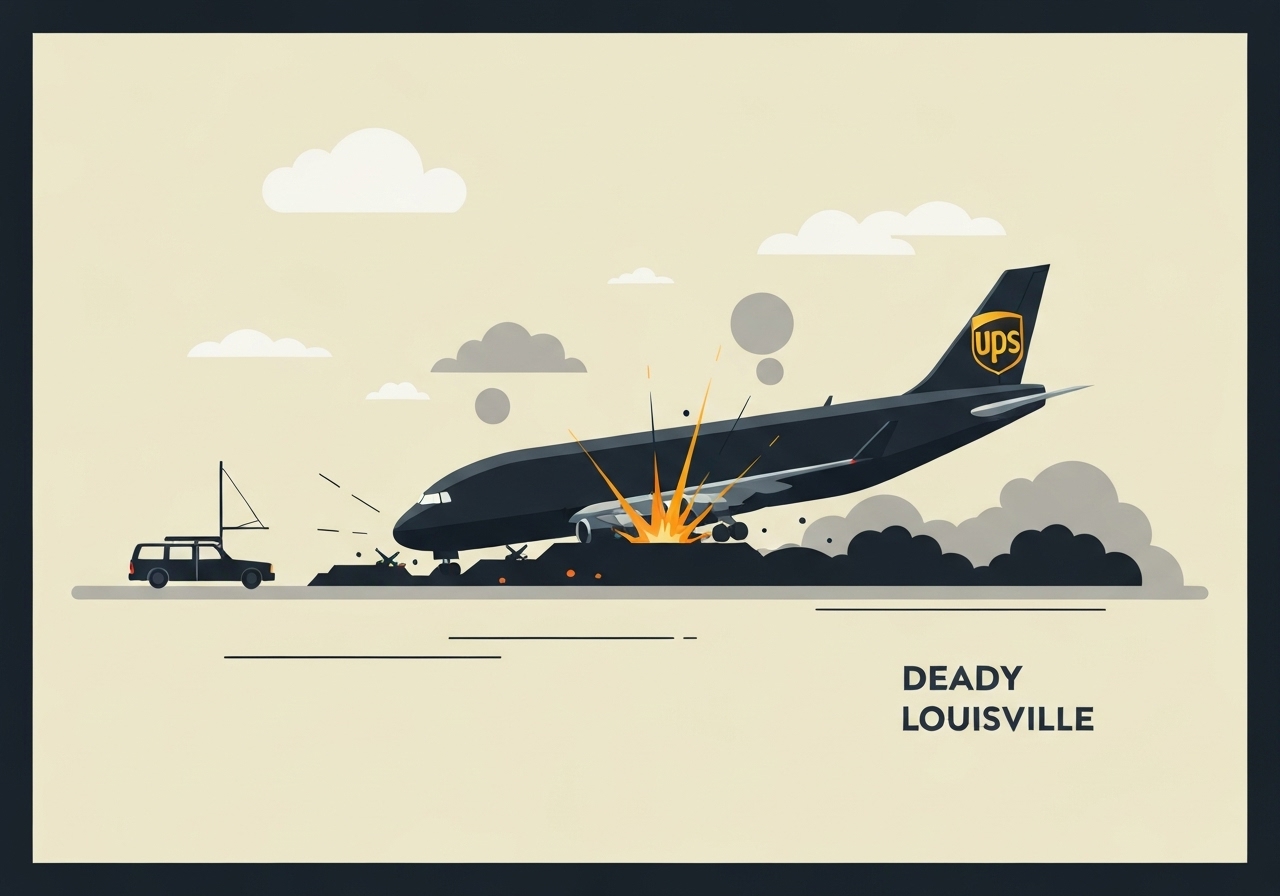
Federal investigators are examining maintenance logs and flight recorders after a UPS McDonnell Douglas MD-11 cargo jet crashed and burned during takeoff at Louisville Muhammad Ali International Airport on Tuesday, Nov. 4, 2025. The accident killed at least 12 people and injured nearly 20 others, and it damaged businesses near the airport in Louisville, Kentucky. Officials say one engine separated from the left wing as the aircraft rolled for departure and the detached engine was later found beside the runway. The crash temporarily shut down operations at UPS’s Worldport hub and prompted a multi-agency emergency response.
Key takeaways
- At least 12 people were killed and nearly 20 others were injured when a UPS MD-11 cargo jet crashed on Nov. 4, 2025, at Louisville Muhammad Ali International Airport.
- Investigators from the National Transportation Safety Board (NTSB) reported the left wing caught fire during the takeoff roll and an engine came off; the engine was later found on the ground beside the runway.
- The aircraft was an MD-11 built in 1991 and had spent more than a month in San Antonio for maintenance work through mid-October, according to flight records.
- UPS’s Worldport hub in Louisville — which handles roughly 300 flights daily and sorts more than 400,000 packages an hour — suspended package-sorting operations following the crash.
- Governor Andy Beshear said crews continued searches in an industrial area adjacent to the airport and that a handful of people remained unaccounted for after the initial response.
- Experts note the MD-11 should be controllable on two engines in many scenarios, but detachment plus additional structural or systems damage could make an abort or climb unsafe.
- Investigators will focus on maintenance history, components linked to the left engine, and the aircraft’s cockpit and data recorders to determine sequence and causation.
Background
The aircraft involved was a McDonnell Douglas MD-11 freighter, manufactured in 1991. The MD-11 is a three-engine, long-range cargo aircraft with engines on each wing and one in the tail; the model has been involved in high-profile incidents in the past that prompted scrutiny of engine attachment and maintenance practices. UPS operates a major global sorting and air-hub in Louisville called Worldport; the facility is central to the company’s overnight and international logistics network.
Regulatory oversight of older freighter fleets often focuses on aging-structure inspections, attachment fittings, and component overhauls. In the late 1970s and 1980s, accidents involving engine separation led to changes in inspection intervals and maintenance procedures; investigators routinely revisit those histories when an in-flight or takeoff-stage structural failure is alleged. At the same time, commercial air freight demand and tight turnaround schedules can put pressure on maintenance planning and logistics.
Main event
On Nov. 4, 2025, the fully loaded MD-11 began its takeoff roll from Louisville, bound for Honolulu, and crews reported flames along the aircraft’s left side as it attempted to become airborne. The NTSB’s preliminary account said the left wing ignited and an engine separated during the takeoff roll; emergency responders later observed wreckage and the detached engine on the ground near the runway. Video reviewed by attorneys and analysts showed the jet struggling to gain altitude as the fire intensified along the left wing.
After leaving the runway area the jet struck an industrial section adjacent to the airport, shredding the roof of a large building and igniting a blaze that stretched nearly a city block, according to local fire officials. The aircraft narrowly missed a nearby bar and came down near other commercial facilities and scrap yards, and authorities reported it landed not far from a Ford assembly plant that was operating at the time. Crews searched through charred debris and damaged buildings while attempting to account for missing people.
Emergency services from Louisville and surrounding jurisdictions responded, extinguishing the main fire and treating the injured. The airport temporarily closed some operations; passenger flights resumed the next morning with limited runway availability. UPS immediately halted package-sorting at Worldport, and the company began coordinating with investigators and local officials as rescue and recovery continued.
Analysis & implications
Investigators will prioritize the aircraft’s maintenance records, component histories for the left engine and pylon attachments, and the flight data and cockpit voice recorders to reconstruct the timeline. The MD-11 in question underwent maintenance while parked in San Antonio for over a month until mid-October, but officials have not publicly detailed the specific work performed. If maintenance actions or missed inspections are implicated, the findings could prompt renewed industry guidance or regulatory action for older freighter fleets.
A detached engine during takeoff is an acute failure mode that can cascade: beyond the immediate loss of thrust, separation can damage flight controls, hydraulic systems, or fuel lines on the wing, worsening fires or reducing controllability. Aviation consultant John Cox told investigators and reporters the MD-11 should generally be able to fly on two engines, but that assumes remaining systems and structures are intact; the presence of fire or collateral damage could make continued flight or a rejected takeoff untenable.
Operationally, the disruption at Worldport is significant. The Louisville hub handles roughly 300 flights per day and processes hundreds of thousands of packages per hour; a prolonged halt would ripple through UPS’s domestic and international delivery schedules, particularly for time-sensitive shipments. For regulators and carriers, the accident raises questions about inspection regimes for aging aircraft, contractor oversight, and how maintenance records are tracked across multi-station repairs.
Comparison & data
| Item | 1979 O’Hare crash | Nov. 4, 2025 Louisville crash |
|---|---|---|
| Fatalities | 273 | 12 (so far) |
| Aircraft/Engine | Boeing DC-10; GE engines detached | MD-11 (1991); left engine detached |
| Primary focus | Improper maintenance (NTSB) | Maintenance history, engine/pylon, recorders |
The table highlights similarities investigators have noted between the 1979 O’Hare accident, which involved engine separation and maintenance issues, and the 2025 Louisville crash. While the earlier accident had a far higher death toll and different airframe, the recurrence of a detached engine places maintenance and attachment hardware squarely at the center of inquiries. Investigators will quantify differences in inspection history, component service life, and any recent repairs to determine whether parallels are superficial or causal.
Reactions & quotes
Officials and analysts responded quickly after the crash, outlining immediate investigative steps and the humanitarian response.
“We are actively investigating the sequence of events, and we will be reviewing maintenance and data recorder information as priorities.”
NTSB spokesperson Todd Inman
The NTSB emphasized preservation of wreckage and data as early evidence collection priorities.
“The amount of fuel on board made the ensuing fire exceptionally intense and destructive, complicating rescue and recovery.”
Pablo Rojas, aviation attorney
Rojas, who reviewed publicly available video, noted how fuel load and fire behavior affected both the aircraft breakup and the ability of first responders to search and stabilize the scene.
“A handful of people remain unaccounted for; crews continue to search the industrial area near the airport.”
Gov. Andy Beshear (statement)
The governor’s office coordinated state resources and reiterated that local responders and federal investigators were working on-site.
Unconfirmed
- Reports that a specific maintenance action in San Antonio directly caused the failure remain unverified; investigators have not publicly identified the exact work performed in mid-October.
- It is not yet confirmed whether the separated engine damaged other critical systems (hydraulics, flight controls) before or after detachment; forensic analysis is ongoing.
- Claims circulating online about cargo shifting causing the crash lack substantiation from preliminary official statements.
Bottom line
The immediate cause of the Nov. 4, 2025 crash remains under investigation, but the separation of a left-wing engine and a wing fire during the takeoff roll are central facts from early NTSB briefings. Maintenance history, pylon and engine-component integrity, and recorder data will be the most consequential evidence in determining sequence and responsibility. The human toll is already significant, and local communities and UPS’s global operations face material disruption as rescue, recovery, and forensic work continue.
For the aviation industry and regulators, this accident raises renewed scrutiny of aging freighter maintenance practices and recordkeeping across multiple maintenance facilities. Expect a methodical, evidence-driven NTSB inquiry that may produce safety recommendations, and monitor official releases before drawing conclusions about liability or systemic failures.
Sources
- NPR — news report and scene reporting (media)
- NTSB — agency statements and investigation updates (official/agency)
- UPS — corporate statements and operational notices (official/corporate)
- Office of Governor Andy Beshear — state press releases and situational updates (official/state government)
- Federal Aviation Administration (FAA) — regulatory context and airworthiness guidance (agency)