
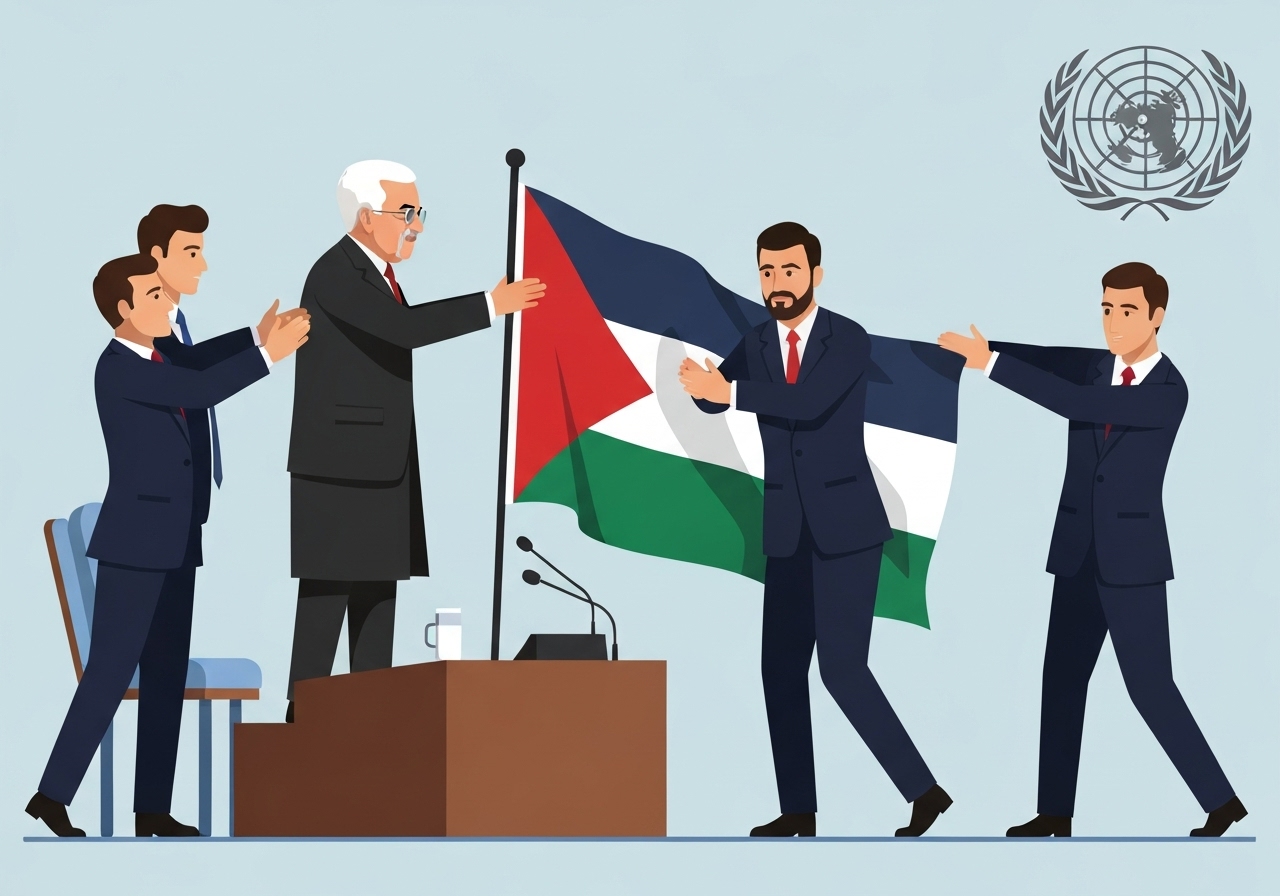
US Blocks Mahmoud Abbas From UN Meeting on Palestinian State Recognition
The United States prevented Palestinian president Mahmoud Abbas from taking part in a United Nations meeting intended to address recognition of a Palestinian state, according to the Financial Times. The shared source did not include precise timing, location details or an official US rationale.
Key Takeaways
- The Financial Times reports the US barred Mahmoud Abbas from attending a UN meeting concerning recognition of a Palestinian state.
- The meeting was described as focused on steps to recognise a Palestinian state; the outcome of any vote was not stated in the source.
- Details on when and where the exclusion occurred, and the US justification, were not provided in the shared excerpt.
- Blocking a head of state or delegation from UN proceedings is an uncommon diplomatic move with potential political consequences.
- Broader regional and international responses were not reported in the source and remain unclear.
Verified Facts
The only verifiable details available from the shared material are that Mahmoud Abbas, identified as the Palestinian leader, was barred by the United States from attending a United Nations meeting that the report linked to recognition of a Palestinian state. This information is attributed to the Financial Times (link in Sources).
The source excerpt did not provide a date, location, or transcript of any exchanges between US officials and Palestinian representatives. No direct quotations from US or Palestinian officials were included in the provided text.
United Nations meetings that address state recognition can take several forms (for example, General Assembly debates or Security Council considerations). The shared report does not specify which UN forum was involved in this instance, nor does it describe any formal vote or procedural motions that followed the exclusion.
Context & Impact
Excluding a delegation or leader from a UN meeting is likely to increase diplomatic tensions between the parties involved and could prompt statements or retaliatory measures from affected states. It may also influence how other countries position themselves on recognition or related diplomatic initiatives.
Recognition of statehood at the UN is a politically sensitive issue. Even where a majority of member states support recognition, actions at the UN can be shaped by regional alliances, procedural rules and, in Security Council matters, the veto powers of permanent members.
Given the limited information in the shared source, the full diplomatic fallout — including reactions from other UN members, timing of any follow-up meetings, or legal and procedural steps taken at the UN — is not established.
Unconfirmed
- Exact date and location of the UN meeting where Abbas was barred.
- Official US reasoning or internal communications that led to the exclusion.
- Whether a vote on Palestinian state recognition occurred at the meeting and, if so, its result.
- Responses from the Palestinian Authority, member states, or the UN Secretariat beyond the Financial Times report.
Bottom Line
The Financial Times reports that the US blocked Mahmoud Abbas from participating in a UN meeting tied to recognition of a Palestinian state, but the shared excerpt lacks critical procedural and timing details. The move, if confirmed in detail, could have diplomatic consequences and would merit further reporting from primary sources and official statements.