
Lead
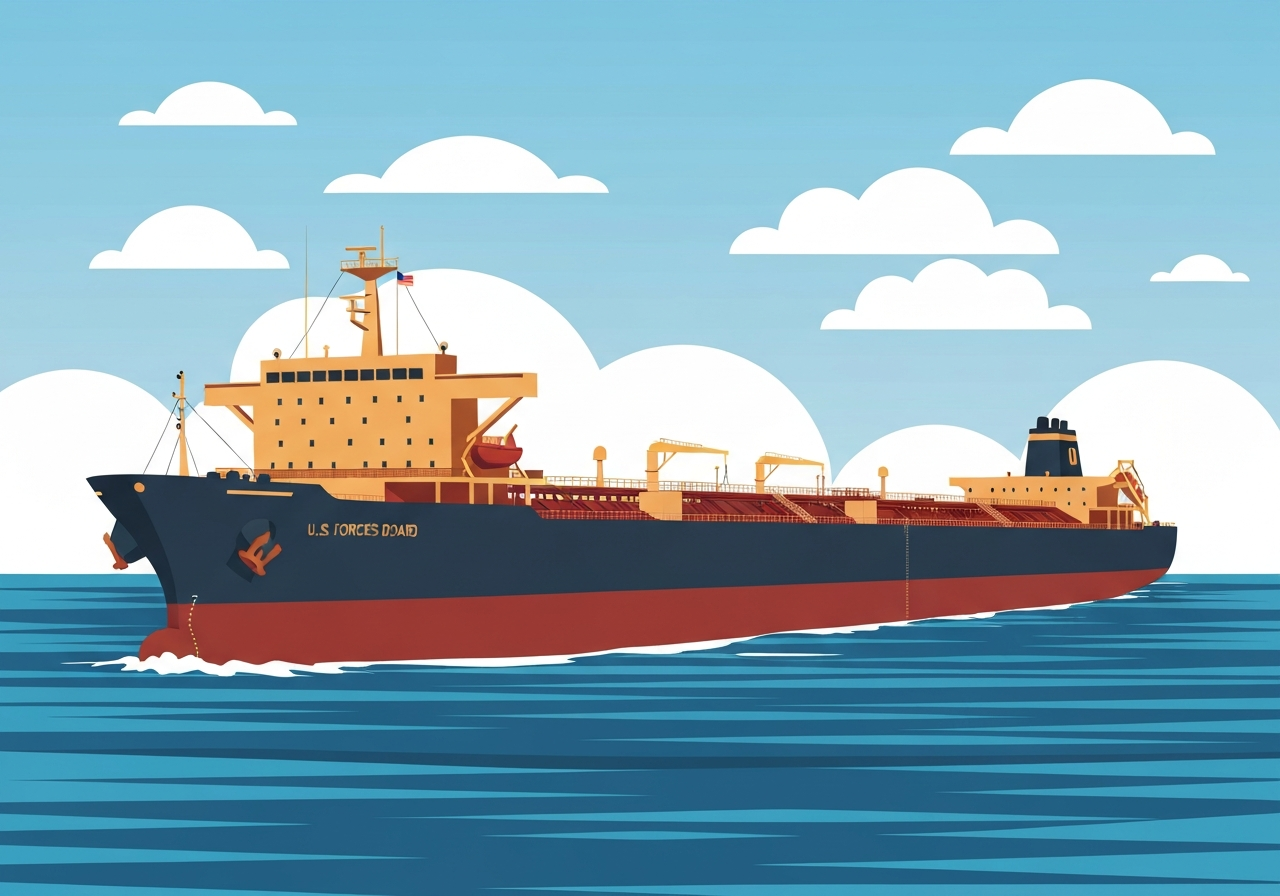
U.S. military forces boarded a sanctioned oil tanker, the Aquila II, in the Indian Ocean on Monday after tracking the vessel from the Caribbean as part of an oil quarantine aimed at pressuring Venezuela, Defense Secretary Pete Hegseth said. The operation followed a surge of sanctioned and clandestinely flagged tankers that fled Venezuelan waters after a U.S. raid in early January. The Aquila II, a Panamanian‑flagged vessel linked to U.S. sanctions over illicit Russian oil transfers, was detained while U.S. authorities decide its legal status. The Pentagon said the boarding was part of a maritime interdiction to enforce a quarantine on vessels operating in defiance of U.S. measures.
Key Takeaways
- The U.S. boarded the Panamanian‑flagged tanker Aquila II in the Indian Ocean after tracking it from the Caribbean, officials said on Monday.
- Defense Secretary Pete Hegseth said the action was tied to an oil quarantine intended to squeeze Venezuela’s sanctioned oil networks.
- The Aquila II is under U.S. sanctions for involvement in shipments of illicit Russian oil and has spent much of the last year with its transponder off, a tactic known as “running dark.”
- U.S. naval assets reported operating near the ship included destroyers USS Pinckney and USS John Finn and the mobile base ship USS Miguel Keith.
- After a separate U.S. strike in the eastern Pacific, U.S. Southern Command reported two people killed and one survivor, bringing the administration’s cumulative death toll from strikes on alleged drug boats to 130.
- The Trump administration has seized seven tankers so far; analysts say at least 16 tankers fled the Venezuelan coast last month.
- The Aquila II was being held rather than formally seized pending further legal and administrative decisions, a defense official said.
Background
Since the United States imposed sweeping sanctions on Venezuela’s oil sector, Caracas has increasingly relied on a network of falsely flagged or opaque tankers — often called a “shadow fleet” — to move crude into international markets. Sanctions target state and private actors in Venezuela as well as foreign intermediaries suspected of facilitating illicit shipments, including transfers involving Russian crude. Operators frequently employ tactics such as turning off Automatic Identification System (AIS) transponders, a practice known as “running dark,” to conceal routes and avoid interdiction.
The U.S. action comes in the wake of a high‑profile U.S. operation on Jan. 3 that aimed to capture then‑President Nicolás Maduro; following that raid, multiple tankers departed Venezuelan ports. U.S. officials have said seizing or interdicting sanctioned tankers can both choke revenue streams that sustain sanctioned regimes and generate legal or administrative proceeds to aid reconstruction efforts. At the same time, those moves raise complex questions about maritime law, flag‑state jurisdiction and the rights of third parties such as crew and cargo owners.
Main Event
According to Pentagon statements and defense officials, naval forces tracked the Aquila II from the Caribbean into the Indian Ocean before conducting a right‑of‑visit maritime interdiction. Video released by the Pentagon showed uniformed personnel boarding a ship via helicopter and a Navy destroyer maneuvering alongside the tanker; the footage was consistent with operations launched from the mobile base ship USS Miguel Keith. A defense official said the Aquila II was not formally seized and placed under U.S. control at the time of reporting but was being held while its fate was determined.
Ship‑tracking data indicates the Aquila II spent extended periods with its AIS transponder off over the past year, a pattern investigators associate with attempts to hide voyages. Ownership records list a company address in Hong Kong, and the ship is Panama‑flagged. Analysts at TankerTrackers.com documented the vessel as one of at least 16 that fled the Venezuelan coast following the early January operation, using satellite imagery and surface photos to track movements.
The Pentagon’s public post said the boarding was executed after the tanker “ran” from the Caribbean quarantine enforcement and that U.S. forces followed. Navy officials confirmed the presence of USS Pinckney and USS John Finn among surface units in the operational area. A defense official speaking on condition of anonymity said commanders were ordered not to let the sanctioned vessels escape, a directive Defense Secretary Hegseth reiterated publicly in remarks to shipyard workers in Maine.
Analysis & Implications
The operation signals a significant extension of U.S. maritime reach in enforcing economic pressure on Venezuela and related networks. By following submerged or darkened tankers across ocean basins, U.S. forces aim to reduce the effectiveness of illicit shipping methods that shift sanctioned crude into legitimate supply chains. That creates operational challenges — long tailing across thousands of nautical miles — and legal hurdles tied to boarding rights, flag‑state consent and cargo ownership claims.
Strategically, the interdictions are part of a broader U.S. policy to isolate revenue sources for targeted Venezuelan and allied entities and to limit oil flows to countries like Cuba, which U.S. officials say benefit from subsidized shipments. Officials have framed seizures as both punitive and corrective — a way to deny sanctioned actors income while potentially redirecting assets to support Venezuelan recovery, though the mechanics of that redirection remain legally and administratively complex.
Internationally, aggressive interdictions risk diplomatic friction with flag states, companies, and third‑party nations whose flagged vessels or intermediaries are implicated. The use of force or detention on the high seas can prompt contestation under the United Nations Convention on the Law of the Sea (UNCLOS) and bilateral maritime agreements. Consequently, the U.S. will likely face legal challenges and calls for transparency about evidentiary bases for boardings and seizures.
Comparison & Data
| Item | Count / Status |
|---|---|
| Tankers seized by U.S. administration | 7 |
| Tankers reported to have fled Venezuela last month | At least 16 |
| Latest reported deaths from alleged drug‑boat strikes | 2 (one survivor) |
| Cumulative reported death toll from strikes | 130 |
These figures frame the operational tempo and human cost of overlapping interdiction campaigns: multiple tanker interdictions aimed at sanctions enforcement and separate strikes targeting suspected drug traffickers in regional waters. Analysts say the number of fleeing tankers underscores the scale of attempts to evade sanctions, while casualty totals draw scrutiny to strike authorization, intelligence quality and post‑strike procedures for survivors.
Reactions & Quotes
The Defense Secretary framed the interdictions as an uncompromising enforcement of policy.
“The only guidance I gave to my military commanders is none of those are getting away.”
Defense Secretary Pete Hegseth
The Pentagon described the boarding as a lawful maritime interdiction tied to the quarantine.
“We conducted a right‑of‑visit, maritime interdiction. The Aquila II was operating in defiance of President Trump’s established quarantine of sanctioned vessels in the Caribbean. It ran, and we followed.”
U.S. Department of Defense (Pentagon)
U.S. Southern Command provided details on a separate eastern Pacific strike that resulted in casualties.
“The strike killed two people; one person survived. We have notified the Coast Guard to activate its search and rescue system for the survivor.”
U.S. Southern Command
Unconfirmed
- Whether the Aquila II carried sanctioned oil at the moment of boarding: ship‑transmitted data indicated it was not laden with crude Monday, but cargo histories require full manifest and inspection confirmation.
- The ultimate legal disposition of the Aquila II (formal seizure and disposition, release, or transfer to third parties) remained pending at the time of reporting.
- The full ownership and beneficial‑owner chain for the Aquila II and linked entities is incompletely documented in public registries and may be subject to further investigation.
Bottom Line
The boarding of the Aquila II underscores a more assertive U.S. use of maritime interdiction to enforce sanctions and disrupt opaque oil shipments tied to Venezuela and related networks. Operational follow‑through — legal processing, evidence disclosure and international engagement — will determine whether such actions sustainably deter sanctions evasion or provoke legal and diplomatic pushback.
For observers, the case highlights two converging trends: growing reliance on clandestine maritime techniques by sanctioned actors and an expanded willingness by the U.S. to pursue those actors across ocean basins. Expect intensified legal scrutiny, additional boardings or seizures as authorities follow leads, and ongoing debate over the balance of enforcement, maritime law and humanitarian considerations for crews and coastal states.
Sources
- Associated Press — Article on Aquila II boarding (news)
- U.S. Department of Defense — Official statements and social media posts (official)
- U.S. Southern Command — Statement on eastern Pacific strike (official)
- TankerTrackers.com — Vessel tracking and analysis (independent maritime tracker)
Correction noted in original reporting: the destroyer involved is the USS John Finn (corrected from an earlier misname).