
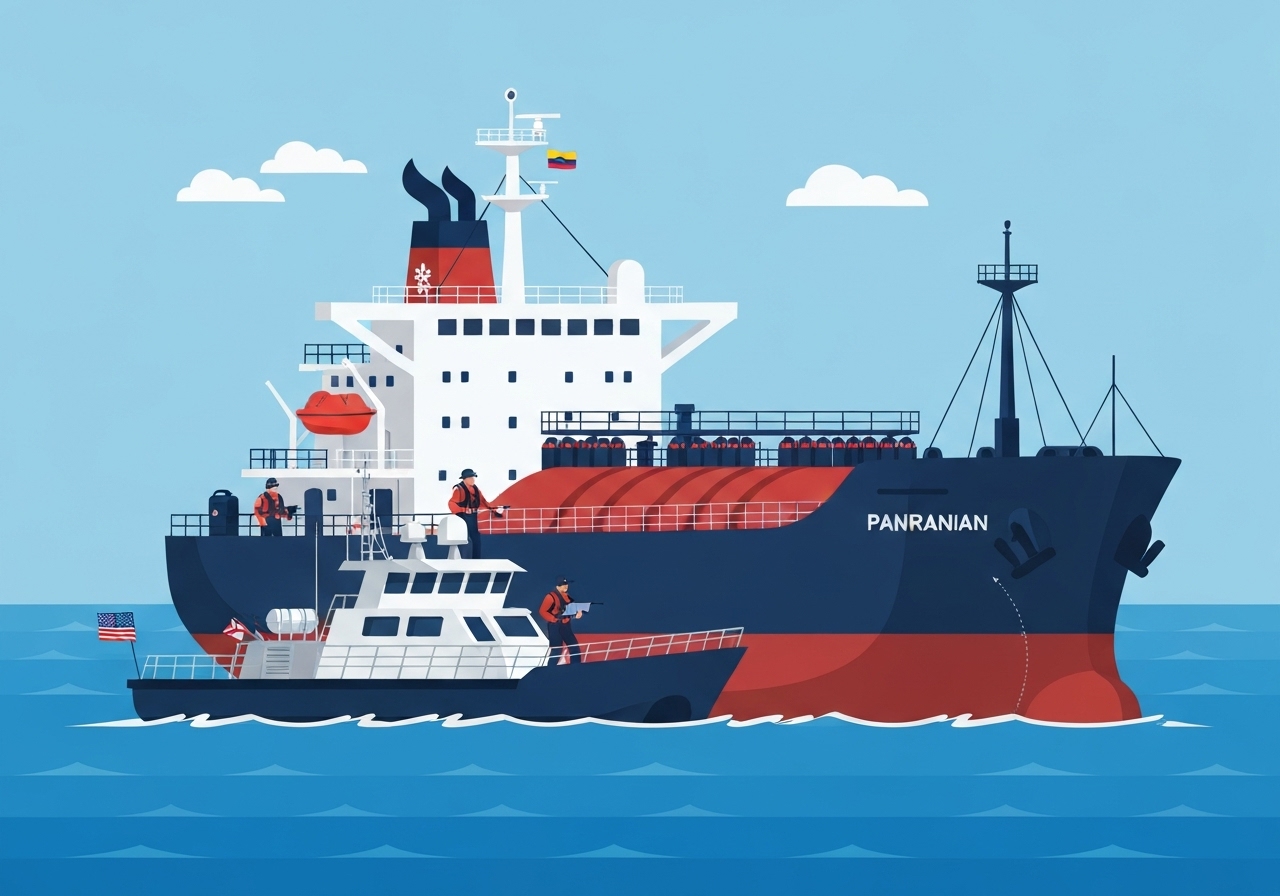
— The U.S. Coast Guard boarded a Panamanian-flagged tanker, the Centuries, in Caribbean waters after it had left Venezuela on Saturday, officials and industry sources said. The action, confirmed by a Homeland Security statement, is the second U.S. operation this month involving a tanker carrying Venezuelan crude bound for Asia. U.S. officials described the move as part of a broader campaign to curb shipments they say finance illicit networks; Venezuelan industry insiders said the cargo is tied to a China-based trader. The boarding left the vessel’s legal status and ultimate disposition unclear as investigators and diplomats assess next steps.
Key Takeaways
- On Dec. 20, 2025, the U.S. Coast Guard boarded the Panamanian-flagged tanker Centuries in Caribbean waters after it departed Venezuela.
- The Centuries was carrying Venezuelan crude bound for Asia, and industry sources linked the cargo to an established China-based oil trader.
- Homeland Security Secretary Kristi Noem stated the vessel was “apprehended” and framed the operation as targeting illicit oil flows used to fund regional narco networks.
- The action is the second U.S. boarding this December of a tanker reportedly carrying Venezuelan oil, signaling heightened enforcement in the month.
- The Centuries is not listed on the U.S. Treasury’s publicly maintained sanctions registry, according to reporting and industry checks.
- Sourcing for key details relied on U.S. officials and three Venezuela oil–sector contacts who spoke on background because of the sensitivity of the matter.
- The legal rationale, potential seizure, and diplomatic consequences remain unresolved pending further investigation and possible judicial or administrative proceedings.
Background
Since 2019, the United States has escalated financial and trade restrictions on Venezuela’s state oil sector, citing corruption and human-rights concerns. Those measures include targeted designations by the Treasury Department and export controls that restrict certain transactions and companies. In 2025 the U.S. administration re-intensified its rhetoric and enforcement against networks it says enable sanctioned oil flows, framing some shipments as funding criminal groups. Vessels carrying Venezuelan crude often operate through complex commercial intermediaries and use flags of convenience, complicating enforcement and attribution.
The Trump administration in December announced broader measures aimed at stopping sanctioned oil tankers from entering or leaving Venezuelan ports, and senior U.S. officials have tied some shipments to regional illicit financing. Venezuela’s oil industry has, at times, sold crude through third-party traders and international buyers, including firms based in Asia, which creates commercial routes that enforcement agencies monitor. Panama, a frequent flag state for commercial tankers, has limited direct control over enforcement once a vessel leaves territorial waters, placing emphasis on flag-state cooperation and port-state measures. The interplay of commercial shipping practices, sanctions law and geopolitical actors frames the current incident.
Main Event
Early on Dec. 20, U.S. Coast Guard personnel approached and boarded the Centuries while it was operating in Caribbean waters after departing a Venezuelan terminal, U.S. and Venezuelan industry sources said. The boarding was described by Homeland Security Secretary Kristi Noem as an “apprehension,” language the department used in a public post summarizing the action. Industry contacts inside Venezuela identified the cargo as Venezuelan crude and linked the shipment to a China-based oil trader known to transport Venezuelan barrels to East Asian refineries.
Officials who spoke to reporters and two Venezuela oil-sector insiders—each granted anonymity because the information is sensitive—said the Centuries was not on the Treasury Department’s publicly available sanctions list. That detail complicates the legal trajectory: vessels and cargoes explicitly designated by Treasury face clear-cut interdiction authorities, whereas action against non-listed vessels typically requires other legal bases, such as evidence of illicit conduct or violations of export controls. U.S. authorities have so far said the operation targeted the illicit movement of sanctioned oil, but they have not released court filings or seizure paperwork as of this report.
The boarding marks the second reported operation this month in which U.S. personnel intervened in a tanker carrying Venezuelan crude bound for Asia. The earlier action, also publicized by U.S. officials, involved a different vessel and set the tone for increased maritime enforcement in the southern Caribbean. Diplomatic channels between the United States, Panama (the vessel’s flag state), and nations with commercial ties to Venezuelan oil are expected to become active as authorities pursue documentation and ownership trails for the cargo.
Analysis & Implications
Legally, boarding a foreign-flagged vessel on the high seas raises questions about jurisdiction and the basis for enforcement. When a vessel is on the public sanctions list, U.S. authorities can rely on specific statutory and regulatory authorities; when it is not, investigators must demonstrate other grounds such as evidence of illicit activity or violations of export restrictions. That evidentiary threshold can shape whether the vessel is detained, seized, or released after inspection, and it will influence any subsequent prosecutions or administrative forfeiture actions.
Diplomatically, the incident risks friction with Panama, which registers many commercial tankers, and with countries that import Venezuelan crude. If the cargo is ultimately traced to a trader based in China and bound for Chinese refineries, Beijing may raise objections or seek clarifications, especially if its commercial actors were not notified. The U.S. action fits within a broader strategy to pressure Nicolás Maduro by disrupting revenue streams, but it also raises questions about extraterritorial enforcement and the burden on commercial shippers who must choose routes and counterparties under greater legal uncertainty.
Economically, repeated interdictions or the threat of interception could increase transactional risk for oil traders working with Venezuelan crude, raising insurance and freight costs and possibly encouraging shifts in shipping practices. For refiners in Asia that rely on heavy Venezuelan crude, supply-chain disruptions could push them to alternative grades or suppliers, altering trade flows. For Venezuela, restricted access to maritime buyers could further tighten state oil revenues and complicate internal political dynamics.
Comparison & Data
| Incident | Date | Vessel | Flag | Cargo | Action | Sanctions-listed? |
|---|---|---|---|---|---|---|
| Current case | Dec. 20, 2025 | Centuries | Panama | Venezuelan crude | Boarded / “apprehended” | No (public list) |
| Earlier December case | Dec. 2025 (earlier in month) | Different tanker | Reported various | Venezuelan crude | Boarded | Reported |
The table highlights that both December incidents involved vessels departing Venezuela with crude and subject to U.S. boarding actions; public lists of sanctioned entities do not include the Centuries. Limited public detail about the earlier case underscores how maritime interdictions can proceed with varying levels of transparency depending on the legal route pursued. Analysts will watch whether future cases yield formal charges, forfeiture filings, or diplomatic protests that clarify enforcement norms.
Reactions & Quotes
U.S. Homeland Security framed the operation as enforcement against illicit oil flows. The department’s public message was brief but categorical about the goal.
“The Coast Guard has apprehended a tanker that had been docked in Venezuela. The United States will continue to pursue the illicit movement of sanctioned oil that is used to fund narco terrorism in the region. We will find you, and we will stop you.”
Kristi Noem, U.S. Homeland Security Secretary (post)
President Trump had earlier announced a sweeping stance toward tankers linked to Venezuela, signaling a tougher posture that preceded the December actions.
“A total and complete blockade of all sanctioned oil tankers going into and out of Venezuela.”
President Donald J. Trump (public statement)
Venezuelan oil-industry contacts told reporters that the Centuries’ cargo is associated with an established China-based trader with a history of moving Venezuelan barrels to East Asian refineries; those claims come from industry records and commercial tracking but have not been validated by U.S. Treasury designations.
Unconfirmed
- The ultimate buyer and final delivery point for the Centuries’ cargo have not been independently verified beyond industry reporting that links the shipment to a China-based trader.
- Claims that intercepted Venezuelan oil shipments directly finance “narco terrorism” are asserted by U.S. officials but have not been publicly substantiated with judicial filings or detailed evidence in this case.
- Whether the Centuries will be formally seized, detained, or released pending paperwork and legal proceedings remains unresolved at the time of reporting.
Bottom Line
The Dec. 20 boarding of the Centuries demonstrates an intensification of U.S. efforts to interdict maritime flows of Venezuelan crude, particularly those the administration regards as funding illicit networks. Because the vessel is not on the Treasury Department’s public sanctions list, the legal path forward is likely to focus on evidence of specific illicit conduct or violations of export restrictions rather than automatic forfeiture under a designation.
Observers should watch for three developments: whether authorities file formal charges or forfeiture actions; responses from Panama, China-linked traders, and Caracas; and any operational changes by shipowners and insurers that would alter the practical flow of Venezuelan crude to global markets. For traders and governments alike, the incident underscores growing enforcement risks and the need for clearer documentation and cooperation if maritime commerce is to proceed without further disruptions.
Sources
- The New York Times (news report summarizing official statements and industry sources)
- TankerTrackers.com (private maritime tracker; credited for vessel imagery)
- U.S. Department of the Treasury — OFAC sanctions registry (official public sanctions list)