
Lead
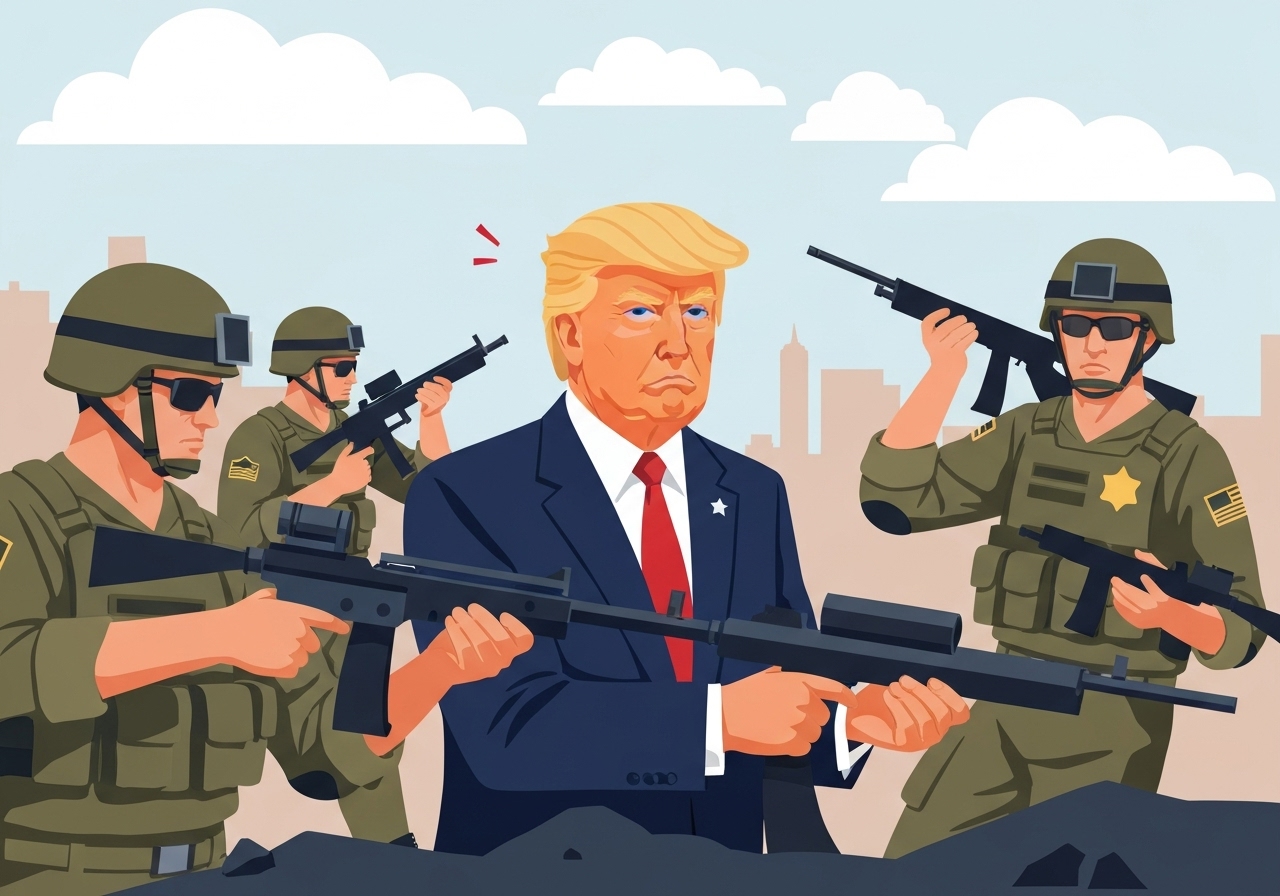
On Jan. 7, 2026, in the pre-dawn hours over Caracas, a U.S. military operation aimed at capturing President Nicolás Maduro narrowly avoided disaster when a large MH-47 Chinook was struck but remained flyable. The mission, code-named Absolute Resolve, involved more than 150 aircraft launched from some 20 land and sea bases and carried dozens of Army Delta Force commandos toward Maduro’s fortified compound. President Trump called the attempt “perfectly executed,” while U.S. officials later acknowledged the assault encountered intense resistance and serious risks. The outcome of the raid and full casualty or capture details remain unclear as officials continue to review the operation.
Key Takeaways
- Operation name: Absolute Resolve — executed in the early hours of Jan. 7, 2026, over Caracas, Venezuela.
- Scale: More than 150 aircraft were launched from about 20 different land and sea bases across the region.
- Flight profile: U.S. helicopters skimmed roughly 100 feet above the sea and over the city en route to the target.
- Forces: Dozens of Army Delta Force commandos were aboard the assault helicopters.
- Damage: The lead assault aircraft, an MH-47 Chinook, was struck but remained operational; the flight leader, who planned the mission and piloted the Chinook, was reportedly wounded three times in the leg.
- Support: A U.S. cyber operation reportedly darkened parts of Caracas and U.S. fighter jets struck Russian-built Venezuelan air defenses to clear the route.
- Political context: President Trump framed the raid as a display of U.S. military capability and warned of further action if interim leader Delcy Rodríguez resists U.S. directives.
Background
The United States and Venezuela have been at loggerheads amid a protracted political crisis that has seen the U.S. back opposition figures and label Nicolás Maduro’s government illegitimate. In Caracas, Maduro presides over a heavily fortified presidential compound defended by air defenses purchased from Russia and by loyal security forces. Washington’s posture toward Venezuela has hardened during President Trump’s second term, with an increased willingness to use special operations and kinetic means to pursue political objectives.
U.S. planning for high-risk raids draws on years of special operations experience but faces added complexity when missions intersect with urban environments, foreign air defenses and geopolitical competitors. Russia’s military relationship with Venezuela — notably its air-defense systems and advisors — raises the stakes for U.S. actions in the region and complicates operational planning. Regional allies and bases provided the launch points; the scale of Absolute Resolve reflects a cross-domain effort combining air, sea, cyber and special-operations elements.
Main Event
In the early-morning operation, multiple U.S. helicopters, including an MH-47 Chinook carrying assault troops and command personnel, transited low over water before moving inland toward Caracas. According to U.S. officials who spoke on condition of anonymity, the helicopters initially avoided detection thanks in part to a concurrent cyberattack that disrupted portions of the city’s infrastructure and to suppression strikes by U.S. fighter jets targeting radar sites. The approach aimed to exploit stealth, timing and electronic disruption to reach the president’s compound.
As the assault group neared its objective, Venezuelan air defenses and ground fire engaged the formation. The lead Chinook was hit but remained airworthy long enough to deliver its contingent; the mission planner and pilot aboard that helicopter was struck three times in the leg, U.S. officials said. That moment was described by participants as pivotal, with the damaged aircraft’s ability to stay aloft determining whether the entire raid could continue or would have to abort under duress.
Details about what happened inside and around the presidential compound remain limited in public reporting. President Trump later characterized the mission as “perfectly executed,” while U.S. military and intelligence teams have been conducting after-action reviews. Venezuelan official statements and independent confirmation of the raid’s tactical results, including any detentions or casualties on either side, were incomplete at the time of reporting.
Analysis & Implications
The operation illustrates a significant shift in U.S. willingness to undertake high-risk, large-scale special operations in politically sensitive settings. Deploying more than 150 aircraft and multi-domain capabilities signals that the U.S. is prepared to marshal substantial resources for decapitation-style or capture missions when political leadership deems it necessary. That posture may deter some adversaries, but it also raises the probability of escalation, especially in theaters where competitors such as Russia have a stake.
Operationally, the raid underscores the centrality of electronic warfare and cyber measures in modern special operations: the reported cyber disruption of Caracas and the use of radar-suppressing airstrikes were enabling actions that reduced, but did not eliminate, the threat to aircraft. The damage to the Chinook despite those measures indicates persistent vulnerabilities when attacking defended urban sites and highlights the importance of robust contingency planning and casualty evacuation capabilities.
Politically, an administration that publicly lauds such missions risks domestic and international fallout if missions do not achieve clear, verifiable success or if civilian harm becomes evident. The president’s public framing of the raid as a demonstration of power may shore up support among constituencies favoring decisive military action, but it could complicate diplomatic channels and fuel anti-U.S. sentiment in the region.
Comparison & Data
| Operation | Scale (Aircraft) | Launch Footprint |
|---|---|---|
| Absolute Resolve (Jan. 7, 2026) | More than 150 | ~20 land and sea bases |
| Typical targeted U.S. raids (historical) | Single- to low-double-digit aircraft (approx.) | Usually launched from a single nearby base or ship |
The table contrasts Absolute Resolve’s unusually large, multi-baseline posture with typical past targeted raids that have relied on far smaller air footprints and more limited staging. The scale reflects both the perceived threat environment — including Russian-supplied defenses — and the political priority assigned to the mission.
Reactions & Quotes
“A perfectly executed operation,”
President Donald J. Trump (as reported)
President Trump used that characterization to frame the mission publicly; administration officials have emphasized bold action while acknowledging tactical risks in private briefings to reporters.
“The Chinook was hit but remained flyable,”
The New York Times / U.S. officials (reporting)
U.S. officials speaking to the press described the aircraft damage and the wound to the flight leader as central events that forced immediate on-the-spot decisions by mission commanders and aircrews.
Unconfirmed
- Whether President Nicolás Maduro was inside the targeted compound at the time of the assault remains unverified by independent sources.
- Precise casualty figures for Venezuelan forces, U.S. personnel beyond the reported wounded flight leader, and any civilian casualties have not been publicly confirmed.
- The full technical scope, attribution and effects of the reported cyberattack on Caracas have not been independently confirmed.
Bottom Line
Absolute Resolve was a large, multi-domain U.S. operation that came perilously close to significant failure when its lead assault helicopter was struck during the approach to President Maduro’s compound. The incident highlights both the expanded tactical toolkit available to U.S. forces and the elevated operational risks inherent in direct raids against defended foreign sites, particularly where outside powers maintain military ties.
Politically, the raid underscores a more assertive U.S. posture under President Trump and raises the prospect of additional strikes if diplomatic or coercive measures fail. Officials and analysts will be watching closely for confirmation of tactical results, any escalation from Venezuela or its backers, and how the administration balances rapid action with the legal and diplomatic consequences of such operations.
Sources
- The New York Times — U.S. newspaper reporting that includes accounts from current and former U.S. officials; primary public source for operational details cited above.