
Lead
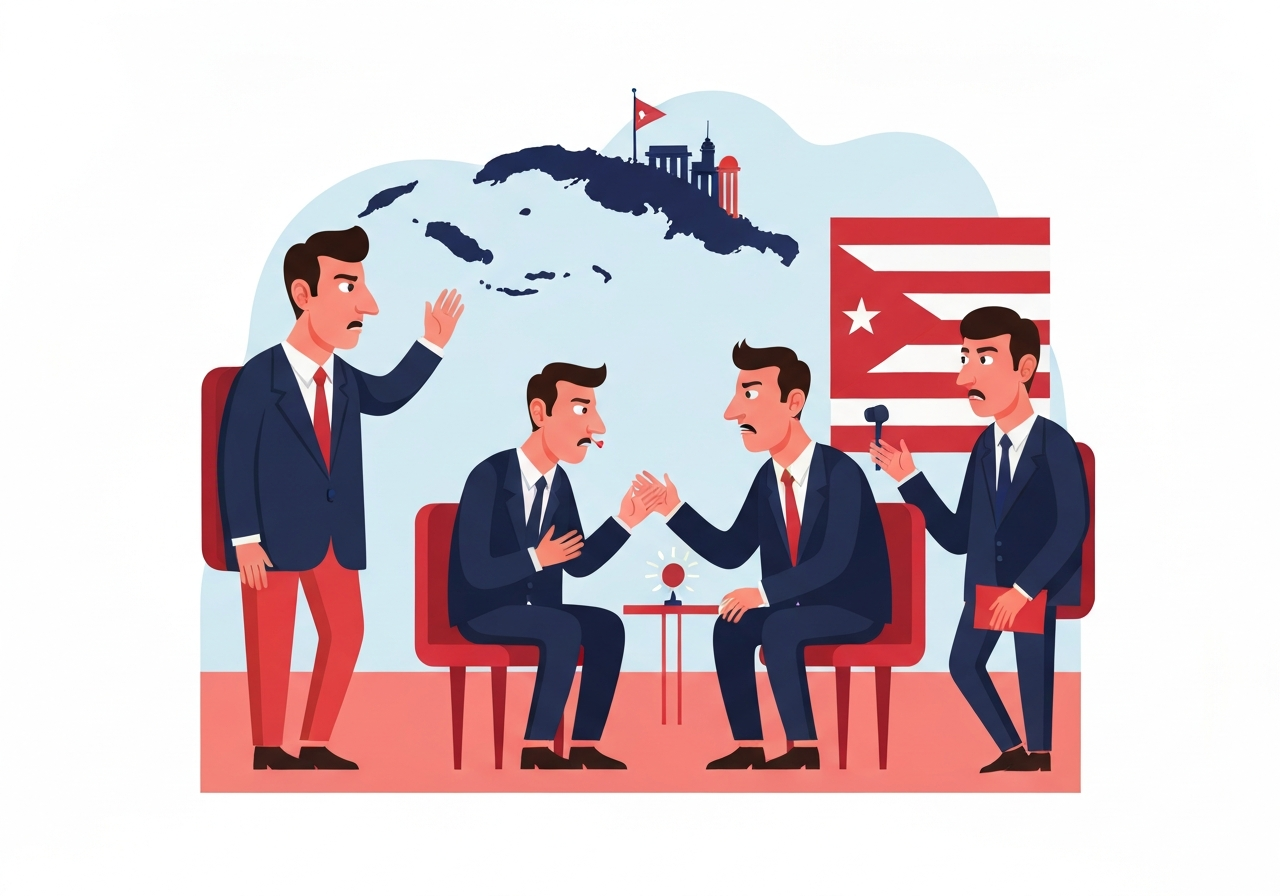
President Donald Trump said on Sunday at his Mar‑a‑Lago estate that the United States is in discussions with Cuba’s highest officials about a possible agreement, days after warning of measures that could choke the island’s fuel supplies. Trump suggested a deal could be reached but provided no details. The comments followed a series of U.S. actions this week — including an executive order threatening tariffs on countries that sell oil to Cuba — that coincided with long lines at Havana petrol stations and increasing power outages.
Key Takeaways
- President Trump told reporters on Sunday at Mar‑a‑Lago that the U.S. is talking to “the highest people in Cuba” about a potential deal, without specifying terms.
- Earlier in the week the White House issued an executive order threatening additional tariffs on countries selling oil to Cuba; that action preceded reported fuel queues in Havana on Friday.
- Trump framed Cuba as a “failing nation” now cut off from Venezuelan oil and finance, saying the island “has no money” and “no oil.”
- Secretary of State Marco Rubio and other administration officials have signalled a goal of political change in Havana following the fall of Venezuela’s Nicolás Maduro.
- Cuban authorities have accused the U.S. of attempting to strangle their economy as power cuts and fuel shortages deepen on the island.
- No formal agreement, timeline or concrete concessions have been disclosed by either side as of Sunday.
Background
Tensions between Washington and Havana have been escalating in recent months, intensified by developments in Venezuela. The collapse of Nicolás Maduro’s hold in Caracas removed a major source of subsidised oil and remittances that had supported Cuba’s economy for years. The loss of Venezuelan support has contributed to a fragile economic situation on the island, with shortages of fuel and other essentials becoming more acute.
The Trump administration has publicly pushed for political change in Cuba, a longstanding objective for many U.S. policymakers and Miami‑area politicians. This week the White House took steps aimed at limiting Cuba’s access to external energy supplies, including an executive order announced on Thursday that warned of tariffs on third‑party countries supplying oil to Havana. Cuban officials say these moves amount to economic strangulation amid already‑growing domestic hardship.
Main Event
On Sunday at Mar‑a‑Lago, President Trump told reporters that U.S. officials were in contact with top Cuban leaders and expressed optimism a deal could be reached, but he did not describe the substance of any talks. He reiterated that Cuba has been weakened by the loss of Venezuelan support and suggested that Havana might seek a negotiation to avert a humanitarian crisis. Trump’s public remarks followed a sharper warning he made on Saturday that Cuba faced “zero” oil or money if it did not comply.
Earlier in the week the administration signed an executive order that threatened new tariffs on nations that continue to sell oil to Cuba. Within hours of that announcement, reports surfaced of long queues at petrol stations in Havana and growing complaints about daily power interruptions on the island. Cuban state media and official spokespeople framed the shortages as the result of hostile U.S. policy, while U.S. officials framed pressure as leverage to prompt political change.
Secretary of State Marco Rubio, a frequent critic of the Cuban government and the son of Cuban exiles, has publicly endorsed stronger measures aimed at promoting regime change in Havana. Administration messaging has combined public pressure, economic measures and diplomatic outreach to Cuba’s leadership, though precise bargaining positions and incentives under discussion have not been disclosed.
Analysis & Implications
If talks between Washington and Havana are genuine and continue, a negotiated outcome could range from limited humanitarian exemptions and energy supplies to broader concessions tied to political or economic reform. The U.S. administration’s public rhetoric — emphasizing both pressure and a stated willingness to deal — suggests it is trying to expand leverage while leaving room for diplomacy. Absent clear terms, however, the risk is that pressure intended to hasten political change instead exacerbates humanitarian and economic distress for ordinary Cubans.
Regionally, measures that restrict third‑party oil sales to Cuba would force other governments and companies to choose between trade ties and exposure to U.S. tariffs. That dynamic could complicate relations with nations that previously supplied or transited fuel to Havana. For Cuba, loss of access to fuel has immediate consequences for hospitals, public services and transport, and sustained shortages would likely deepen internal unrest and migration pressures toward the U.S. coast and beyond.
Politically, the administration’s posture will play well with constituencies in South Florida and among critics of the Cuban government, but it also raises questions for U.S. partners that may not want to be caught between Washington’s penalties and Havana’s needs. Any deal framed as a short‑term fix without institutional guarantees could prove fragile; durable solutions would probably require multilateral coordination and clear humanitarian safeguards.
Comparison & Data
| Date | Action/Event |
|---|---|
| Thursday | Executive order threatening tariffs on countries selling oil to Cuba |
| Friday | Reports of long lines at petrol stations in Havana |
| Sunday | President Trump says U.S. is in talks with Cuba’s top leaders |
The sequence above shows how U.S. policy actions were followed by visible strains in Cuba’s fuel supply chain within days. While exact volumes of lost fuel flows or the number of affected power outages were not published with the administration’s announcements, the public timeline underscores the tight coupling between policy signals and on‑the‑ground shortages.
Reactions & Quotes
U.S. officials framed the approach as calibrated pressure designed to create leverage for negotiations and potential concessions from Havana.
“Cuba is a failing nation…we’re talking to the people from Cuba, the highest people in Cuba, to see what happens.”
President Donald Trump, Mar‑a‑Lago press remarks
Cuban authorities responded by accusing the U.S. of intentionally worsening living conditions on the island.
“These measures are aimed at strangling our economy and deepening the hardship faced by ordinary Cubans.”
Cuban government statement (paraphrased)
Analysts warn that pressure without transparent humanitarian safeguards could create unintended consequences for civilians.
“Leverage can prompt negotiations, but without clear humanitarian channels the costs will fall on the population.”
Regional policy analyst (paraphrased)
Unconfirmed
- Precise content and terms of the reported talks between U.S. and Cuban officials remain undisclosed and unverified.
- It is not publicly confirmed which Cuban officials or delegations are engaged in the negotiations described by the president.
- Quantitative data on oil flow reductions, the scale of fuel shortfalls, or the number and duration of power outages have not been released by either side.
Bottom Line
The Trump administration says it is engaging Cuba’s top leadership in talks after adopting measures intended to constrain Havana’s fuel access. While the president expressed optimism about reaching a deal, no specifics were provided, leaving significant questions about what concessions or safeguards might be part of any arrangement.
Observers should watch for formal statements or documented agreements that clarify humanitarian exemptions, the role of third‑party suppliers, and any sequencing of incentives versus penalties. Without transparent terms, short‑term political gains risk deepening material hardship for ordinary Cubans and creating broader regional frictions.
Sources
- The Guardian — news report summarising White House remarks and Cuban reactions (media)