
Lead
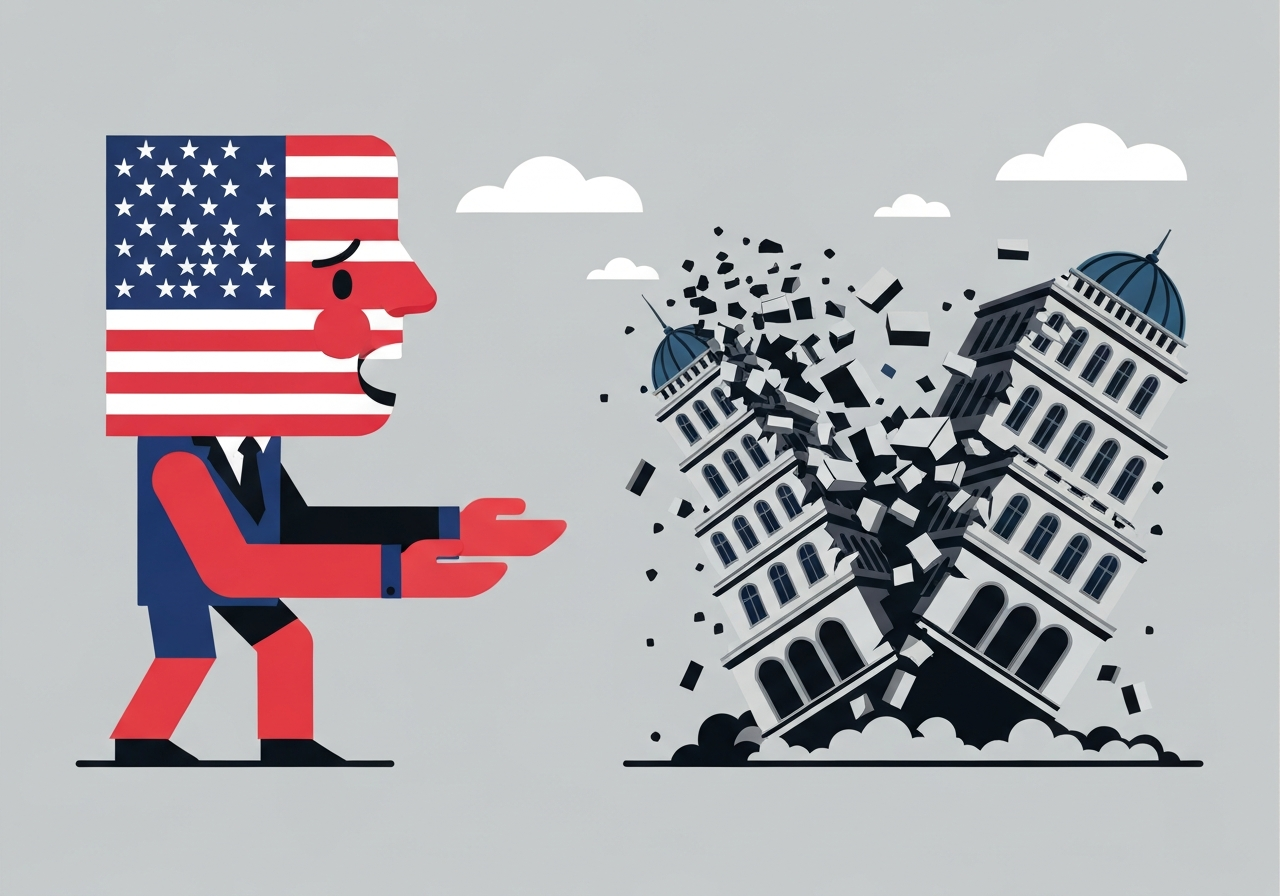
At the 62nd Munich Security Conference in Munich on Feb. 13–15, 2026, U.S. Secretary of State Marco Rubio and European leaders presented sharply different readings of trans-Atlantic ties. Rubio, speaking on , urged renewed common purpose while warning that migration and cultural change are testing social cohesion. German Chancellor Friedrich Merz, in an opening address, declared that the postwar rules-based order is fraying and called on Europe to mobilize its economic and military strengths. The contrast between applause for visiting U.S. officials and sober European rhetoric suggested political sympathy without a clear path to strategic alignment.
Key Takeaways
- Marco Rubio delivered a keynote on , arguing the U.S. faces migration challenges and warning of a postwar “delusion” that liberal democracy would naturally spread.
- Rubio traced U.S. identity to European immigration, citing Scots-Irish, German and other groups; he did not address Indigenous, African, or Chinese labor contributions in his remarks.
- European Union foreign policy chief Kaja Kallas publicly rejected alarmist claims about Europe’s decline during her remarks on .
- German Chancellor Friedrich Merz told attendees on that the rules-based international order “no longer exists” and urged Europe to unlock its political, economic and military potential.
- Merz contrasted Russia’s GDP at about €2 trillion with the EU’s nearly tenfold advantage, arguing wealth has not translated into commensurate strength.
- Conference organizer Wolfgang Ischinger said European attendees felt “a sigh of relief,” reflecting enduring dependence on U.S. security and trade ties despite growing strategic divergence.
- The event underscored a gap between ceremonial trans-Atlantic gestures—standing ovations for U.S. officials—and substantive European moves toward strategic autonomy.
Background
The Munich Security Conference (MSC), held annually since 1963, is a diplomatic forum where heads of state, ministers and security experts debate international threats and alliances. This 62nd edition (Feb. 13–15, 2026) convened amid rising tensions: renewed great-power competition with Russia and China, supply-chain pressures, and contentious domestic politics across Western democracies. For decades the U.S.-Europe relationship rested on U.S. security guarantees, NATO commitments and deep trade ties; recent years have tested those foundations as European leaders discuss greater strategic self-reliance.
The conference has become a barometer for trans-Atlantic sentiment: speeches and side meetings reveal both public stances and private calculations. Past MSC gatherings have produced policy shifts and signaling—on defense spending, sanctions and alliance cohesion—so remarks by senior U.S. officials and EU leaders carry political weight. Against that institutional backdrop, this year’s lineup—featuring U.S. Secretary of State Marco Rubio and German Chancellor Friedrich Merz—highlighted competing diagnoses of the West’s present challenges.
Main Event
On , Secretary of State Marco Rubio delivered a keynote that emphasized shared roots between the United States and Europe while framing migration as a common strain. Rubio argued that a postwar assumption—that liberal democracy and market ties would make conflict obsolete—proved misguided, and he warned of migration’s effects on social cohesion and cultural continuity. His historical account credited European immigrant groups for shaping the American frontier and economy, but omitted several other founding and labor contributions, a gap noted by some attendees.
The speech drew a standing ovation inside the Hotel Bayerischer Hof; Wolfgang Ischinger described attendees as breathing “a sigh of relief,” reflecting continued reliance on American leadership for security and commerce. Not all in the room shared that reaction: Kaja Kallas, the EU foreign policy chief, visibly refrained from immediate applause and later responded directly to what she called an inflated assessment of European decline.
Earlier, on the opening day , Chancellor Friedrich Merz offered a starker diagnosis. He argued that the old international order—flawed in its prime—has effectively disintegrated and that great-power rivalry now treats resources and technology as leverage in a zero-sum contest. Merz pressed Europe to convert its economic scale into coordinated political and military strength and signaled shifts in Germany’s defense posture to operate at “full speed.”
Throughout the three days, debate moved beyond rhetorical alignment to practical questions: how Europe can reduce dependence on external supply chains, whether NATO members will meet capability goals, and what shared industrial policies could look like. The conference agenda combined plenary speeches, ministerial panels and numerous closed-door meetings where diplomats and ministers explored those operational details.
Analysis & Implications
The MSC exchange reveals two concurrent dynamics: rhetorical rapprochement and strategic divergence. Public gestures—applause for visiting U.S. officials—reflect the political salience of the trans-Atlantic bond, but leaders like Merz are signaling that Europe no longer expects American leadership to solve structural vulnerabilities. That shift has implications for NATO burden-sharing, EU defense industrial policy and long-term alliance management.
Economic data underline Merz’s point: if the EU’s GDP is an order of magnitude larger than Russia’s (~€2 trillion), the problem is not a lack of resources but the political will and institutional mechanisms to deploy them coherently. Building interoperable forces, coordinating procurement, and protecting critical technologies will require domestic reforms and cross-border cooperation that can strain electorates already sensitive to migration and industrial change.
Rubio’s emphasis on migration as a cohesion challenge resonates in both the U.S. and Europe, but treating migration primarily as a cultural threat risks simplifying complex economic and demographic drivers. Policy responses that balance humane protections, economic integration and border management would be more durable than rhetoric that foregrounds civilizational decline. Domestic politics in multiple countries will shape whether leaders adopt that balanced approach or double down on exclusionary narratives.
On the international stage, the MSC exchanges may accelerate European moves toward strategic autonomy while preserving cooperative areas—intelligence sharing, deterrence, sanctions—where U.S. and European interests still align. That hybrid future would require new diplomatic frameworks to manage differences without eroding core alliance functions.
Comparison & Data
| Entity | Approx. GDP (euros) |
|---|---|
| Russia | ~€2 trillion |
| European Union | ~€20 trillion (nearly 10× Russia) |
Those headline numbers illustrate scale but not capability: GDP does not automatically translate into military readiness, technological leadership or supply-chain resilience. Converting economic weight into strategic advantage requires coordinated investment, streamlined procurement and political consensus—areas where the EU has historically lagged behind the U.S.
Reactions & Quotes
“An unprecedented wave of mass migration threatens the cohesion of our societies,”
Marco Rubio, U.S. Secretary of State, keynote speech,
Rubio used this line to frame migration as a shared problem, linking cultural continuity to political stability. The phrasing drew applause from many delegates but also prompted criticism for omitting broader historical contexts.
“This order … no longer exists,”
Friedrich Merz, German Chancellor, opening remarks,
Merz’s statement set a pessimistic tone and was accompanied by calls for Europe to mobilize its economic and military potential. His speech focused on structural reforms and strategic industrial policy rather than symbolic gestures.
“Woke, decadent Europe is not facing civilizational erasure,”
Kaja Kallas, EU High Representative, remarks,
Kallas directly countered alarmist narratives and emphasized confidence in Europe’s institutions and values, signaling resistance to rhetoric that frames the continent as inevitably declining.
Unconfirmed
- Whether the standing ovation for Rubio signals concrete policy shifts in European capitals remains unconfirmed; applause can reflect diplomatic courtesy rather than binding commitments.
- Attributing long-term European policy changes directly to MSC speeches is speculative; internal government deliberations and legislatures will determine outcomes.
- Reports suggesting unified European agreement on a single defense procurement program are not confirmed and lack published treaty or legislative text.
Bottom Line
The Munich Security Conference exposed an uneasy equilibrium: political theater and mutual reassurance coexist with a growing drive in Europe to act independently on security and industry. U.S. appeals to shared history and warnings about migration won polite reception, but they did not erase deep European calls for structural change.
For policymakers, the takeaways are concrete: translate economic scale into coordinated capabilities, address migration with policy mixes that combine integration and orderly border management, and build diplomatic mechanisms that can reconcile U.S.-European differences without undermining core cooperation. The coming months will show whether rhetoric at MSC becomes policy—or remains a snapshot of uneasy trans-Atlantic politics.
Sources
- NPR — news report covering MSC speeches and reactions (media).
- Munich Security Conference (MSC) — official conference agenda and speaker list (official/organizer).
- Federal Government of Germany — statements and transcripts from Chancellor Friedrich Merz (official/government).