
Lead
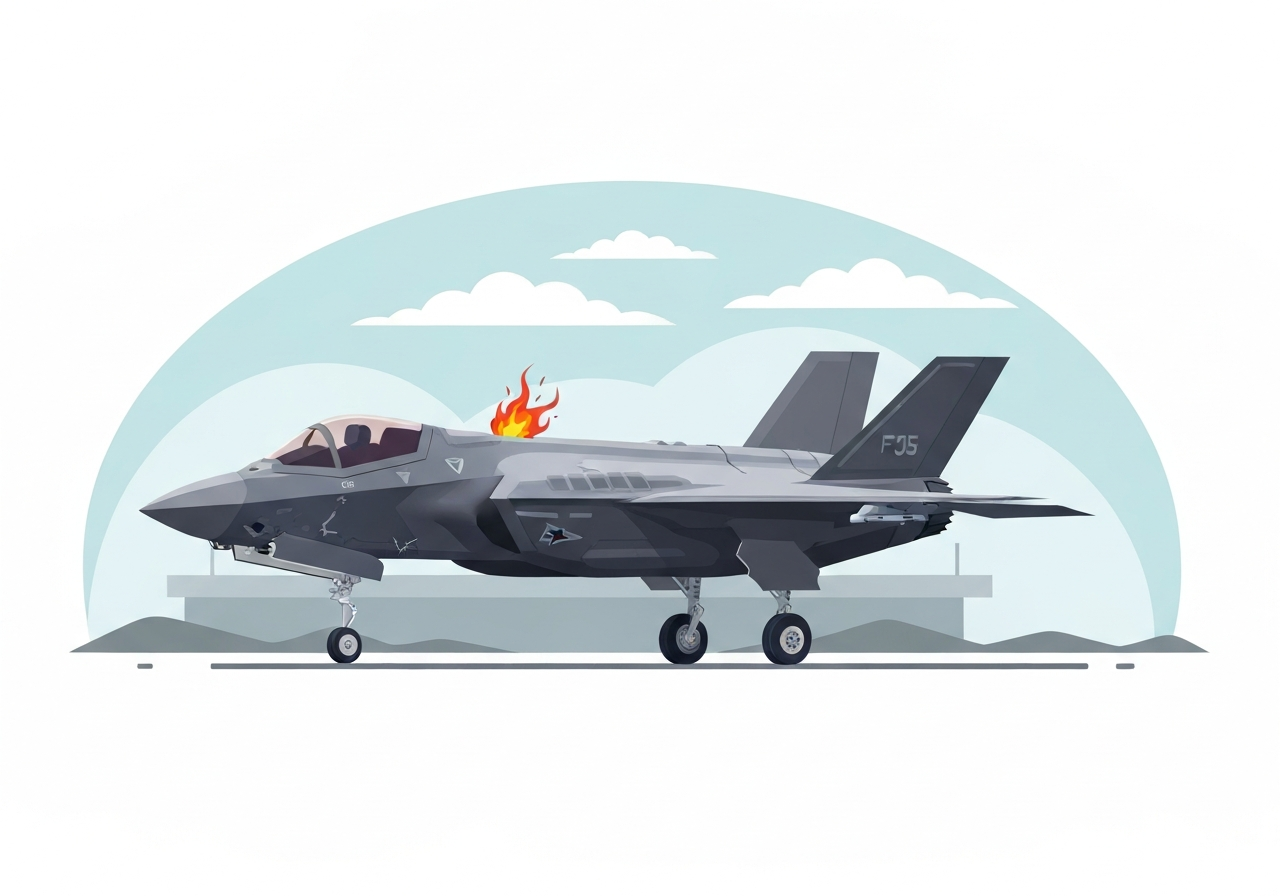
On March 19, 2026, a US F-35 stealth fighter made an emergency landing at a US air base in the Middle East after being struck, what two sources said is believed to be, Iranian fire. US Central Command spokesperson Capt. Tim Hawkins said the jet was “flying a combat mission over Iran” when it was forced to land; the aircraft touched down safely and the pilot is in stable condition. The episode is under formal investigation by US forces. If confirmed, officials say it would be the first known instance of Iran striking a US aircraft in the war that began in late February.
Key Takeaways
- The F-35 landed safely at a US base in the Middle East on March 19, 2026; the pilot is reported stable and the incident is under investigation.
- Two sources told reporters the jet was struck by what is believed to be Iranian fire while conducting a combat mission over Iran, per US Central Command statements.
- This would be the first confirmed strike on a US aircraft by Iran since the conflict began in late February 2026; both the US and Israel operate F-35s in the theater.
- Separate recent losses include three US F-15s mistakenly shot down by Kuwaiti air defenses (all six crew ejected safely) and a KC-135 tanker crash in western Iraq that killed six crew members.
- The F-35 platform represents a multibillion-dollar investment and individual aircraft cost upwards of $100 million, raising both operational and political stakes.
- US forces are reinforcing the region: reporting indicates the 31st Marine Expeditionary Unit (out of Okinawa) and the Tripoli Amphibious Ready Group have been dispatched, and the USS Tripoli was seen near Singapore this week.
- Senior US officials, including Defense Secretary Pete Hegseth, continue to describe the campaign as decisively successful and say Iranian air defenses have been substantially degraded.
Background
The current confrontation began in late February 2026 and has rapidly drawn in high-end air operations from multiple partners. The United States and Israel are both employing fifth-generation fighters, including the F-35, in operations tied to the broader conflict with Iran. Iran has invested in layered air-defence systems over decades, creating dense engagement zones that complicate coalition air operations and raise the risk of both intentional and accidental strikes.
Previous incidents underscore the hazards of operating in that environment: three US F-15s were downed by Kuwaiti air defenses in a friendly-fire episode, and a KC-135 tanker went down in western Iraq with six fatalities, which the US military said was not caused by hostile or friendly fire. Those events have already prompted reviews of coordination, identification and deconfliction procedures among coalition forces and regional partners. The presence of amphibious and expeditionary forces, such as the 31st MEU and the Tripoli Amphibious Ready Group, signals a US intent to bolster deterrence and operational flexibility in the region.
Main Event
According to two people familiar with the matter and remarks from US Central Command, an F-35 on a combat mission over Iranian airspace sustained damage and diverted to a US base in the Middle East on March 19, 2026. Capt. Tim Hawkins, a CENTCOM spokesperson, confirmed the aircraft landed safely and that the pilot remains in stable condition; he also said the incident is being investigated. Sources characterized the impact as coming from Iranian fire, though CENTCOM framed the strike as under review pending formal findings.
The aircraft involved is part of the US and allied inventory of fifth-generation fighters operating in the theater. Officials have emphasized both the operational importance of the platform and the political sensitivity of any incident involving advanced US warplanes. Immediate actions following the landing included damage assessment, pilot debriefing, and securing the aircraft for technical inspection, US military procedures that aim to preserve evidence and determine causal factors.
US forces have not publicly released technical details about the nature of the damage or the munition type, and investigators will examine flight data, maintenance logs, telemetry and any available sensor footage. The report of an F-35 being struck contrasts with previous losses in the campaign that were attributed to non-hostile causes or misidentification; if strike attribution to Iranian forces is validated, it marks a new phase in the conflict dynamics.
Analysis & Implications
If investigators confirm the jet was hit by Iranian fire, the incident could shift tactical calculations on both sides. For US commanders, an affirmed hostile hit would necessitate changes to mission planning, aircraft routing and altitude profiles, as well as possibly accelerating force protection measures for regional bases. It would also intensify diplomatic pressure on Tehran and could prompt calibrated US military responses intended to deter further strikes without triggering broader escalation.
Strategically, a confirmed strike would test political will in Washington and among allies. US policymakers must weigh the operational need to continue contested sorties against the political and public appetite for escalation. The presence of expeditionary units and carrier-ready groups gives the US military a range of response options, but each carries risks: kinetic retaliation risks wider conflict, while inaction could be perceived as weakness.
Economically and technologically, damage to a high-value asset such as an F-35 has procurement and readiness implications. Each aircraft represents an investment exceeding $100 million and specialized sustainment chains; even a non-loss can strain squadron availability and logistics. The psychological and symbolic effects—both domestic and international—are likely to amplify the event beyond its immediate material impact.
Comparison & Data
| Incident | Date (2026) | Aircraft | Casualties/Damage |
|---|---|---|---|
| Suspected strike leading to emergency landing | March 19 | F-35 (US) | Aircraft damaged; pilot stable; under investigation |
| Friendly-fire shootdown | Earlier in campaign | Three F-15s (US) | 3 aircraft lost; 6 crew ejected safely |
| Tanker crash | Last week | KC-135 (US) | 1 aircraft crashed; 6 crew killed; cause under review |
The table places the F-35 emergency landing in context with other recent US losses and incidents in the wider campaign. While the F-15 shootdown and the KC-135 crash have established casualty and equipment-loss baselines, the F-35 case is distinct because it may represent direct hostile engagement by Iranian systems. Analysts will track investigation findings, which will determine whether the event joins the category of hostile attrition or remains classified with non-combat causes.
Reactions & Quotes
US military spokespeople have provided limited official comment while investigations proceed, and senior civilian leaders have framed the broader campaign optimistically.
The aircraft landed safely, and the pilot is in stable condition. This incident is under investigation.
Capt. Tim Hawkins, US Central Command (official spokesperson)
We are winning decisively; Iran’s air defenses have been flattened.
Defense Secretary Pete Hegseth (senior US official)
Those statements reflect the dual message from US authorities: reassurance about immediate personnel safety, and a broader narrative of operational success. Independent analysts and regional partners are likely to press for more detailed evidence before drawing firm conclusions about who fired the shot and how.
Unconfirmed
- Whether the munition or projectile that struck the F-35 definitively originated from Iranian state forces remains unverified pending forensic analysis.
- The precise time, altitude and coordinates of the impact have not been publicly released, leaving details of the engagement timeline unclear.
- Specific technical damage assessments and whether the aircraft will be repairable or returned to service have not been confirmed.
Bottom Line
The emergency landing of a US F-35 after being struck — if later confirmed as Iranian fire — would represent a notable escalation in the ongoing conflict that began in late February 2026. It raises both tactical concerns for air operations in the region and strategic questions about how the United States and its partners will balance deterrence with the risk of broader confrontation.
In the near term, investigators’ findings will shape military posture and diplomatic messaging. Observers should watch for formal attribution results, any change in sortie patterns over Iranian airspace, and Washington’s diplomatic and operational responses over the coming days.
Sources
- CNN (news reporting; original article and on-the-record statements)
- US Central Command (official military statements and spokesperson communications)
- U.S. Department of Defense (official releases; statements regarding aircraft losses and investigations)