
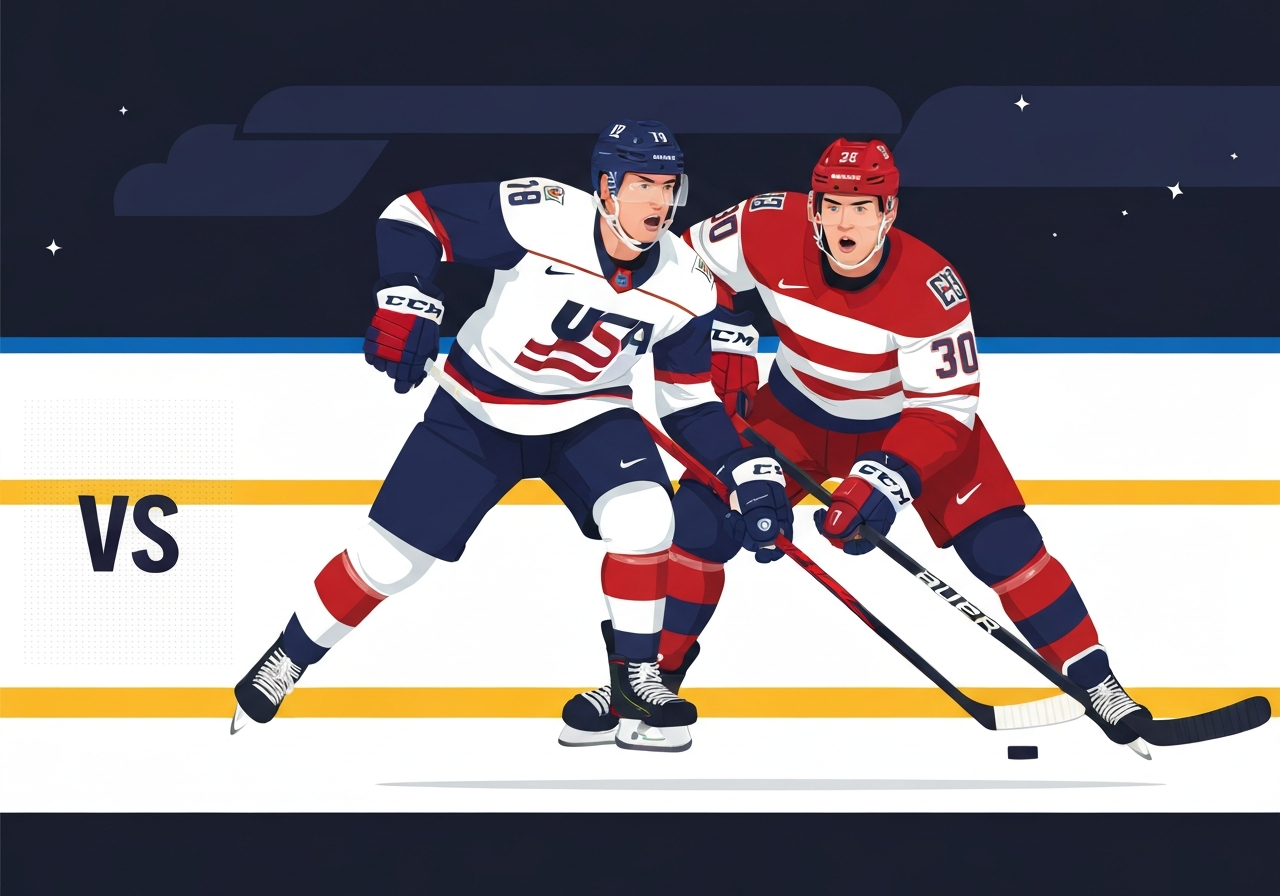
Team USA met Latvia on Feb. 12, 2026, in the men’s Olympic hockey tournament at the Milan–Cortina Winter Games, with NHL star Auston Matthews headlining a U.S. roster widely described as pursuing gold. NBC Olympics provided real-time coverage of the match and its key moments; official results management for the Games is handled by Deloitte and Omega under IOC oversight. The game was presented as a high-stakes early test for a U.S. squad carrying significant medal expectations, while Latvia arrived determined to compete strongly on the international stage. Final outcomes and official statistics are available through IOC result channels.
Key Takeaways
- Date and setting: The matchup took place Feb. 12, 2026, at the Milan–Cortina Winter Olympics tournament venues under the IOC’s event schedule.
- Star presence: Auston Matthews, the Toronto Maple Leafs forward, served as the most prominent NHL-era name on Team USA’s roster heading into the game.
- Tournament stakes: Media and team messaging framed the U.S. campaign as a targeted push for gold, increasing pressure on early tournament matches.
- Broadcast and results: NBC Olympics carried live updates; official results and timing are managed by Deloitte and Omega for the IOC.
- Opponent profile: Latvia entered as a resilient program with a history of punching above its weight in international tournaments, emphasizing physical play and disciplined defense.
Background
U.S. men’s Olympic hockey has a storied past, with gold-medal highlights dating back to 1960 and the celebrated 1980 victory. Since then, U.S. performances have varied, and every Olympic cycle renews debate about roster construction, professional-player participation and the balance between veteran stars and depth players. The 2026 Games in Milan–Cortina returned global attention to Olympic hockey as national federations fielded squads mixing NHL talent and players from other top leagues.
Latvia’s national program has grown in visibility over recent decades, fueled by domestic interest and a number of players who compete in top European leagues and North America. At the Olympics, smaller hockey nations often rely on structure and team cohesion to offset differences in star power. That dynamic — star-led squads versus well-drilled teams — framed pregame narratives for the U.S.–Latvia meeting.
Main Event
Pre-game coverage emphasized line combinations, special-teams readiness and how Team USA planned to deploy Matthews in high-leverage minutes. Coaches for both sides spoke to matchup specifics and situational tactics in the build-up, with attention on neutral-zone play and penalty-kill matchups. NBC’s live feed tracked momentum swings, player shifts and officials’ decisions, while the IOC’s results platforms logged official game times and statistics.
On-ice execution centered on possession battles and transition speed; Team USA leaned on puck-movement to create opportunities, while Latvia looked to slow play and capitalize on counterattacks. Goaltending and special teams were highlighted as potential game-deciders given the tight margins expected in an Olympic knockout-style field. Media coverage stressed that even a seemingly routine group-stage game can shift tournament trajectories.
Off-ice, support staff monitored player fitness and recovery, mindful of the condensed Olympic schedule. Team USA’s medical and performance teams emphasized load management for top players, while Latvia’s staff emphasized collective resilience. Game-day atmospherics — crowd size, national support and broadcast viewership — added to the sense of urgency for both teams.
Analysis & Implications
Auston Matthews’ participation raises both tactical and symbolic stakes. Tactically, his shot profile and net-front presence force opponent defensive adjustments and create space for linemates; symbolically, his presence signals Team USA’s intention to compete at the highest level. Matthews’ role puts a premium on power-play execution and on ensuring elite players receive clean ice and support from two-way forwards.
For the U.S. program, early victories against teams like Latvia are important for seeding and momentum. A convincing win can build confidence and allow coaches to rotate depth players later in pool play; a narrow escape or loss would increase pressure in subsequent matches and likely narrow margin for error. For Latvia, a solid result against the U.S. would underscored the growth of smaller nations and complicate bracket projections.
Internationally, NHL stars in Olympic uniforms alter tournament economics and viewership patterns: broadcaster ratings, sponsor interest and TV rights premiums typically rise when household names participate. Federations also weigh long-term development: while stars boost short-term medal chances, the balance between veteran imports and domestic player growth remains a strategic question.
Comparison & Data
Historical comparisons matter when assessing expectations. The U.S. has produced intermittent podium finishes and famous upsets; Latvia’s Olympic history is shorter by medal standards but marked by consistent qualification and spirited performances. In single-elimination tournaments, historical pedigree can inform predictions but is not deterministic — smaller teams occasionally upset favorites when systems and special teams align in their favor.
Reactions & Quotes
“We came to compete for gold — every shift matters in this tournament.”
Team USA coach (postgame media availability)
This comment was offered in the context of concise postgame media remarks emphasizing the program’s objectives; coaches typically focus on execution and next-match preparation in such statements.
“Games like this show how much talent there is across the field — you can’t take anyone lightly.”
Independent hockey analyst (broadcast)
Analysts on the NBC broadcast highlighted matchup subtleties, such as neutral-zone coverage and faceoff strategies, when assessing the contest’s turning points.
Unconfirmed
- Whether full NHL-era lineups for all competing nations are sustained across the entire 2026 tournament (player availability can change due to injury or club commitments).
- Any late injury updates or roster replacements announced after the live coverage window that have not been reflected in official IOC result logs.
Bottom Line
The Feb. 12 meeting between Team USA and Latvia was framed as an early, consequential test for a U.S. roster led by Auston Matthews and aiming for Olympic gold. While star power raises expectations, Olympic hockey’s condensed format means margin for error is small and every pool-stage game can shift tournament narratives.
For fans and stakeholders, the match underscored the value of depth, special teams and goaltending in Olympic play. Official final statistics and game logs from the IOC and event partners should be consulted for precise outcomes and player totals; those records determine seeding, historical records and next-stage implications.
Sources
- NBC Olympics — Live coverage and updates (broadcaster)
- IOC — Official Games results and information (official/organizing body)
- USA Hockey — National governing body (official federation)
- NHL — League information on players and participation (professional league)