
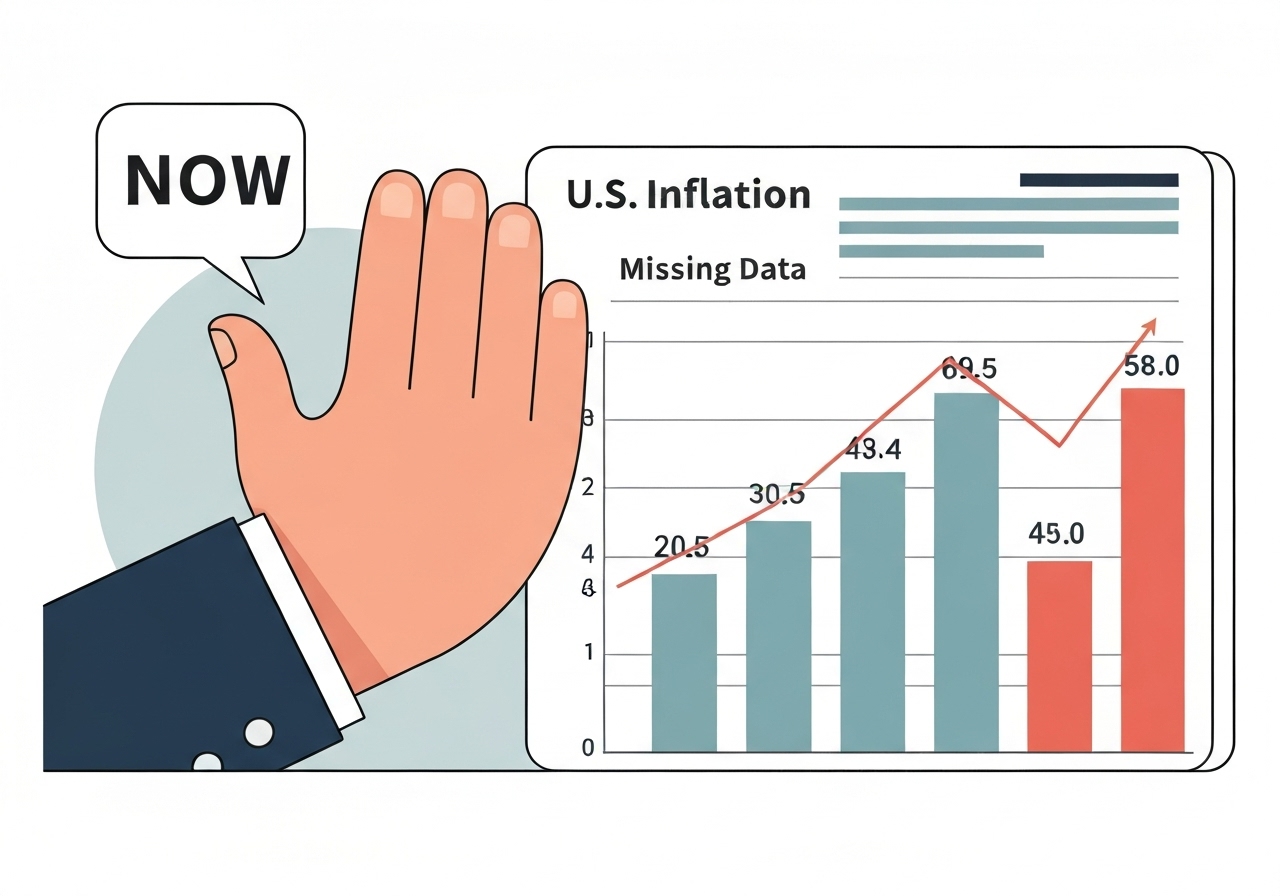
The November U.S. consumer price index released in mid-December appeared substantially softer than economists expected, with the annual headline rate coming in 0.4 percentage points below consensus. But the Bureau of Labor Statistics said this was the first CPI release after the U.S. government shutdown, and October’s data were not retroactively collected, leaving gaps. The agency warned November figures “did not include 1-month percent changes for November 2025 where the October 2025 data are missing,” and some survey responses were carried forward from September to October. Investors nevertheless cheered the report, alongside a 10.2% jump in Micron shares, lifting major equity indexes.
Key takeaways
- November headline CPI undershot expectations by 0.4 percentage points, a surprising shortfall versus consensus estimates.
- The Bureau of Labor Statistics said October 2025 data could not be retroactively collected after the government shutdown, creating gaps in the series.
- BLS noted that November did not include 1-month percent changes where October data were missing, and some survey items were carried forward from September to October.
- Evercore ISI economist Krishna Guha flagged that BLS “put in zero inflation in multiple categories” when computing housing inflation for some cities.
- Micron Technology shares rose 10.2% on an earnings beat the same day, a move that buoyed broad market indices.
- This was the first CPI report published after the shutdown-related data interruption, increasing the chance of noisy or revised figures.
- Market reaction was immediate and positive, but several data issues mean the headline drop may overstate disinflation.
Background
The Consumer Price Index, compiled by the Bureau of Labor Statistics, is one of the primary gauges the Federal Reserve and investors watch to assess inflationary pressure. The BLS collects thousands of price observations each month across goods and services; missing months or carry-forward entries can distort month-to-month percent changes and short-run signals. In mid-December 2025 the U.S. experienced a brief government shutdown that interrupted several data-collection operations, and the BLS later said it could not retroactively collect October 2025 price responses. That interruption transformed the November release from a routine update into the first post-shutdown reading, making clear communication about methodology crucial for users.
Policymakers and markets treat CPI prints as inputs to interest-rate expectations, corporate pricing strategy, and wage bargaining. Federal Reserve Chair Jerome Powell has cautioned about the difficulty of setting policy when data are imperfect, likening it to “navigating by the stars under cloudy skies.” When a high-profile release like CPI contains gaps or methodological carry-forwards, traders and analysts must separate solid signals from noise. Historical precedents show that incomplete data can be revised later, and those revisions sometimes materially change the apparent inflation trajectory over a few months.
Main event
On the day the Bureau of Labor Statistics published November CPI, headline inflation surprised to the downside by 0.4 percentage points versus consensus expectations. The BLS explained this was the first CPI report issued after the government shutdown and that October’s data were not recovered, producing blanks in the month-to-month series. To produce a November reading the agency carried forward certain survey data from September into October and omitted some 1-month percent-change calculations where October inputs were absent. Those steps reduced the number of independent month-to-month comparisons embedded in the November numbers.
Markets interpreted the softer headline print as a sign that inflation pressures were easing and priced accordingly; equity indices rose and bond yields shifted lower on the news. Micron’s earnings surprise and a 10.2% stock jump amplified risk-on positioning, contributing materially to the day’s gains in major indexes. Market commentators noted the unusual confluence of a big tech earnings beat on the same day as a headline CPI surprise, which can complicate attribution of market moves. Analysts quickly pointed out methodological caveats in the BLS release and urged caution in drawing definitive policy conclusions from this single monthly report.
Observers on the data side scrutinized specific components. Evercore ISI’s Krishna Guha suggested that, in calculating housing inflation for certain urban areas, the BLS effectively inputted zeros in multiple categories — an action that would mechanically lower measured inflation in those local indices. The BLS’s public notes acknowledged carry-forward procedures but did not present city-by-city breakdowns of which items were imputed or carried. That gap in transparency is part of why economists and market participants are calling for follow-up information and potential revisions when full data become available.
Analysis & implications
The immediate analytical challenge is separating true easing from statistical artifact. When a national index omits a month’s worth of price observations and uses carry-forward methods, short-run volatility can be suppressed or amplified depending on which items were missing. Housing components — rent and owners’ equivalent rent — are large, slowly moving items; if those subcomponents were zeroed or undercounted in specific metros, headline and core measures could appear meaningfully lower even if underlying price pressure is unchanged. That matters because the Fed pays particular attention to shelter metrics when assessing persistent inflation.
For Federal Reserve policy, a single noisy print is less decisive than a sequence of consistent releases. The Fed’s reaction function incorporates a range of indicators including CPI, PCE inflation, payrolls, and wages. Policymakers are likely to treat the November CPI read as provisional and emphasize incoming data and revisions before changing the path of interest rates. Market pricing of rate cuts or hikes should therefore be interpreted with caution: a temporary market rally or fall in yields after the release does not necessarily reflect a durable shift in monetary expectations.
For investors, the episode underscores the value of looking through headline monthly volatility to broader trends and data quality notes. Equities can jump on headline surprises, as they did with Micron’s 10.2% surge; yet short-term moves driven by noise often reverse or are reinterpreted when fuller data emerge. Fixed-income investors should be mindful that missing or imputed shelter readings can distort real yield calculations and forward inflation compensation. Portfolio managers may prefer to weight longer-run indicators and cross-check CPI with alternatives like PCE and private-sector price trackers until the BLS releases any revisions.
Comparison & data
| Metric | Status / note |
|---|---|
| November 2025 headline CPI vs. consensus | Reported 0.4 percentage points below expectations |
| October 2025 CPI data | Not retroactively collected after government shutdown |
| Method used for missing items | Certain survey entries carried forward from September to October; some 1-month changes omitted |
| Micron share move | +10.2% on earnings beat |
The table summarizes the key factual points without introducing new numeric estimates. Because the BLS did not recover October price responses, multiple categories rely on carry-forward methodology for the immediate November release. That makes direct month-to-month comparisons less reliable and raises the probability of later revisions once complete data arrive or when researchers reweight based on alternative samples.
Reactions & quotes
It appears the agency “put in zero inflation in multiple categories” for housing in some cities, which would mechanically lower measured shelter inflation in those areas.
Krishna Guha, Evercore ISI
The CPI release “did not include 1-month percent changes for November 2025 where the October 2025 data are missing,” the BLS said in its release explaining methodology choices after the shutdown.
Bureau of Labor Statistics (official release)
Setting policy with imperfect data is difficult; as Chair Powell has said, it’s like “navigating by the stars under cloudy skies,” a reminder that noisy readings require caution.
Jerome Powell, Federal Reserve Chair
Unconfirmed
- Whether specific cities had housing components explicitly set to zero by the BLS remains a claim from outside analysts and is not fully documented in BLS public tables.
- The precise numerical impact of the missing October data on the November headline and core rates will only be known when BLS provides component-level details or issues revisions.
- The extent to which Micron’s 10.2% jump drove the broader market rally versus the CPI surprise is not settled; both contributed but attribution is not fully quantified.
Bottom line
The November CPI release contained headline relief relative to expectations, but important methodology caveats — missing October inputs and carried-forward survey data — make the reading noisy. Markets reacted quickly, amplified by a strong Micron earnings beat, yet policymakers and careful investors should treat this monthly print as provisional. The Federal Reserve is likely to wait for subsequent, more complete data before materially changing policy guidance.
In practice, investors should cross-check November CPI with upcoming releases, including PCE updates, payrolls, and private-sector price trackers, and watch for BLS component detail or revisions. Short-term market moves are real and can create trading opportunities, but durable shifts in inflation and policy require confirmation from a sequence of reliable data points.