
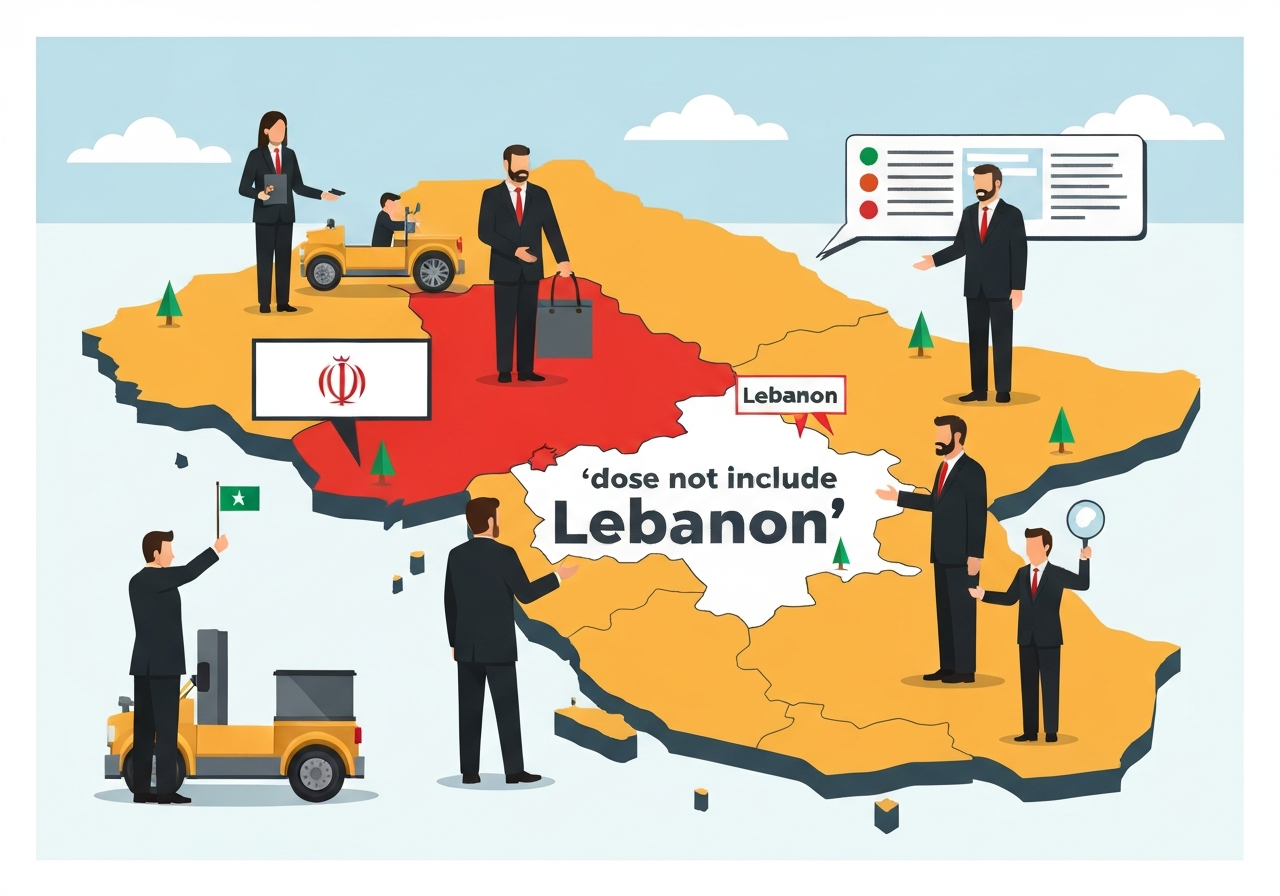
Israeli Prime Minister Benjamin Netanyahu’s office said on Wednesday that Israel welcomes the United States’ decision to suspend strikes against Iran for two weeks, but that the temporary truce “does not include Lebanon.” The announcement followed Pakistani Prime Minister Shehbaz Sharif’s statement that Washington and Tehran — and their allies — had agreed an immediate cessation of hostilities, reportedly effective everywhere, including Lebanon. Netanyahu said the pause aims to create space for negotiations scheduled in Islamabad and to prevent Iran from posing a nuclear, missile and terrorist threat to the region and beyond. He added, however, that Israel will continue operations it deems necessary along its northern border.
Key Takeaways
- Israel’s prime minister’s office publicly endorsed a US decision to halt strikes on Iran for two weeks beginning in early April 2026.
- Netanyahu explicitly stated the two-week truce “does not include Lebanon,” signalling continued Israeli operations against Lebanon-based Hezbollah.
- Pakistani PM Shehbaz Sharif announced that parties, including the US and Iran, agreed to an immediate ceasefire that reportedly covers Lebanon; the two statements conflict.
- Hezbollah attacked Israel on March 2, 2026, saying it was in retaliation for Israel’s killing of Iran’s Supreme Leader Ayatollah Ali Khamenei on February 28, 2026.
- Israeli strikes on Lebanon since then have killed more than 1,500 people and displaced over 1,000,000, according to reporting as of April 8, 2026.
- The US and Iran are due to hold negotiations in Islamabad on Friday, intended to consolidate the temporary pause and address wider security concerns.
Background
The immediate confrontation escalated after Iranian leader Ayatollah Ali Khamenei was killed on February 28, 2026, an event that prompted retaliatory strikes by Iran-aligned Hezbollah against Israel on March 2. Those Hezbollah attacks drew a forceful Israeli military response across northern Israel and deep into southern Lebanon, including air strikes and a ground incursion described by the Israeli military as an effort to create a buffer zone. The humanitarian toll in Lebanon has been severe: more than 1,500 dead and more than 1,000,000 people displaced, numbers widely reported by international media and humanitarian agencies.
Diplomatic efforts accelerated in early April when the United States and Iran signalled willingness to pause direct attacks for 14 days to allow for talks. Pakistan offered to host mediating talks in Islamabad, and both sides scheduled negotiations for Friday, April 10, 2026. Officials from multiple capitals have framed the pause as an opportunity to negotiate limits on missile and nuclear escalation and to reduce regional spillover, but the exact geographic scope remains contested.
Main Event
On Wednesday, Netanyahu’s office released a statement on X saying Israel supported the US move to suspend strikes on Iran for two weeks, but that the agreement “does not include Lebanon.” The statement framed the US pause as aligned with Israeli goals to neutralise threats posed by Iran’s nuclear and missile programs and associated proxies. Israeli statements emphasised that ongoing operations in southern Lebanon are intended to prevent future attacks and to secure territory along the border.
Pakistani Prime Minister Shehbaz Sharif, however, publicly announced that the US, Iran and their allies had agreed to an “immediate ceasefire everywhere including Lebanon and elsewhere,” and described the pause as effective immediately. That public claim appears to clash with Israel’s explicit exclusion of Lebanon from the two-week truce, creating diplomatic ambiguity ahead of the Islamabad talks.
There was no immediate public response from Hezbollah or the Lebanese government to Netanyahu’s clarification. On the ground in southern Lebanon, the Israeli military has maintained a ground presence and said it aims to secure additional territory, while humanitarian agencies report continued civilian displacement and casualties from recent strikes. The situation remains fluid as negotiators prepare to meet in Pakistan.
Analysis & Implications
The divergent statements from Israel and Pakistan highlight a core diplomatic challenge: defining the geographic and operational scope of any temporary pause. If Washington and Tehran conceive the truce as region-wide but Israel excludes Lebanon, the pause may reduce direct US–Iran strikes while leaving proxy confrontations — and their humanitarian consequences — unaddressed. That outcome could produce a partial de-escalation without stabilising the broader conflict dynamics in the Levant.
Politically, Netanyahu’s exclusion of Lebanon serves multiple domestic and strategic purposes. Domestically, it signals to Israeli constituencies and the military that operations to neutralise Hezbollah remain authorised. Strategically, it preserves leverage on the northern front and maintains pressure on Hezbollah’s command-and-control and logistics. Internationally, however, an open-ended Israeli campaign in Lebanon risks drawing criticism and complicating US mediation efforts between Washington and Tehran.
Economically and humanitarianly, the ongoing violence in Lebanon has already produced large-scale displacement and infrastructure damage, with long-term reconstruction costs likely to be substantial. Continued Israeli operations could further degrade Lebanon’s economy and public services, complicating humanitarian access and deepening regional instability that may prolong the conflict beyond any two-week pause.
Comparison & Data
| Metric | Value |
|---|---|
| Hezbollah attack on Israel | March 2, 2026 |
| Killing of Iran’s Supreme Leader | February 28, 2026 |
| Reported deaths in Lebanon | More than 1,500 |
| Reported displaced in Lebanon | More than 1,000,000 |
| Proposed truce duration | Two weeks (14 days) |
The table summarises core dates and humanitarian figures cited in reporting up to April 8, 2026. These numbers indicate the rapid escalation and human cost in Lebanon since late February. Analysts caution that casualty and displacement figures may change as access improves and assessments are updated.
Reactions & Quotes
Israeli government officials framed the US pause as aligned with their security objectives while carefully excluding Lebanon from the truce’s terms. That framing signals Israel’s intent to maintain pressure on Hezbollah despite diplomatic openings between Washington and Tehran.
“We support the United States’ efforts to ensure Iran no longer poses a nuclear, missile and terror threat … but the two-week truce does not include Lebanon.”
Office of the Prime Minister of Israel (statement on X)
Netanyahu’s office used the statement to link the US pause to wider non-proliferation and counterterror goals, while also making clear that Israel reserves the right to continue operations it considers necessary on its northern border.
Pakistan positioned itself as a diplomatic convenor and presented the Islamabad talks as producing an immediate, broad ceasefire — a contrast that underscores competing narratives about what was agreed on the pause and where it applies.
“The US, Iran and their allies have agreed to an immediate ceasefire everywhere including Lebanon and elsewhere.”
Shehbaz Sharif, Prime Minister of Pakistan (public statement)
Sharif’s public assertion, if accurate as stated, would indicate a comprehensive pause; the inconsistency with Israel’s statement raises immediate questions about enforcement, verification and the role of third-party guarantors.
Unconfirmed
- Whether the Islamabad negotiations will produce a written, verifiable agreement covering Lebanon is not yet confirmed; public statements from involved parties conflict.
- There has been no immediate, verifiable confirmation from Hezbollah or the Lebanese government accepting or rejecting the Pakistani claim of an “immediate ceasefire everywhere.”
- Details on enforcement mechanisms, verification measures, and third-party monitoring for any ceasefire remain unspecified and unverified.
Bottom Line
The announced two-week suspension of US strikes on Iran creates a diplomatic opening that could reduce direct US–Iran exchanges, but Israel’s explicit exclusion of Lebanon makes any region-wide de-escalation uncertain. Unless the parties clarify and agree on geographic scope and verification, the pause risks being partial — ending some direct attacks while allowing proxy fighting to continue.
Observers should watch the Islamabad talks for (1) the text of any agreement, (2) agreed verification and enforcement arrangements, and (3) the immediate responses from Hezbollah and Lebanon’s authorities. Those elements will determine whether the truce becomes a durable step toward broader stability or a temporary lull with continued humanitarian cost in Lebanon.