
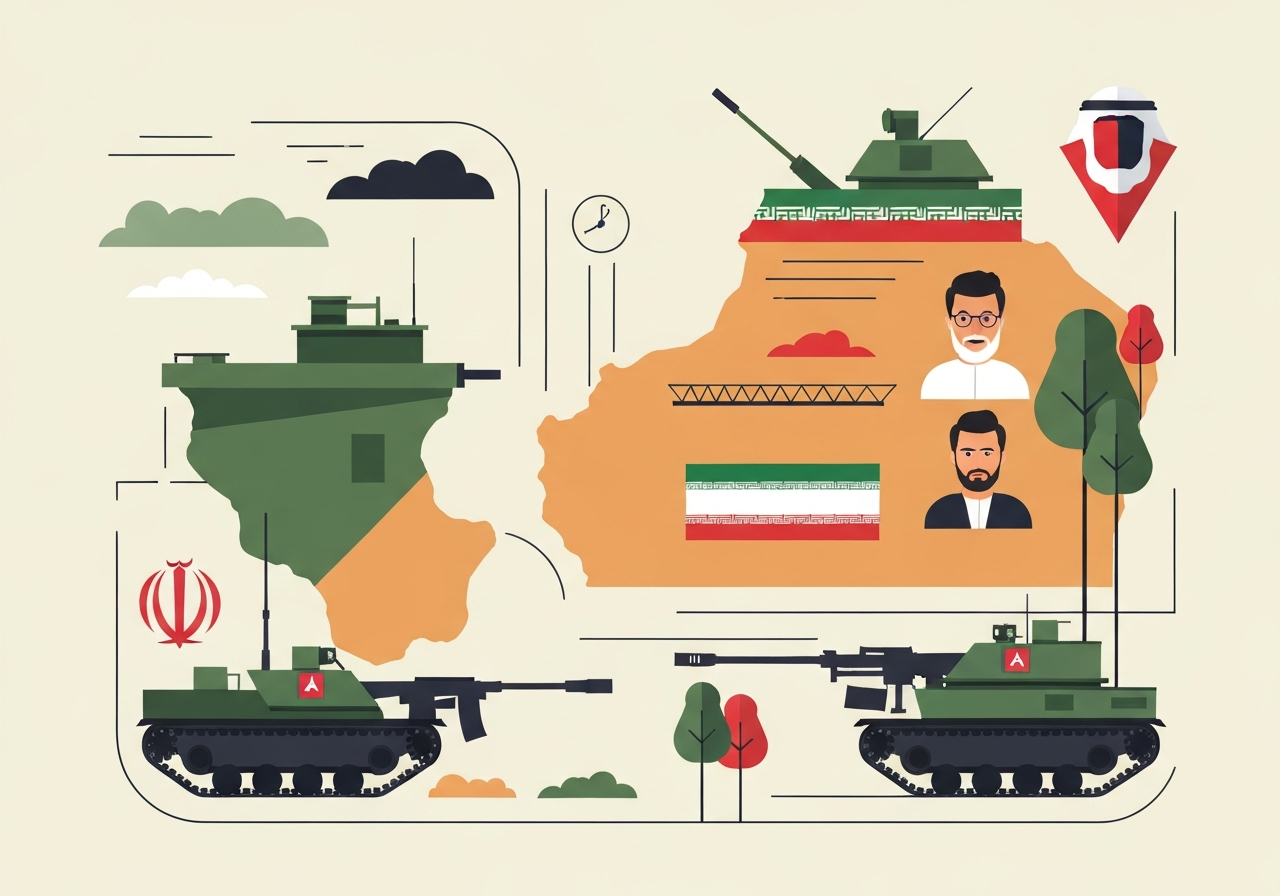
Lead: U.S. and Iranian delegations are scheduled to meet in Oman on Friday in a last-minute bid to ease tensions, even as Tehran, Washington and regional capitals increase military preparations. The talks focus on Iran’s nuclear program under a proposed framework that would pause enrichment for three years but leave unresolved missile and proxy issues. Meanwhile, U.S. forces and Israeli units are reinforcing defenses across the region, and Iran’s military and the IRGC have issued stark warnings. Diplomacy and deterrence are proceeding in parallel, raising the probability that negotiations and confrontation could unfold simultaneously.
Key Takeaways
- The Oman talks are set for Friday and center on Iran’s nuclear program, including a proposed three-year zero-enrichment commitment followed by limits below 1.5 percent.
- Iran reportedly holds roughly 440 kg of uranium enriched to 60 percent; the proposal would move that stock to a third country as part of the framework.
- U.S. logistical movements show over 100 military flights into the region in recent weeks and the deployment of additional Patriot and THAAD systems.
- Washington currently maintains about 10 naval vessels in the CENTCOM area, including the aircraft carrier USS Abraham Lincoln and multiple Arleigh Burke–class destroyers.
- Iranian authorities claim seizure of two tankers carrying about 1 million liters of fuel and detention of 15 foreign crew members.
- Israeli officials warn of a sharp rise in Iranian ballistic missile production, with projections of up to 300 missiles per month and stocks of 6,000–10,000 within two years cited by analysts.
- Senior U.S. officials stress that talks must address missiles, proxy activity and human rights in addition to nuclear controls; Iran prefers to limit negotiations to the nuclear file.
Background
The current diplomatic window follows months of escalating incidents across the Gulf and eastern Mediterranean: maritime harassment, drone shootdowns, and strikes on nuclear-related sites that have already produced episodic clashes. The crisis intensified after a string of sabotage and strikes last year, which included attacks on Iranian nuclear facilities and reciprocal actions at sea. Protests inside Iran since December 28 over economic collapse and drought have further complicated Tehran’s domestic politics; some estimates put fatalities in the unrest as high as 30,000, which Iranian authorities deny or dispute.
Regional powers and mediators—including Turkey, Qatar and Egypt—have worked to broker a framework acceptable to both Washington and Tehran, seeking to tie a nuclear restraint package to confidence-building measures. The United States has made it clear that its negotiating agenda extends beyond uranium enrichment to ballistic missiles, support for armed groups, and internal repression. Israel, which has said it will not allow a nuclear-armed Iran, has been pressing for strong action but has reportedly been asked to refrain from unilateral strikes during the talks.
Main Event
U.S. envoys in the region are conducting shuttle diplomacy: senior advisers moved between Abu Dhabi, Doha and Muscat in the days before the Oman meeting to coordinate allied positions. Public statements from the White House and the president reiterated that military options remain on the table while diplomacy proceeds. On the Iranian side, senior commanders in the Islamic Revolutionary Guard Corps (IRGC) and the regular army framed negotiations as born of American caution and warned of direct strikes on Israel and U.S. bases if conflict resumes.
Operationally, U.S. airlift and air-defense assets have surged: trackers report more than 100 cargo flights bringing personnel and equipment into the Middle East recently, and additional Patriot and THAAD batteries were cited as arriving to bolster regional defenses. CENTCOM released footage of flight-deck operations on the USS Abraham Lincoln as part of a public deterrence posture; U.S. officials say about 10 surface ships remain in the CENTCOM area of operations. At the same time, satellite imagery indicates Iran is hardening some nuclear sites—burying entrances at facilities such as Isfahan in apparent anticipation of future strikes.
Incidents at sea continue to feed tension. Iranian authorities said the IRGC seized two tankers carrying roughly 1 million liters of fuel, detaining 15 foreign crew members, while U.S. naval vessels have escorted commercial ships after harassment episodes. Separate encounters included an F-35C shooting down an Iranian drone and IRGC boats approaching a U.S.-flagged tanker in the Strait of Hormuz; U.S. destroyers provided escort and defensive support during that episode.
Analysis & Implications
Short-term, the talks in Oman present a narrow path to de-escalation by addressing the most sensitive technical aspects of Iran’s nuclear program. If Iran accepts a temporary zero-enrichment period and transfers its most highly enriched stock (about 440 kg of 60 percent material) out of the country, it would reduce immediate breakout risk but not eliminate long-term proliferation concerns. The proposed post-three-year cap below 1.5 percent would significantly constrain weapons-grade enrichment but would require intrusive monitoring and verification mechanisms to be credible.
Longer-term risk hinges on unresolved missile and proxy questions. Senior U.S. officials insist any durable agreement must include limits on ballistic-missile development and the transfer of advanced weapons to non-state actors. Iran’s qualitative missile improvements and reported plans to ramp production—estimates of 300 missiles per month have circulated in open reporting—would overwhelm regional defenses over time and force allies to make costly investments in interceptor systems.
Operationally, the U.S. faces air- and sealift constraints in sustaining a high-tempo campaign: moving a single Patriot battalion previously required some 73 C-17 sorties, illustrating the logistical intensity of large-scale contingency operations. The current pattern of rapid flights and temporary asset surges is consistent with a posture designed to deter or to prepare for discrete strikes, but not necessarily to sustain prolonged high-intensity operations without wider mobilization or allied commitments.
Politically, outcomes will be shaped by domestic pressures in Washington, Tehran and allied capitals. U.S. policymakers balance a desire to avoid open war ahead of an election cycle against pressure from regional partners and domestic constituencies. In Tehran, leadership calculations will weigh concession against internal unrest and regime survival; publicized casualty estimates from protests add another layer of complexity that could harden Iranian positions or, conversely, make leadership more risk-averse.
Comparison & Data
| Item | Reported/Estimated Figure |
|---|---|
| Highly enriched uranium (60%) | ~440 kg |
| Projected missile production (monthly) | Up to 300 |
| U.S. ships in CENTCOM area | ~10 (incl. USS Abraham Lincoln) |
| Recent military flights into region | Well over 100 |
| Fuel seized (Iran claim) | ~1,000,000 liters; 15 crew detained |
| C-17 sorties to move one Patriot battalion | 73 |
These figures clarify the scale of the challenge: removing or relocating 440 kg of highly enriched uranium would materially lower an immediate weapons breakout risk, while tens or hundreds of additional missiles per month would grow regional stockpiles fast. Similarly, the large number of airlift sorties needed to reposition heavy air defenses underscores the limits of quick fixes and why pre-positioning and allied hosting arrangements matter.
Reactions & Quotes
“While these negotiations are taking place, I would remind the Iranian regime that the president has many options at his disposal,” a White House spokesperson said, underscoring the administration’s simultaneous diplomatic and military signaling.
White House Press Office (official)
U.S. Secretary of State emphasized that meaningful talks must include missiles, proxy activities and human-rights concerns, not solely enrichment limits.
U.S. Secretary of State (senior official remarks)
An IRGC commander warned that Iranian forces would target Israel first and U.S. bases in the region if attacked, reflecting Tehran’s deterrence messaging.
Islamic Revolutionary Guard Corps (IRGC statement)
Unconfirmed
- Claims that Tehran will agree to transfer all 440 kg of 60% uranium to a third country have not been independently verified by international monitors.
- Open reporting of missile production rates—such as 300 missiles per month—stems from defense assessments and Israeli press reporting and lacks public, independently verifiable confirmation.
- Details about the flags and nationalities of crew on the seized tankers have not been fully corroborated by independent maritime authorities.
Bottom Line
The Oman talks represent a narrow diplomatic opportunity that could reduce immediate nuclear risk if Tehran accepts temporary zero-enrichment and a transfer of its most enriched stock. However, absent parallel restrictions on missiles and arms transfers and robust verification, any agreement would leave significant long-term security gaps for Israel and Gulf states.
Operational indicators—heavy airlift, added air defenses, carrier presence and hardening of Iranian facilities—show that both sides are preparing for conflict even as they talk. That parallel track raises the chance that an incident could rapidly escalate if miscalculation occurs, making transparent verification and continuous crisis communication among regional actors essential in the coming days.
Sources
- The War Zone — independent defense and security reporting (original reporting)
- Al Jazeera — international news outlet (reporting on proposed framework)
- Jerusalem Post — Israeli press (reporting on regional consultations and missile assessments)
- Reuters — international news agency (diplomatic reporting)
- U.S. Central Command (CENTCOM) — official military communications (public statements and media)
- Tasnim News Agency — Iranian state-linked news agency (IRGC claims on tanker seizures)