
Lead
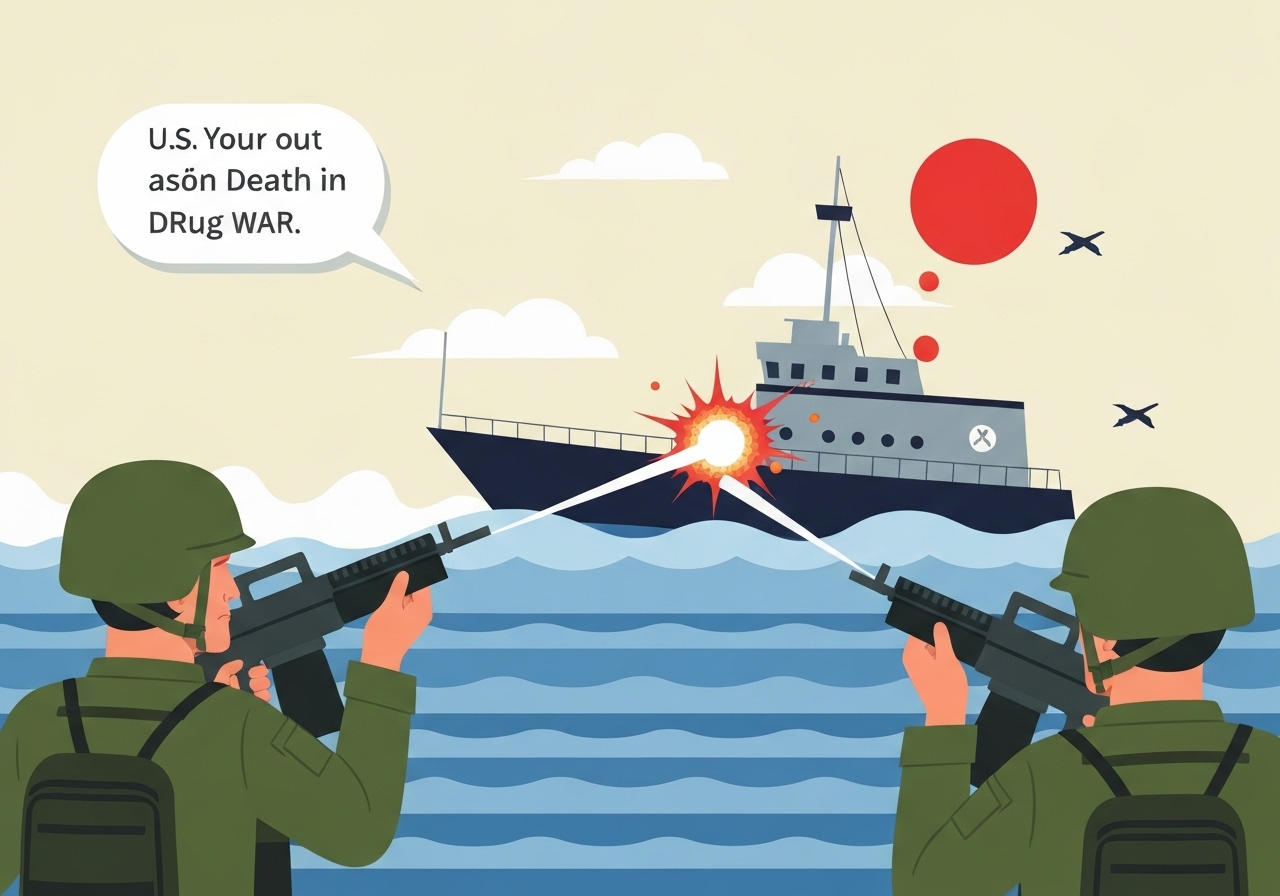
U.S. forces struck an alleged drug-trafficking vessel in the Caribbean on 7 November, killing three people, U.S. Defense Secretary Pete Hegseth said, bringing the reported death toll from the administration’s maritime campaign in Latin America to at least 70. The strike, shown in a short video released by the Pentagon, was carried out in international waters, officials say. Washington has described the operation as part of a broader push against groups it labels narco-terrorists, while critics and some governments call for clearer evidence and legal justification. No U.S. personnel were reported injured in the action.
Key takeaways
- The latest strike killed three people and was confirmed by Defense Secretary Pete Hegseth on 7 November.
- The U.S. campaign began in early September and has destroyed at least 18 vessels — 17 boats and one semi-submersible — according to U.S. statements.
- The overall death toll from the campaign is at least 70, based on U.S. disclosures and regional reports.
- U.S. forces have deployed six Navy ships to the Caribbean, sent F-35 aircraft to Puerto Rico and ordered the USS Gerald R. Ford carrier strike group to the region.
- The administration has described drug cartels as terrorist organizations and notified Congress it regards the situation as an “armed conflict” with those groups.
- Critics, some regional governments and families of the dead say many victims were civilians, primarily fishermen, and demand evidence linking targets to drug shipments.
- The Senate on Thursday blocked a Democratic war-powers resolution that would have required presidential consultation with Congress before strikes in Venezuela.
Background
The U.S. strikes began in early September, when American forces started targeting vessels in the Caribbean and the eastern Pacific that Washington says were involved in narcotics trafficking. The administration frames the operations as efforts to disrupt a flow of cocaine toward the United States, labeling the cartels involved as terrorist organizations to justify a range of military measures. Over the past weeks the U.S. has increased its military footprint in the region, positioning ships and aircraft to support maritime interdiction and strikes.
Those measures have raised questions about international law and sovereignty. Regional governments, including Venezuela, have accused the U.S. of overreach; Venezuela’s president, Nicolás Maduro, has repeatedly denied state involvement in cocaine production and says his country is being used as a transit corridor against its will. Families of those killed in earlier strikes and some human-rights groups say many victims were civilians, notably small-scale fishers, and demand transparent investigations.
Main event
On 7 November, Defense Secretary Pete Hegseth posted footage on X showing the strike on an alleged narco-boat in international waters, saying the vessel was operated by a “Designated Terrorist Organization.” He said U.S. forces sustained no casualties and that the action followed the same operational pattern as earlier strikes. The released clip obscures parts of the boat, a practice seen in prior government videos, and does not include full forensic detail linking the vessel to narcotics shipments.
U.S. officials say the campaign targets traffickers who pose a threat to the homeland by facilitating shipments of deadly drugs. The administration has also sought legal avenues to expand operations beyond boats, asking the Justice Department for guidance on striking other types of targets, according to people briefed on internal discussions. Meanwhile, deployments in the Caribbean have included F-35s sent to Puerto Rico and the positioning of the USS Gerald R. Ford carrier strike group.
The Senate’s recent action to block a Democratic war-powers measure means the president retains broad latitude to continue or expand strikes without fresh congressional authorization specific to Venezuela or the region. That parliamentary outcome removes an immediate legislative constraint on the White House’s military campaign plans, even as calls grow for more oversight and evidence about who is being targeted.
Analysis & implications
The U.S. approach represents a notable shift from traditional interdiction and law-enforcement cooperation toward a more kinetic, military-led campaign at sea. Classifying drug cartels as terrorist organizations and characterizing the situation as an “armed conflict” creates legal space for strikes, but it also raises complex questions about proportionality, rules of engagement and jurisdiction in international waters. If the administration continues to expand the campaign, it risks deeper diplomatic friction with regional governments that view such operations as encroachments on their sovereignty.
Operationally, destroying vessels can disrupt shipments in the short term but is unlikely to stop organized smuggling networks alone. Cartel logistics have historically adapted by shifting routes, using different vessel types or increasing overland coordination; the loss of individual boats does not dismantle financial networks or land-based production. A sustained counter-narcotics strategy typically requires parallel measures: intelligence sharing, judicial cooperation, port interdiction and addressing underlying demand in consumer markets.
The domestic political context matters. The administration’s posture speaks to a priority on demonstrating decisive action against the drug flow ahead of an election cycle; the Senate’s decision to block the war-powers resolution preserves executive flexibility. However, without transparent evidence linking each target to narcotics trafficking and clear legal justification, the campaign risks legal challenges, congressional scrutiny and reputational costs among allies and partners in Latin America.
Comparison & data
| Metric | Reported figure |
|---|---|
| Vessels destroyed | 18 (17 boats, 1 semi-submersible) |
| Reported deaths | At least 70 |
| U.S. naval presence | 6 ships deployed to Caribbean |
| Aircraft deployments | F-35s sent to Puerto Rico; USS Gerald R. Ford strike group positioned |
The table summarizes publicly disclosed counts from U.S. statements and reporting. These figures track kinetic actions at sea and immediate effects but do not capture unreported incidents, detained suspects, or downstream judicial outcomes. Analysts caution that vessel destruction is a partial metric: effectiveness should be measured over months in terms of seizure volumes, arrests, prosecutions and reductions in supply indicators.
Reactions & quotes
U.S. officials framed the operation as a defensive measure against a transnational threat. In his brief public statement, the defense secretary emphasized deterrence and warned traffickers to stop operations or face lethal force.
“To all narco-terrorists who threaten our homeland: if you want to stay alive, stop trafficking drugs,”
Pete Hegseth, U.S. Secretary of Defense (public post)
Regional leaders and civil-society groups pushed back, highlighting civilian deaths and calling for evidence. Venezuela’s president characterized U.S. actions as aggressive and politically motivated, reiterating his long-standing denial of domestic drug production and condemning external military pressure.
“These moves are violations of sovereignty and part of pressure against our government,”
Nicolás Maduro, President of Venezuela
Human-rights organizations have urged transparent investigations and independent verification of targets and casualties, noting that families report many victims were local fishers. Those calls reflect longstanding concerns about collateral harm and the need for accountability.
Unconfirmed
- Specific evidence tying the latest struck vessel to narcotics shipments has not been publicly released; U.S. statements assert the connection but detailed proof remains undisclosed.
- Claims that all those killed were cartel operatives are disputed by families and local reports, which say several victims were civilian fishers; independent, verifiable casualty assessments are pending.
- Reports that the administration may strike targets other than boats are based on internal requests for legal guidance; formal policy changes or new authorities have not been publicly enacted.
Bottom line
The U.S. maritime campaign has escalated kinetic activity in the Caribbean and eastern Pacific, producing immediate tactical effects — boat removals and a rising death toll — while prompting serious legal and diplomatic questions. Destroying vessels and interdicting shipments can yield short-term disruption, but analysts warn such actions alone are unlikely to dismantle trafficking networks without coordinated law-enforcement, judicial and demand-reduction measures.
For policymakers and observers, the key issues ahead are transparency and accountability: public release of evidence linking targets to trafficking, independent investigation of civilian casualties, and clear legal foundations for strikes beyond narrow interdiction. The Senate vote to block the war-powers resolution leaves the executive branch with operational leeway in the near term, increasing the need for congressional oversight and regional diplomatic engagement to manage risks and unintended consequences.
Sources
- The Guardian (international news outlet) — original reporting summarizing the strike and reactions.
- Agence France-Presse (AFP) (international news agency) — contributed reporting and regional context.