
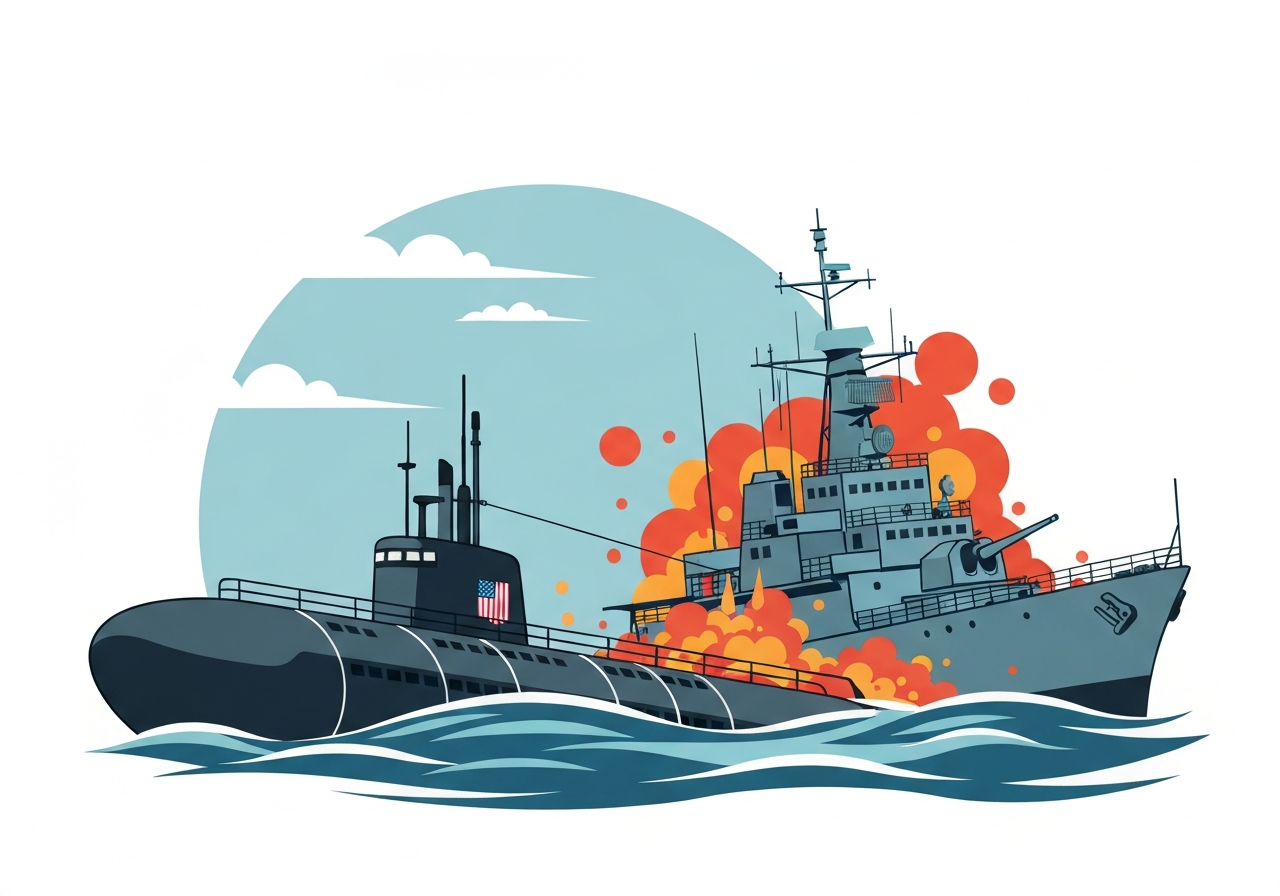
Lead: A U.S. submarine fired a torpedo that sank an Iranian warship in the Indian Ocean on Tuesday night, officials said, as U.S. and Israeli air strikes intensified across Iran. Tehran responded with additional missile and drone launches and threats to military and economic infrastructure across the Middle East. State media reported that Iran’s Supreme Leader, Ayatollah Ali Khamenei, was killed at the start of the conflict and that his scheduled public mourning was postponed. The exchanges have disrupted oil and shipping routes and left thousands stranded across the region.
Key Takeaways
- U.S. Defense Secretary Pete Hegseth said a torpedo from a U.S. submarine sank an Iranian warship in the Indian Ocean on Tuesday night; Sri Lankan authorities reported 180 people were aboard, 32 were rescued and 87 bodies recovered.
- Reported fatalities: at least 1,045 in Iran, more than 70 in Lebanon and 11 in Israel; six U.S. service members have also been killed.
- The U.S. and Israel began large-scale operations on Saturday aimed at Iran’s leadership, missile forces and nuclear infrastructure, with stated and implied objectives that have shifted over time.
- Iranian forces launched missiles and drones toward Israel and other Gulf states; Turkey said NATO defenses intercepted an Iranian ballistic missile before it reached Turkish airspace.
- A Maltese-flagged container ship was struck by two missiles in the Strait of Hormuz; its 24 crew members were rescued, and tanker traffic through the strait has fallen roughly 90% from prewar levels.
- Israel said it struck Basij-linked buildings and internal security command sites in Iran; Iran warned of destruction targeting regional military and economic infrastructure.
- Israeli Defense Minister Israel Katz said the offensive had been planned for mid-2026 but was moved forward to February, citing events inside Iran and wider strategic considerations.
Background
The confrontation began with coordinated strikes by the United States and Israel that targeted Iran’s top leadership, missile arsenals and elements linked to its nuclear program. Washington and Tel Aviv have publicly framed operations as degrading Iran’s military capability; some U.S. and Israeli statements have also suggested an aim to weaken or change the government’s hold on power. Over the opening days, the stated objectives and timelines have shifted, producing an open-ended campaign rather than a narrowly defined operation.
Iran’s internal political landscape is strained: widespread protests earlier in the year led to a bloody crackdown by security forces, including Basij units of the Islamic Revolutionary Guard Corps. Iranian authorities’ harsh response increased international pressure and was cited by Israeli and U.S. officials when justifying strikes on internal security targets. At the same time, Iran’s leaders are now racing to appoint a successor to Supreme Leader Ayatollah Ali Khamenei, who state media said was killed early in the conflict — only the second leadership transition since the 1979 revolution.
Main Event
U.S. Defense Secretary Pete Hegseth told reporters that a U.S. submarine launched a torpedo that sank an Iranian warship in the Indian Ocean on Tuesday night. Sri Lankan authorities reported that the vessel sank outside their territorial waters; of about 180 people reported aboard, 32 were rescued and 87 bodies were recovered by Sri Lankan forces. The incident intensified regional alarm over maritime security, particularly near the Strait of Hormuz.
On multiple fronts, Iran fired missiles and deployed drones in response to the campaign. Air raid sirens and explosions were reported across central and northern Israel as Iranian launches and Hezbollah rocket fire collated with Israeli deep strikes in Lebanon and inside Iran. Turkey reported that NATO air defenses intercepted a ballistic missile from Iran before it reached Turkish airspace, a development that elevated concerns about the conflict’s potential to draw in NATO members.
Israel said it struck facilities associated with the Basij and Iran’s internal security command — moves Israel framed as targeting institutions responsible for domestic repression and control. Iranian state TV broadcast images of damaged residential and institutional buildings in Tehran and Qom, the latter involving a clerical building linked to the panel that will select the next supreme leader; Iranian outlets said the building was empty when struck.
Economic and civilian targets have been affected: a Maltese-flagged container ship was hit by two missiles while transiting the Strait of Hormuz, sparking a fire though the crew was rescued. Shipping trackers reported a roughly 90% drop in traffic through the strait compared with prewar levels, intensifying global energy market concerns as oil prices rose sharply and international supply chains were disrupted.
Analysis & Implications
The sinking of an Iranian warship by a U.S. submarine marks a significant escalation in maritime warfare in the region. Naval losses raise the risk of further encounters at sea and complicate assurances for commercial shipping. With the Strait of Hormuz seeing a steep decline in traffic, insurers, shipping firms and energy markets face acute uncertainty that could keep prices elevated and reroute trade for months.
Politically, attacks on Basij and internal security infrastructure appear intended to degrade Tehran’s tools of domestic control and to accelerate political pressure on the regime. However, Iran’s foreign minister has argued that command structures have been decentralized, which, if true, may blunt the effectiveness of strikes aimed at a central command. The decentralization claim also raises the prospect of localized reprisals that are harder to predict and deter.
Regionally, the hostilities have already drawn in nonstate actors such as Hezbollah and produced cross-border strikes affecting Bahrain, Kuwait and beyond. NATO’s reported interception of an Iranian ballistic missile underscores a risk of the conflict expanding beyond the immediate belligerents, creating dilemmas for allied members on rules of engagement and escalation control.
Comparison & Data
| Location | Reported Fatalities | Notable Incident |
|---|---|---|
| Iran | 1,045 | Nationwide strikes; leadership targeted |
| Lebanon | 70+ | Hezbollah exchanges; strikes around Beirut |
| Israel | 11 | Missile, drone attacks and domestic strikes |
| U.S. troops | 6 | Combat-related fatalities reported |
The table summarizes reported human costs and a selection of operational effects. Beyond fatalities, the conflict’s economic toll is visible in maritime traffic and energy markets: MarineTraffic data show about a 90% reduction in tanker transits through the Strait of Hormuz from prewar baselines, and freight-routing shifts are already affecting delivery schedules and costs.
Reactions & Quotes
“A torpedo from a U.S. submarine sank an Iranian warship,”
Pete Hegseth, U.S. Secretary of Defense (official statement)
Hegseth’s statement framed the sinking as a defensive and strategic action tied to broader U.S. objectives in the campaign.
“Every leader appointed by the Iranian terror regime… will be a target for elimination,”
Israel Katz, Israeli Defense Minister (public post)
Katz’s comment underscored Israel’s posture toward Iran’s succession process and signaled that individuals tied to what Israel calls terrorism could be singled out.
“Forces act largely on their own according to general orders,”
Abbas Araghchi, Iran Foreign Ministry (press commentary)
Iran’s foreign ministry framed its command structure as decentralized, suggesting strikes on leadership nodes might not fully degrade operational capabilities.
Unconfirmed
- Whether the U.S. and Israel have an explicit, coordinated plan to topple Iran’s government remains unconfirmed beyond public statements indicating a desire to weaken the regime.
- The full passenger and casualty manifest of the Iranian warship has not been independently verified beyond Sri Lankan authorities’ reports of 180 aboard and 87 bodies recovered.
- Precise command-and-control degradation inside Iran following strikes — and whether decentralization claims will limit operational impact — is still unclear.
- The identity and political orientation of any future supreme leader and how foreign powers will respond to that choice are uncertain.
Bottom Line
The sinking of an Iranian warship by a U.S. submarine marks a marked escalation in a widening conflict that has already produced significant fatalities, regional missile exchanges and severe disruption to global shipping and energy markets. The strikes have targeted leadership, missile forces and internal security — a blend of military and political objectives that complicates both operational planning and diplomatic exit strategies.
Short-term risks include further maritime clashes, spillover into neighboring airspace and rising energy costs that will ripple through the global economy. Longer term, the outcome will hinge on Iran’s internal cohesion after the reported death of its supreme leader, the effectiveness of strikes against decentralized forces, and whether external actors can manage escalation while pursuing political objectives.