
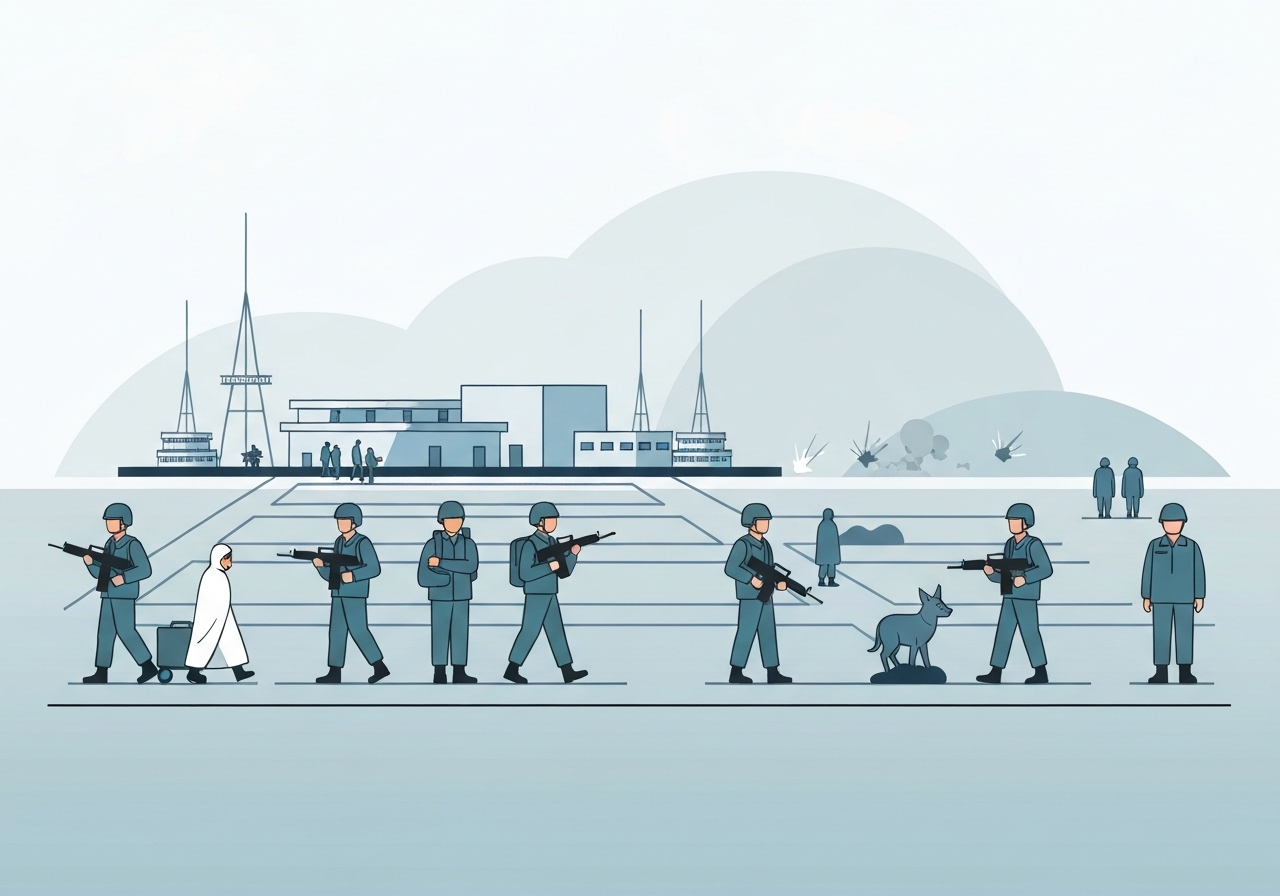
U.S. and U.K. forces have reduced staff at Al-Udeid air base in Qatar as Washington weighs possible action over Tehran’s crackdown on protests. The move, described by U.S. officials to media as a precaution, comes after Iran intensified its domestic repression and amid warnings from both governments to limit travel to regional military sites. Qatar said the steps respond to rising regional tensions; it is unclear how many personnel will leave. Airlines and aviation authorities have also adjusted routes after Iran temporarily closed much of its airspace.
Key takeaways
- The United States has pulled some personnel from Al-Udeid air base in Qatar — a facility hosting roughly 10,000 U.S. service members and about 100 U.K. staff — as a precaution amid heightened regional tensions.
- British officials confirmed some U.K. personnel are being removed and temporarily closed the British embassy in Tehran, shifting operations to remote work.
- Iran closed its airspace from 02:45 local time (22:15 GMT) on Thursday, initially for two hours and later extended to 08:00 local time (03:30 GMT), prompting airlines like Air India and Lufthansa to reroute flights.
- Rights groups report at least 2,403 protesters killed — including 12 children — and some 18,434 arrests during the recent unrest in Iran.
- The U.S. embassy in Doha and the U.S. Mission to Saudi Arabia advised personnel to exercise increased caution and limit non-essential travel to military sites in the region.
- Officials characterize the withdrawals as precautionary rather than a prelude to immediate large-scale troop movements similar to last year’s rapid redeployments.
Background
Al-Udeid Air Base in Qatar is the largest U.S. military installation in the Middle East and serves as a regional hub for air operations and logistics. Roughly 10,000 U.S. personnel and about 100 U.K. staff are normally stationed there, making it a strategic asset for operations across the region. Its size and role have made any movement of personnel politically and operationally sensitive.
The current tension escalated after a severe domestic crackdown in Iran that began in late December amid economic collapse and soaring living costs. Protests that started over economic grievances broadened into political demands, becoming one of the most serious popular challenges to Iran’s clerical leadership since 1979. International concern has risen as rights groups and watchdogs allege large-scale lethal force and mass arrests.
Main event
U.S. and U.K. officials told media partners that selected military staff are being withdrawn from Al-Udeid as a precaution while the U.S. administration considers possible responses to Iran’s domestic crackdown. A Qatari government statement framed the measures as a response to regional tensions and emphasized protecting citizens, infrastructure and military facilities.
The British Foreign Office temporarily closed the embassy in Tehran and said staff will operate remotely. The U.S. embassy in Doha advised personnel to exercise increased caution and to avoid non-essential travel to the base. The U.S. Mission to Saudi Arabia issued similar travel advisories to its personnel and citizens.
Airspace disruptions compounded the situation: Iran closed much of its airspace beginning 02:45 local time (22:15 GMT) on Thursday, a restriction that was extended to 08:00 local time (03:30 GMT). Airlines including Air India and Lufthansa announced route changes to avoid Iranian and, in Lufthansa’s case, Iraqi airspace “until further notice.” Aviation regulators and carriers cited potential risk from escalating conflict and anti-aviation weaponry as reasons for rerouting.
While some personnel were ordered to depart Al-Udeid, Reuters-cited diplomats indicated there were no immediate signs of mass troop evacuations or large convoys leaving the base akin to movements seen before last year’s Iranian strike. Qatari authorities stressed continuity of security measures and the protection of critical installations.
Analysis & implications
Operationally, reducing non-essential personnel at a major hub like Al-Udeid lowers risk exposure while preserving core mission capabilities. The base supports intelligence, surveillance, refuelling and command functions across the region; a limited drawdown avoids degrading those capabilities while addressing force protection concerns.
Politically, the adjustments signal heightened U.S. and allied concern about spillover from Iran’s internal unrest and the possibility of retaliatory regional escalation. The moves may be intended to reassure domestic audiences and regional partners that contingency planning is underway without committing to immediate kinetic options.
Economically and diplomatically, airspace closures and airline rerouting have immediate commercial impacts, increasing flight times and costs and complicating logistics. Wider, sustained airspace restrictions would add pressure to global aviation and regional trade, and could prompt additional travel advisories from Western governments.
For Tehran, the presence of Western evacuations and diplomatic closures may be used domestically to frame external pressure or intervention narratives. Conversely, regional states hosting U.S. and allied forces must balance security cooperation with diplomatic relationships in a volatile environment.
Comparison & data
| Metric | Reported figure |
|---|---|
| Confirmed protest deaths (HRANA) | 2,403 (including 12 children) |
| Reported arrests (HRANA) | 18,434 |
| Personnel at Al-Udeid (typical) | ~10,000 U.S., ~100 U.K. |
These figures underline the scale of domestic repression alleged by rights groups and the strategic footprint of Western forces in the Gulf. The numbers do not by themselves indicate military intent but do explain why regional bases and diplomatic posts are focal points for precautionary measures.
Reactions & quotes
“These measures are precautionary and intended to protect personnel while the situation is assessed,”
U.S. official (statement to media)
The U.S. characterization frames the withdrawals as risk mitigation rather than imminent offensive planning. Officials emphasized the preservation of operational capacity while prioritizing force protection.
“We will continue to implement necessary measures to safeguard security and the safety of citizens and residents,”
Qatari government statement
Qatar’s comment stresses sovereign responsibility for protecting infrastructure and foreign military facilities on its territory, and aims to reassure residents amid the reported movements.
“If the killing stops, military action is not automatic; we are monitoring developments,”
U.S. President (remarks to reporters)
President-level remarks underscore that Washington is publicly weighing options while awaiting confirmation of developments on the ground, reflecting both diplomatic caution and pressure from human-rights concerns.
Unconfirmed
- Precise headcount of U.S. and U.K. personnel withdrawn from Al-Udeid has not been released; published estimates of base population remain the reference point.
- Claims that withdrawals prefigure immediate large-scale offensive action against Iran are not substantiated by official statements or visible mass troop movements.
- Reports of planned executions in Iran have been disputed by officials and remain contested amid limited independent verification.
Bottom line
The partial removal of personnel from Al-Udeid and temporary embassy closures reflect a cautious, defensive response by Western governments to mounting instability in Iran and the associated regional risks. Officials frame the changes as precautionary steps designed to protect personnel and maintain core operational capabilities.
While the measures increase attention on the region, they do not constitute conclusive evidence of imminent military action. Observers should watch for further public statements from U.S., U.K. and regional governments, diplomatic moves by host states, and independent verification of human-rights allegations in Iran to assess whether the situation will escalate or de-escalate.
Sources
- BBC News (international news outlet)
- Reuters (international news agency)
- U.S. Federal Aviation Administration (official aviation regulator)
- Human Rights Activists News Agency (HRANA) (U.S.-based human-rights monitoring group)
- Amnesty International (international NGO)