
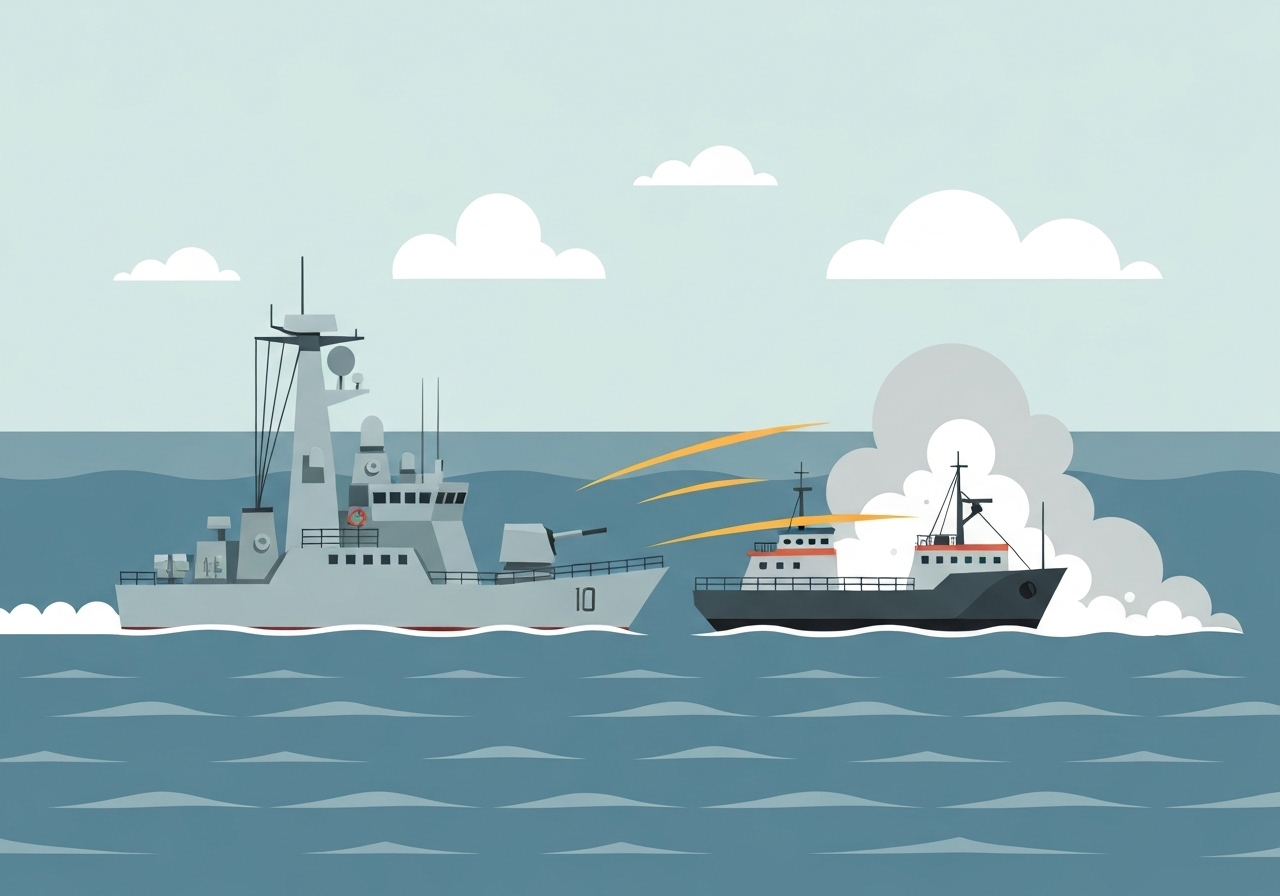
US forces struck a vessel in the Caribbean Sea on 3 September 2025, killing 11 people the White House says were members of the Tren de Aragua cartel and were carrying drugs bound for the United States.
Key takeaways
- President Donald Trump authorised the strike; the White House says the boat departed Venezuela and carried narcotics for the US market.
- The Pentagon has not publicly detailed the weaponry or legal basis used for the attack.
- Legal experts say the strike may violate the law of the sea, the UN Charter prohibition on the use of force, and international human-rights protections.
- The US has designated Tren de Aragua as a Foreign Terrorist Organization; experts disagree on whether that designation makes individuals lawful military targets.
- Venezuela disputed parts of the White House footage and its government suggested the video may be manipulated; independent checks found no clear evidence of AI fabrication.
- Several US Navy ships were reported in the wider region in the days before the strike, though publicly available tracking does not confirm all movements.
Verified facts
On 3 September 2025, the White House announced a US strike on a vessel in the Caribbean Sea and said 11 suspected traffickers were killed. The administration identified the group involved as Tren de Aragua and said the boat had left Venezuela carrying drugs intended for the United States.
The Pentagon has declined to release operational details, including the munitions used, the exact location, or the specific legal authority cited to justify the attack. President Trump posted video of the strike on Truth Social; the Department of Defense has not publicly corroborated all details in that clip.
US public tracking data and social-media posts indicate several US Navy vessels were operating in the region in late August 2025. Recorded transmissions show the USS Lake Erie east of the Panama Canal on 30 August, the USS Fort Lauderdale north of the Dominican Republic on 28 August, and the USS Gravely and USS Jason Dunham transmitting locations from Guantánamo Bay in mid-August.
The administration also announced a US$50 million reward for information leading to the arrest of Venezuelan President Nicolás Maduro; this is part of a broader pressure campaign against Venezuela that coincides with the strike.
Context & impact
Maritime interdiction and counter-narcotics operations have long been part of US strategy in the Caribbean and Pacific approaches to the Americas. This action signals a willingness by the administration to use kinetic force beyond traditional interdiction methods.
Legal scholars warn the move could set a precedent if the legal basis is not transparent. A pattern of extraterritorial strikes against non-state criminal groups complicates relations with coastal states and raises questions about proportionality, necessity and respect for sovereignty.
Domestically, allies of the president framed the strike as decisive action against trafficking, while critics say it risks undermining international law and diplomatic norms. Internationally, the incident may increase tensions between the United States and Venezuela and prompt scrutiny from human-rights bodies.
Official statements
“The president authorised the strike and is committed to using all means to prevent drugs reaching the United States.”
White House official / President Donald Trump (reported)
“Sinking this boat saved American lives.”
Sen. Bernie Moreno (R-OH)
“The ultimate — and most welcome — sign that we have a new sheriff in town.”
Sen. Lindsey Graham (R-SC)
Unconfirmed
- The precise weapons, platforms, or sequence of actions used by US forces in the strike remain undisclosed.
- Whether the vessel was definitively loaded with drugs at the time of attack has not been independently verified.
- Venezuelan claims that the White House video was AI-generated are unproven; independent checks did not find clear signs of deepfakery but cannot establish provenance beyond the clip itself.
- It is not publicly confirmed which specific legal authority the US relied on—domestic authorisation, AUMF invocation, claim of self-defence, or another justification.
Bottom line
The US strike that killed 11 people and targeted a vessel the administration says came from Venezuela raises immediate operational and legal questions. Without transparent disclosure of the legal rationale and operational facts, international-law experts warn the action risks breaching maritime and human-rights norms and could fuel diplomatic fallout with Venezuela and scrutiny from international bodies.
If Washington intends to pursue similar actions, publishing the legal basis and evidence will be central to whether allies, courts and international institutions accept the operation as lawful or view it as an unlawful use of force.