
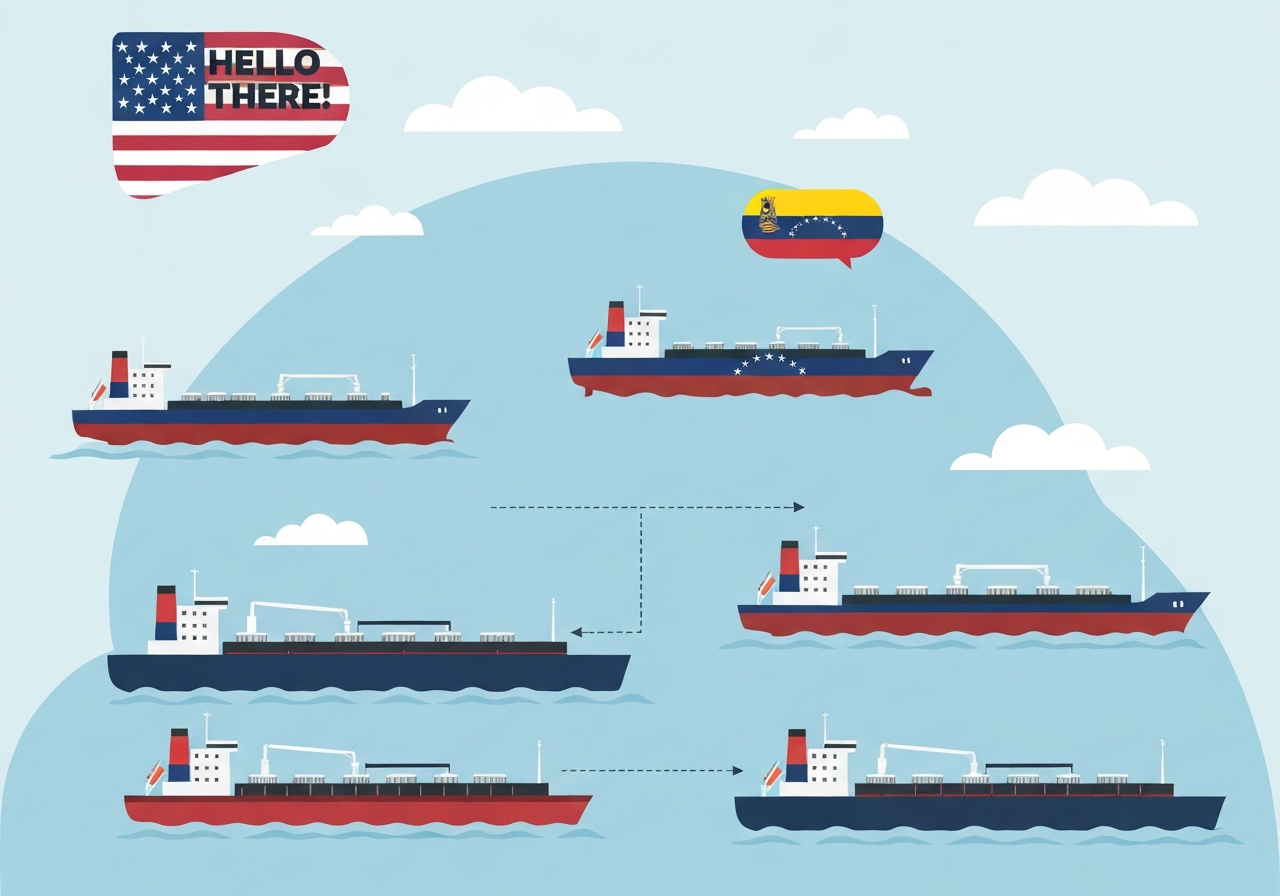
Lead: The U.S. Treasury on Wednesday issued a broad license allowing U.S. companies to transact with Venezuela’s state oil company, PDVSA, marking a major shift from years of strict sanctions as the Trump administration seeks to augment global oil supplies amid the ongoing war with Iran. The authorization permits PDVSA to sell oil directly to U.S. firms and on international markets under specific limits, while the White House also announced a 60-day Jones Act waiver for domestic shipping. Officials framed the steps as short-term measures to ease sharply rising fuel costs driven in part by disruptions around the Strait of Hormuz. The moves stop short of lifting sanctions entirely and include constraints on payments and counterparties.
Key Takeaways
- The Treasury issued a license allowing companies existing before Jan. 29, 2025, to buy Venezuelan oil, reopening trade that had been largely blocked for years.
- The license permits PDVSA to sell oil to U.S. companies and global buyers but bars direct payments to certain sanctioned entities and restricts deals involving Russia, Iran, North Korea, Cuba and some Chinese firms.
- President Trump announced an operational role in Venezuela after Maduro’s ouster and arrest in a U.S. operation in January, a development the administration says justifies phased engagement with the country’s oil sector.
- The White House also waived the Jones Act for 60 days to allow non-U.S.-flagged vessels to move goods between U.S. ports, a step aimed at relieving regional supply pressure.
- Drivers faced an average U.S. pump price of $3.84 per gallon on Wednesday, up from $2.98 before U.S. and Israeli strikes on Iran on Feb. 28, according to AAA.
- Analysts expect limited near-term impact on U.S. gasoline prices; projections for meaningful Venezuelan output gains range from 12 to 18 months, according to Atlantic Council analysts quoted by reporters.
- Venezuela’s economy remains fragile: public-sector wages around $160/month, private-sector average roughly $237, and annual inflation at about 475% last year per the central bank.
Background
Venezuela sits atop the world’s largest proven oil reserves and was once the engine of Latin America’s strongest economy. Under Hugo Chávez, production peaked near 3.5 million barrels per day in 1999, but corruption, mismanagement and international sanctions sent output plunging to below 400,000 barrels per day by 2020. Washington barred most commercial dealings with PDVSA under earlier Treasury measures, a policy aimed at penalizing Nicolás Maduro’s government for alleged corruption and human rights abuses.
Since January, U.S. policy toward Venezuela has shifted amid acute global energy tensions following military action and escalating conflict involving Iran. The Trump administration’s recent intervention in Venezuela and claims of having ousted President Maduro have realigned Washington’s tactical options, prompting officials to consider managed commercial engagement as a tool to increase oil flows without restoring full diplomatic or financial normalcy.
Main Event
The Treasury’s new license allows pre-2025 U.S. firms to resume oil purchases from PDVSA and to participate in transactions that had been prohibited, while preserving mechanisms to prevent direct transfers to designated entities. According to administration officials, payments tied to sales must route through a U.S.-controlled account to ensure oversight and to deny cash flows to blocked parties. The license explicitly excludes certain transactions, including those involving Venezuelan debt or bonds, and prohibits dealings with some sanctioned foreign partners.
In parallel, the White House invoked a 60-day waiver of the Jones Act, the 1920 law requiring goods transported between U.S. ports to use U.S.-built and flagged vessels, citing short-term disruptions tied to the Iran conflict. Administration spokespeople said the temporary relief would help move oil, natural gas, fertilizer and coal more freely to U.S. ports, easing regional supply bottlenecks that have contributed to higher pump prices.
U.S. officials framed the measures as calibrated and limited: an incentive for foreign and U.S. investment in Venezuela’s energy sector while maintaining pressure on Maduro-era actors. Treasury spokespeople told reporters the license aims to increase global crude supply and stabilize markets but cautioned that production increases will take time and sustained investment.
Analysis & Implications
Economically, reopening Venezuelan oil to U.S. buyers could boost global supply over time, but analysts warn of a long lead time. Restoring output requires capital, equipment, and operational capacity that were eroded over decades; experts cited a 12-to-18-month window before Venezuelan barrels could meaningfully affect global markets. In the interim, the administration’s moves are likely intended more as a signaling device to markets than an immediate supply remedy.
Politically, the decision balances competing priorities: delivering relief to U.S. consumers facing rising pump prices ahead of an election cycle, while attempting to avoid legitimizing abuses linked to Venezuela’s leadership. Critics say any commercial normalization risks empowering actors tied to the former Maduro government, and human rights and governance concerns will remain central to opposition.
Strategically, the actions underscore broader U.S. calculations in a volatile energy landscape shaped by the Iran war and Strait of Hormuz disruptions. By loosening sanctions selectively and waiving domestic shipping rules temporarily, Washington seeks to blunt price spikes without fully reversing its leverage on Caracas. Internationally, the move may shift trade patterns—buyers who previously sourced discounted Venezuelan crude via alternative channels may now face new U.S.-regulated pathways that alter pricing and oversight.
Comparison & Data
| Metric | Value/Period |
|---|---|
| U.S. national average gasoline price | $3.84 per gallon (Wednesday) |
| Pre-Feb. 28 national average | $2.98 per gallon |
| Venezuela peak production | 3.5 million bpd (1999) |
| Venezuela production in 2020 | <400,000 bpd |
| Venezuela annual inflation | 475% (last year) |
| Average public-sector pay | ~$160 per month |
| Average private-sector pay | ~$237 per month |
The table highlights long-term structural decline in Venezuelan output and the short-term spike in U.S. pump prices tied to recent geopolitical events. Rebuilding Venezuela’s export capacity will require investment, repair of infrastructure, and time; policymakers and markets should not expect immediate barrel-for-barrel relief to prices.
Reactions & Quotes
Officials and experts offered a mix of reassurance and caution as the administration announced the measures. Vice President J.D. Vance framed the steps as temporary and focused on consumer relief, while analysts stressed operational constraints in Venezuela.
“Gas prices are up and we know they’re up. And we know that people are hurting because of it.”
Vice President J.D. Vance
Vance used the comment to justify rapid action aimed at calming fuel markets ahead of the election calendar, describing the policy moves as short-term interventions rather than permanent normalization. Treasury officials emphasized controls on payments and counterparties to limit unintended financial flows.
“The waiver will help mitigate short-term disruptions to the oil market and allow vital resources to flow to U.S. ports.”
Karoline Leavitt, White House Press Secretary
Leavitt positioned the Jones Act waiver as a narrowly tailored fix for shipping bottlenecks. Maritime and shipping industry stakeholders warned that the measure increases competition for U.S. shippers and could raise costs for domestic carriers, even as it may relieve regional fuel scarcity.
“We’re talking about 12 to 18 months before we see dramatic changes in Venezuelan output.”
Geoff Ramsey, Atlantic Council (analyst)
Analysts like Ramsey stressed the time horizon needed for investment and repair before Venezuelan crude can substantially influence global supply and U.S. pump prices.
Unconfirmed
- The precise timetable for restoring Venezuelan oil output to pre-crisis levels remains uncertain and contingent on investment, equipment access, and on-the-ground security.
- Details on which companies will obtain licenses and the full mechanics of the U.S.-controlled payment arrangements have not been publicly enumerated.
- The extent to which the measures will reduce U.S. gasoline prices in the near term is not confirmed; market responses may vary regionally.
Bottom Line
The Treasury license and the temporary Jones Act waiver represent a pragmatic, constrained U.S. effort to raise global oil availability amid supply shocks tied to the Iran war and Strait of Hormuz disruptions. Policymakers aim to signal to markets that additional barrels can become available, while keeping legal and financial levers in place to limit windfalls to sanctioned actors.
However, substantive increases in Venezuelan production will likely take many months of investment and repairs, limiting immediate relief at the pump. For voters and markets, the administration’s moves are a hedge: a mix of short-term operational fixes and longer-term policy shifts that will be judged by their transparency, enforcement of controls, and the pace of output recovery.