
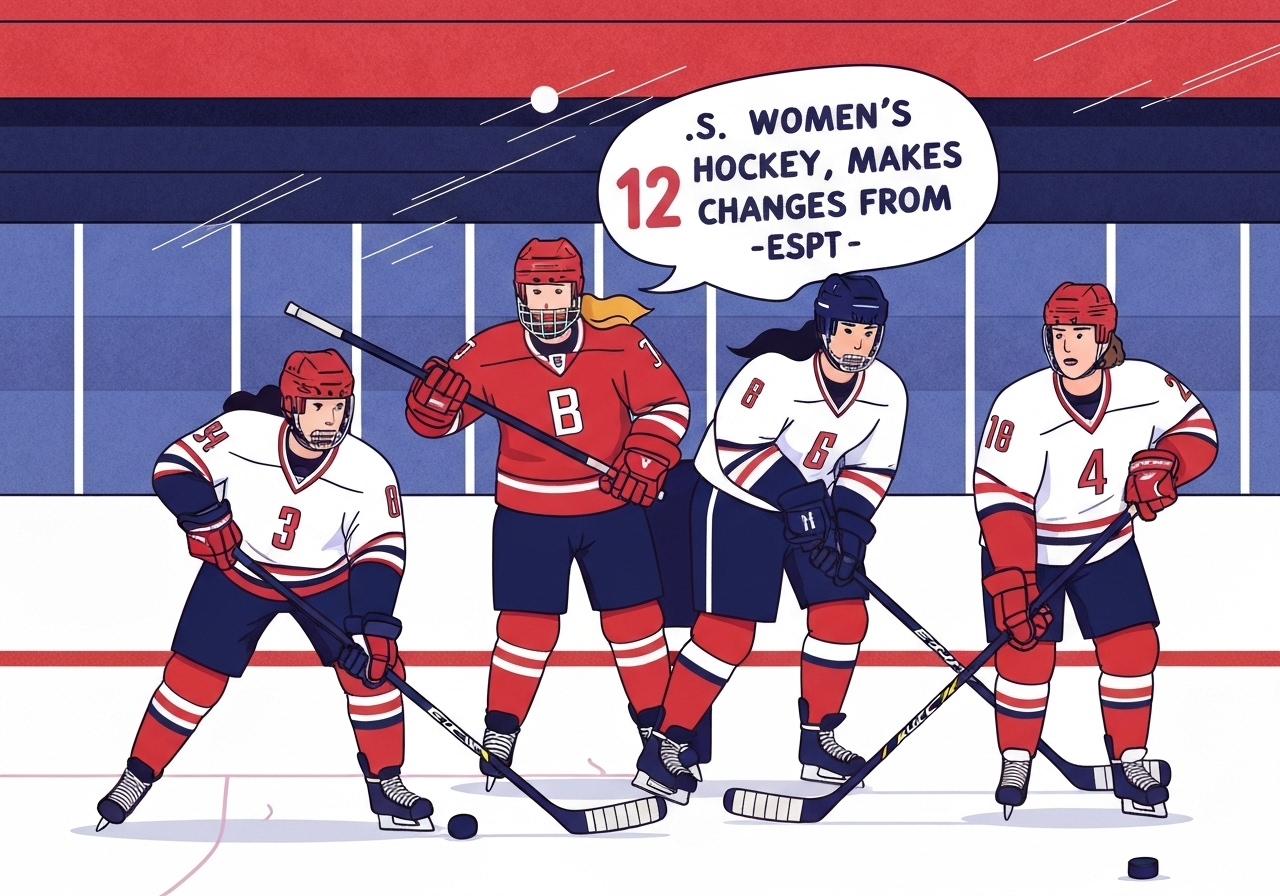
Lead: On Jan. 2, 2026, USA Hockey announced a 23-player women’s Olympic roster for the Milan–Cortina Games that blends veteran leadership with a pronounced youth movement. Hilary Knight, 36, will appear at her fifth Winter Olympics and is expected to captain a team widely regarded as a gold-medal favorite. The roster returns 11 players from the 2022 Beijing silver-medal squad and introduces 12 new selections, including 21-year-old defender Laila Edwards, who would become the first Black woman to skate for the United States at the Olympics. The team opens pool play Feb. 5 against Czechia, with the gold-medal game scheduled for Feb. 19.
Key Takeaways
- USA Hockey released a 23-player roster on Jan. 2, 2026; 11 members from Beijing 2022 returned while 12 new players joined.
- Hilary Knight (36) will make a fifth Olympic appearance, holding U.S. records for most Winter Games appearances by a woman on the team and bringing prior gold (2018) and three silver medals.
- Laila Edwards, 21, is the youngest defender highlighted among newcomers and is set to become the first Black woman to play for the U.S. Olympic women’s hockey team.
- The roster includes 16 players from the PWHL and seven who remain in college, with 20-year-old Joy Dunne (Ohio State) the youngest skater on the roster.
- Goalies Aerin Frankel, Gwyneth Philips and Ava McNaughton are all Olympic debutants; Frankel is widely viewed as the projected starter.
- Coach John Wroblewski, hired in June 2022, prioritized youth and speed; the U.S. swept the most recent Rivalry Series 4–0, outscoring Canada 24–7.
- The United States enters Milan–Cortina as defending world champions after a 4–3 overtime win against Canada in April and as favorites for a third Olympic gold (previous golds: 1998, 2018).
Background
The U.S.–Canada rivalry has defined women’s international hockey since the sport’s Olympic debut in 1998; the Americans won that inaugural tournament and again in 2018, while Canada has taken gold at multiple other Games. After a 5–2 finish in Beijing 2022 that included two losses to Canada, USA Hockey opted for a roster refresh under new leadership. John Wroblewski was hired in June 2022 and signaled a shift toward speed, younger personnel and longer-term development.
Growth of pro women’s hockey has reshaped talent pipelines. The Professional Women’s Hockey League (PWHL), which began play in 2024 and now fields eight teams, accounts for 16 players on this Olympic roster and is widely credited with elevating player conditioning, tactical sophistication and parity across some programs. At the same time, NCAA programs remain a key source of emerging talent: seven players on the roster are still competing in college, reflecting continuing overlap between amateur development and pro pathways.
Main Event
USA Hockey unveiled the 23-player roster on Jan. 2, 2026, combining experienced leaders such as Knight, Kendall Coyne Schofield and Lee Stecklein with younger contributors like Laila Edwards and several collegiate standouts. The team selection returns notable veterans including Alex Carpenter, Kelly Pannek, Megan Keller and Caroline Harvey, while adding players who have forced their way onto the roster through recent domestic and international play.
Hilary Knight’s inclusion is notable both for its performance implications and its symbolism: the 36-year-old announced that these Games will be her final Olympics even as she intends to continue playing professionally in the PWHL. Knight’s presence provides a veteran spine and leadership for a locker room undergoing a generational transition.
The goaltending group is entirely new to Olympic competition. Aerin Frankel, Gwyneth Philips and Ava McNaughton are all set to make their Olympic debuts; Frankel is widely seen as the projected starter based on recent form. The coaching staff emphasized performance metrics, recent Rivalry Series results and championship experience when finalizing the trio.
Selection patterns reflect Wroblewski’s stated priorities: skating speed, transitional play and defensive mobility. The Americans’ sweep of the Rivalry Series — four wins with a combined 24–7 score — and the team’s 4–3 OT world-championship victory over Canada in April reinforced the staff’s belief that a younger, faster roster can sustain the U.S. at the highest level.
Analysis & Implications
The roster’s balance of veterans and youth aims to marry experience with physical speed and depth. Veterans like Knight and Stecklein supply situational awareness, championship experience and leadership in high-pressure moments; younger players bring quickness and upside, particularly in transition and puck retrieval. That mix could help the U.S. maintain puck possession and press Canada’s traditionally physical forecheck with tempo rather than purely strength.
Goaltending remains a critical variable. While Frankel projects as starter, none of the three netminders have previously played at the Olympics, which introduces an element of uncertainty in a tournament where a hot goalie can define medal outcomes. The coaching staff’s recent usage patterns and international starts in 2025–26 will be closely watched in the run-up to Feb. 5.
The PWHL’s influence is apparent: 16 roster spots are occupied by league players, reflecting how a stable professional circuit has accelerated tactical maturity and fitness standards. That concentration of PWHL talent also suggests the league’s style and calendar will affect preparation rhythms ahead of Milan–Cortina; teams with many PWHL players must balance league postseason timing with Olympic training windows.
Internationally, a faster, deeper U.S. roster raises the stakes for rivals. Canada remains the primary challenger, but nations like Czechia, Finland and Switzerland have narrowed gaps through pro opportunities, improved junior development and sharper domestic programs. How well the U.S. integrates younger players under Olympic pressure will influence competitive balance at these Games and beyond.
Comparison & Data
| Item | Beijing 2022 | Milan–Cortina 2026 |
|---|---|---|
| Roster size | 23 | 23 |
| Returnees from 2022 | 23 (baseline) | 11 |
| New players vs 2022 | — | 12 |
| PWHL players | varied | 16 |
| College players | varied | 7 |
The table highlights a substantial turnover rate: 12 roster changes compared with the Beijing squad, indicating deliberate renewal. The PWHL representation (16 of 23) underscores the league’s role in shaping elite rosters; meanwhile, seven college players preserve a pipeline for future cycles. These counts help quantify the strategic tilt toward youth and professional experience.
Reactions & Quotes
Officials and athletes framed the roster in terms of opportunity and continuity. USA Hockey emphasized long-term development and medal ambition in its announcement.
“Getting that call is like a dream come true,”
Laila Edwards, incoming Olympic defender
Team leadership pointed to a collective commitment to speed and accountability as the selection rationale.
“We wanted a roster that could sustain pressure and move the puck quickly,”
John Wroblewski, Head Coach (USA Hockey)
Outside commentators noted the PWHL’s impact on selection depth and international readiness.
“A stable pro league is visible in the roster makeup and game tempo,”
Independent hockey analyst
Unconfirmed
- Final starting lineup and defensive pairings for the opening game vs Czechia remain unannounced and could change after pre-tournament practices.
- How the PWHL schedule and any late-season injuries will affect player availability and conditioning is not fully known.
Bottom Line
This roster represents a strategic pivot: USA Hockey has deliberately trimmed veteran reliance while retaining core leadership to shepherd a younger, faster group. Hilary Knight’s fifth and final Olympics bundles institutional memory with the fresh energy of newcomers such as Laila Edwards and multiple collegiate standouts.
If the projected goaltending order and the PWHL-conditioned depth perform as expected, the U.S. enters Milan–Cortina as a clear favorite. Nevertheless, Olympic tournaments are short and situational — goaltending form, in-tournament injuries and game-to-game adjustments will ultimately shape medal outcomes.