
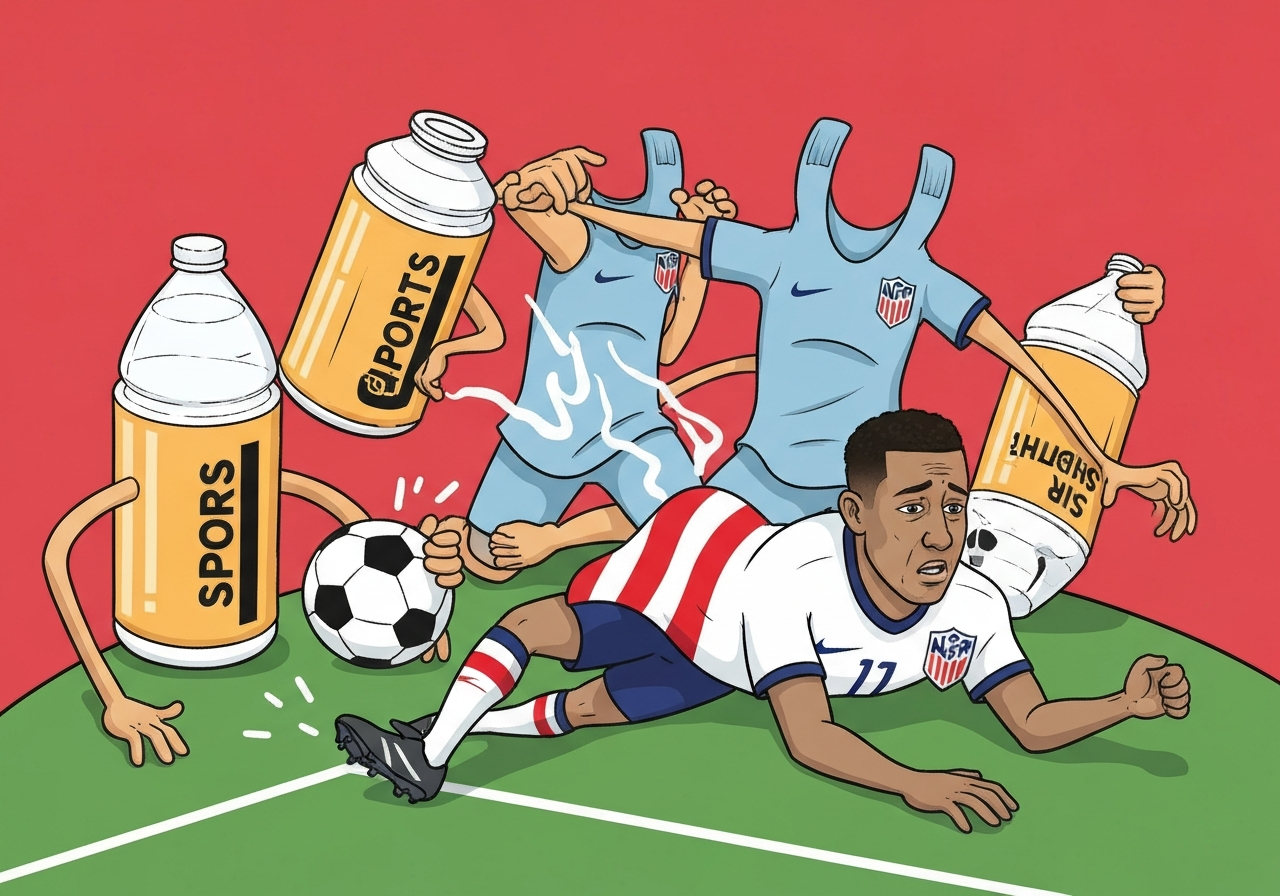
On 28 March 2026 at Mercedes‑Benz Stadium in Atlanta, the United States men’s national team lost a friendly to Belgium in a match notable less for the scoreline than for two odd features: mandatory World Cup‑style hydration breaks and a confusing light‑on‑light kit matchup. Inside the 70,000‑seat, climate‑controlled arena—kept at about 72°F (22°C) by an 8,400‑ton HVAC system—referee‑ordered pauses sent both teams to the bench and drew audible bewilderment from the announced crowd of 66,867. Coaches used the interruptions to deliver tactical adjustments, and several US players said the stoppages and the similar kit colors affected on‑field quick decisions. The combination of breaks and indistinct jerseys became a central talking point after the match, prompting debate about preparation and regulation ahead of this summer’s World Cup.
Key takeaways
- Match details: Belgium defeated the US in a friendly played on 28 March 2026 at Mercedes‑Benz Stadium, attendance 66,867; stadium capacity about 70,000.
- Hydration breaks: Referee enforced World Cup‑style mandatory hydration pauses despite indoor, climate‑controlled conditions of roughly 72°F (22°C); both sides used them for tactical talk.
- Kit confusion: The US wore red‑and‑white striped kits with blue shorts; Belgium wore a light alternate strip, producing a light‑on‑light matchup that confused players and fans.
- Coaches split on rule: US coach Mauricio Pochettino voiced frustration that breaks disrupt rhythm; Belgium coach Rudi Garcia praised the tactical window they provide.
- Player perspectives: Some US players said acclimation to heat made breaks manageable, though several admitted the similar jersey colors slowed quick on‑ball decisions.
- Logistics: Belgian alternates were reportedly unavailable because they had been shipped to Chicago for a subsequent friendly, leaving no dark option on matchday.
- Broader implication: The stoppages and kit clash offered an early preview of operational and tactical wrinkles likely to appear during the World Cup this summer.
Background
FIFA has moved to standardize hydration breaks and other in‑match pauses for player safety and to preserve performance across venues and climates; organizers intend those pauses to be used at the upcoming World Cup. Teams and match officials have been asked to rehearse and approve operational details in advance, but implementation can still produce unexpected effects in friendlies and exhibition fixtures. Atlanta’s Mercedes‑Benz Stadium, a domed, climate‑controlled venue with a large HVAC installation, rarely presents environmental stressors that would necessitate a typical heat‑related break.
Kit selection and coordination are usually handled in pre‑match protocols: teams exchange kit choices, the match commissioner signs off, and referees confirm on gameday. Despite those steps, the US–Belgium friendly exposed a gap between paperwork and practice: approved photos and commissioner sign‑off did not prevent confusion once the match began. International teams routinely travel with alternate kits for contingencies, but shipping schedules and subsequent engagements—Belgium had an away fixture in Chicago coming up—can leave limited on‑site options.
Main event
The match proceeded under ideal indoor conditions—72°F (22°C), natural grass and little environmental strain—yet the referee called mandatory hydration pauses in both halves to mimic World Cup procedures. The stoppages produced visible regrouping: both head coaches gathered players and offered tactical direction in concentrated, timeout‑style huddles. Mauricio Pochettino used the breaks to address structure and rhythm; Rudi Garcia used them to reiterate defensive shape and positioning.
Belgium had established more control by the time the first break arrived, and the pauses did not change the general flow in their favor. From a spectator perspective the interruptions drew boos and confusion, especially when the public‑address announcer explained the reason for the stoppage. In the technical area the breaks allowed coaching staffs to convey adjustments they might otherwise save for halftime or full‑time analysis.
The kit situation added a separate, practical complication: both teams entered the field wearing relatively light palettes—US red‑and‑white striped shirts with blue shorts versus a light Belgian alternate—so quick visual identification of teammates became harder, players said. Several US players reported taking an extra touch or a pause to confirm passing targets, and some conceded that split‑second decisions were affected. Match officials and both federations had approved the combination in advance, but it still caused operational friction once play began.
Analysis & implications
On the surface, mandatory hydration breaks aim to protect players’ health and create consistent conditions across the tournament. In practice, however, they introduce new tactical levers. Coaches now have two brief, guaranteed windows within a half to deliver instructions, alter formations, or remind players of positional duties—opportunities that can change in‑game management and substitute timing. That dynamic benefits teams with coaching staffs who prepare concise, targeted messages and who can convert short pauses into effective tactical resets.
Conversely, players and coaches who prize continuous rhythm may find their strategies disrupted. Pochettino’s complaint that breaks can “cut the rhythm of the game” reflects a broader tension between pacing and interruption. Teams that rely on sustained pressing or long runs of possession may see those patterns truncated, requiring adaptation in match planning and fitness conditioning to preserve momentum across repeated stops.
The kit confusion points to a separate operational shortfall. Pre‑match visual checks—photographs, commissioner approval and referee sign‑off—are necessary but not always sufficient to anticipate in‑game perceptual challenges, especially under broadcast lighting and at high speeds. Tournament organizers and confederations will need to tighten contingency protocols: mandating a clearer contrast standard, requiring both teams to carry an approved dark and light option on site, or empowering referees to insist on an immediate change where recognition is compromised.
Comparison & data
| Item | Match | World Cup standard |
|---|---|---|
| Attendance | 66,867 | Varies by venue |
| Stadium capacity | ~70,000 | N/A |
| Stadium temp | 72°F (22°C) | Breaks used regardless of temp |
| HVAC capacity | 8,400 tons | N/A |
Those figures show the anomaly: mandatory hydration pauses were enforced in a well‑controlled indoor environment that presented no obvious heat risk. The data underline that the breaks are being positioned as regulatory features rather than solely reactive safety measures. Teams and organizers should therefore plan for their tactical and logistical consequences even in temperate settings.
Reactions & quotes
“To be honest I don’t like [them]. I don’t like it because I think you cut the rhythm of the game.”
Mauricio Pochettino, US head coach (post‑match)
Pochettino framed the pauses as disruptive to tempo, a perspective that resonated with coaches and players who favor uninterrupted play. His remarks highlighted coach‑level concerns about match flow even as defenders of the rule stress player welfare.
“I like them… this is an opportunity for us coaches to speak with the team, to speak about strategy and plan.”
Rudi Garcia, Belgium head coach
Garcia emphasized the tactical upside: the brief windows allowed his staff to reinforce defensive structure and keep players aligned with the game plan. That view suggests teams with concise messaging systems may extract more value from the pauses.
“It was hard to tell sometimes who was who. Turning on the field I looked up and sometimes couldn’t tell them apart.”
Christian Pulisic, US midfielder
Players foregrounded the kit issue as a concrete, in‑play obstacle to quick decision‑making. The comments prompted calls for clearer contrast rules in future fixtures to prevent similar confusion.
Unconfirmed
- Whether the kit confusion materially altered any single scoring chance or the final outcome is not confirmed; players said it slowed decisions but did not attribute the loss directly to it.
- Reports that Belgium had no alternates available because kits were already en route to Chicago for their next friendly are consistent with team logistics but lack an independent public inventory confirmation.
- The long‑term tactical advantage of hydration breaks in tournament play—whether they systematically favor defensive or managerial styles—remains speculative until observed across more World Cup matches.
Bottom line
The US–Belgium friendly offered an early glimpse of non‑scoreline variables that may shape the World Cup: standardized hydration breaks and stricter kit‑contrast enforcement will alter in‑game management and operational planning. Coaches who can turn short stoppages into crisp tactical interventions stand to gain an edge, while teams that rely on uninterrupted tempo must adapt training and match strategy.
Equally, the kit mix‑up shows that administrative approvals do not always translate to clear visual conditions on the pitch; tournament organizers should tighten on‑site contingency rules so that a preapproved combination does not become a match‑time problem. For fans and federations alike, the lesson is practical: minor logistical details—pause protocols and a spare dark kit on site—can have outsized effects on the live game experience.